
Cultural Heritage in the Pocket: Turning Visitors into 3D Digital Makers
Crowdsourcing Cultural Heritage: From 3D Modeling to the Engagement of Young Generations
This paper explores a participatory framework for the virtualization of museum collections through Structure from Motion (SfM) techniques. It proposes transitioning the museum visitor from a passive spectator to an active "digital maker" who generates high-quality 3D photorealistic models using accessible mobile devices.
Executive Summary
TL;DR: This research tackles the prohibitive costs of cultural heritage digitization by empowering museum visitors to act as "digital makers." By leveraging Structure from Motion (SfM) and crowdsourcing, the authors demonstrate that young generations can produce SOTA-level 3D models of artifacts using nothing more than their smartphones, effectively decentralizing the preservation of human history.
Contextual Positioning: This work moves beyond traditional "expert-only" survey methods, positioning itself within the Participatory Museum movement. It bridges the gap between high-fidelity laser scanning and low-cost photogrammetry, proving that quantity and community engagement can effectively supplement professional archiving.
Problem & Motivation: The Titanic Task of Archiving
Cultural heritage is under constant threat from natural disasters, climate change, and human conflict (e.g., the collapses at Plaka Bridge or the destruction in Mosul). Traditionally, 3D documentation was a "Titanic undertaking" involving expensive laser scanners and specialized teams.
The authors identified two major gaps:
- High Costs: Standard 3D surveys are too expensive for periodic updates/monitoring.
- Passive Crowdsourcing: Previous projects like Micro-Pasts used volunteers for mundane tasks (photo-masking) rather than creative content generation.
The Insight: If every visitor carries a high-resolution camera (a smartphone), why not provide them with the "Inductive Bias" (the photogrammetric rules) to become data scientists for the museum?
Methodology: The SfM Pipeline for the Masses
The core of the method relies on Structure from Motion (SfM). Unlike active sensors (LiDAR), SfM uses overlapping 2D images to reconstruct 3D geometry based on feature matching and triangulation.
The Acquisition Protocol
To ensure high geometric fidelity, the authors established a specific "photographic network" for visitors:
- Overlap: ~70% between neighboring frames.
- Angle: Shifts of 5–10° between shots.
- Diversity: Images must be taken from varying heights and rotations to solve for occlusion.
Technical Infrastructure
The workflow transitions from the physical museum to cloud/local processing:
- On-site training: Simplified tutorials.
- Dataset Creation: 40–70 images per object.
- Processing: Leveraging Agisoft Photoscan (for local control) or Autodesk Recap360 (for cloud computing efficiency).
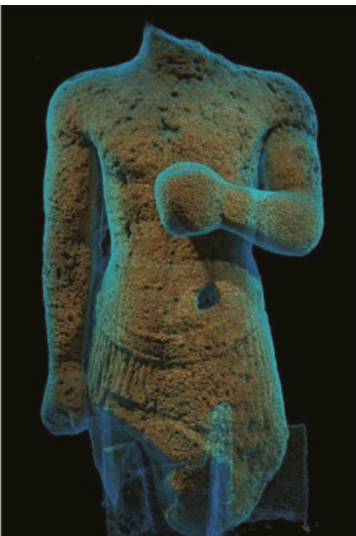 Figure 1: Comparison of visualization modes (Textured, Solid, X-Ray, Wireframe) demonstrating the mesh density achieved by student "invaders."
Experiments: Digital Invasions at Salinas and Catania
The authors tested their framework through #DigitalInvasions, an Italian movement promoting bottom-up cultural value. 80 students from the University of Palermo and Catania were tasked with digitizing specific artworks.
Key Results
The results proved that device type (Smartphone vs. DSLR) was less critical than dataset quality.
- Geometric Fidelity: Models showed minimal deformations and "holes," even on complex textures like alabaster or marble.
- Successful Case Study: The Torso of the Stagnone and the Statue of Zeus Ourios were reconstructed with enough detail for both educational visualization and documentation.
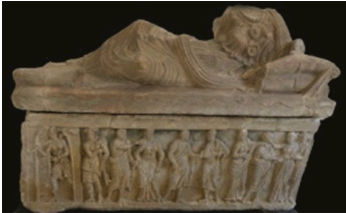 Figure 2: 3D reconstruction of the Statue of Zeus Ourios at the Salinas Museum, showcasing fine-grained surface detail.
Critical Analysis & Conclusion
Takeaway
The "Museum Operator/Maker" model solves the scalability problem of 3D archiving. By involving young generations (18–23 year olds), museums gain a dynamic, constantly updated 3D database while providing visitors with a deeper cognitive connection to the art.
Limitations
- Material Constraints: SfM still struggles with reflective surfaces (glass, polished metals) and items inside showcases.
- Quality Control: While most student models were "impressive," professional validation is still needed to ensure metric accuracy for restoration purposes.
Future Outlook
The paper suggests extending this model to warehouse stocks—artworks hidden from the public—allowing them to be "virtually" exhibited and studied globally. For the broader AI and CV community, this highlights the necessity of Neural Radiance Fields (NeRFs) or Gaussian Splatting as the next potential step for even faster, higher-fidelity crowdsourced reconstructions.