
Beyond the Lab: Capturing the "Unknowable" Contexts of AR through Crowdsourcing
6688_Crowdsourcing Design Guidance for Contextual Adaptation of Text Content in Augmented Reality.
Summary
Problem
Method
Results
Takeaways
Abstract
This paper introduces a privacy-conscious crowdsourcing methodology to gather AR design guidance by deploying a mobile web-based AR application to 400 participants worldwide. The research focuses on "Contextual Adaptation of Text," specifically optimizing billboard coloration and label placement across thousands of diverse real-world environments.
## TL;DR
Designing Augmented Reality (AR) is notoriously difficult because developers can't see what the user sees. This paper presents a breakthrough method to crowdsource thousands of real-world environment snapshots using a mobile web app. By implementing a clever privacy-first "pixelation" review step, the researchers gathered a massive dataset of user preferences for AR text styling, ultimately building a dynamic adaptation model for head-mounted displays like the HoloLens.
## The Motivation: The "Unknowable Context" Problem
In a lab, lighting is perfect, and walls are white. In the real world, AR is used in cluttered kitchens, dark bedrooms, and sun-drenched gardens. Traditional HCI (Human-Computer Interaction) studies struggle with **external validity**—conclusions drawn in a lab often fail when the background is a busy brick wall or a vibrating bus.
The authors argue that to fix AR design, we need to stop bringing users to the lab and start bringing the "lab" to the user's pocket.
## Methodology: The Privacy-Conscious Workflow
The researchers designed a four-stage process to collect data without being intrusive:
1. **Search**: Users play a simple "bird-finding" AR game (using A-Frame on their phone's browser) to ensure they sample different parts of their room.
2. **Capture**: A static background image is taken once the user "targets" the virtual bird.
3. **Refine**: Users manually adjust text colors and panel positions to maximize readability against *their specific* background.
4. **Review (The Secret Sauce)**: Before anything is uploaded, users see their image and a "Pixelation Slider." They can blur private details (like family photos) while keeping the overall color and texture data intact for the researchers.
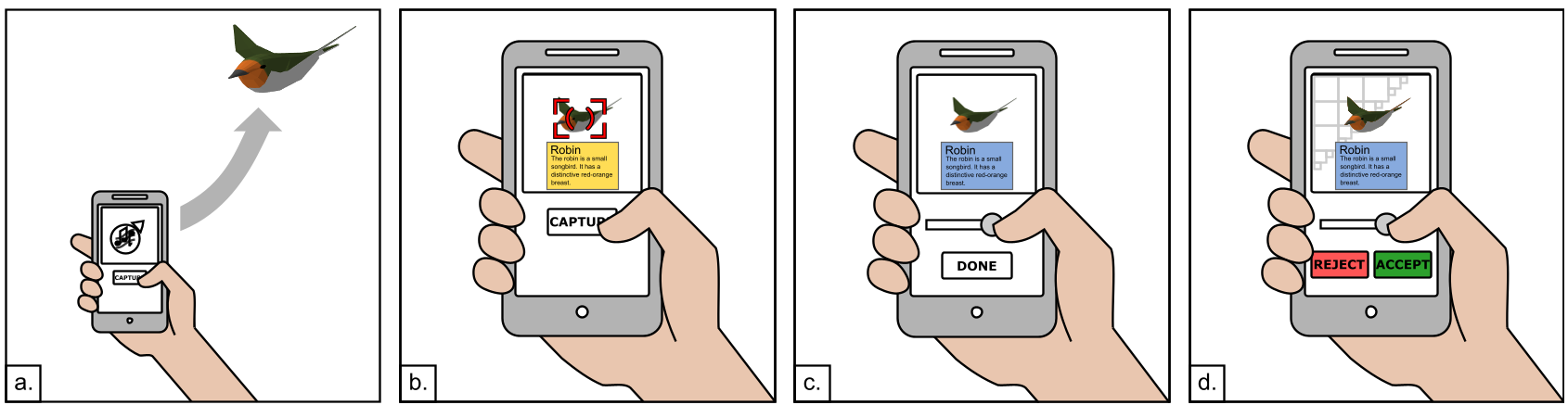
*Above: The 4-step task flow: Searching for the bird, capturing the background, refining aesthetics, and the final privacy review.*
## Key Insights: What do users actually want?
By analyzing nearly 2,000 data points, the study extracted several "design laws" for AR:
* **The Blue Bias**: Across almost all background colors, users consistently preferred **Blue** or **Red** panels for text. Blue, in particular, was the "safe" default for legibility, corroborating previous tiny-sample lab studies but at a global scale.
* **Clutter Avoidance**: Users are remarkably consistent in avoiding "busyness." They moved text labels away from high-texture areas (quantified as **Edgeness**) and highly vibrant areas (**Colorfulness**).
* **Privacy Acceptance**: Interestingly, while 79% of people felt image review was vital, over 50% chose to upload *zero-pixelation* images, suggesting that giving users *control* over privacy is more important than the privacy itself.
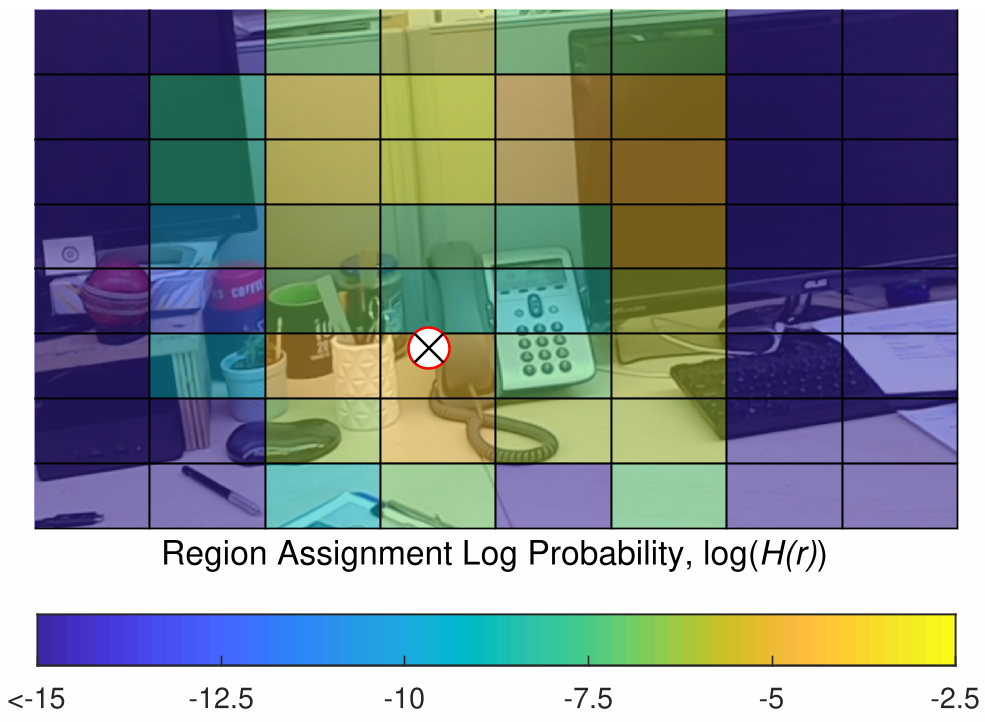
*Above: Probability maps showing where users prefer to place labels based on background "Edgeness" (clutter).*
## From Phone to Headset: Operationalizing the Data
The climax of the paper is the translation of these "crowd-wisdom" data points into a **Dynamic Preference Model**. The authors developed an algorithm (Algorithm 1) that assesses a live camera feed and automatically chooses the best color and location for a tooltip.
They tested this on a **Microsoft HoloLens**, proving that data gathered on cheap smartphones can effectively inform high-end AR optics.
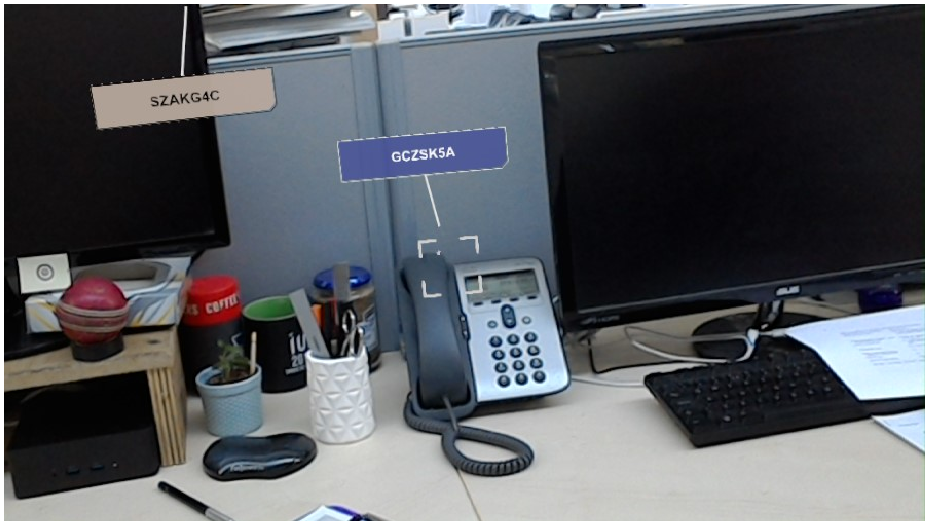
*Above: The final adaptive tooltips in action on a HoloLens, dynamically adjusting to different surfaces.*
## Critical Analysis & Future Outlook
While this work is a landmark for AR data collection, it has its limits. The color perception on a phone's LCD/OLED screen is fundamentally different from the **Additive (Transparent)** light of an Optical See-Through (OST) display like the HoloLens. Future research will need to "calibrate" crowdsourced results to account for the physical transparency of AR glasses.
**The Takeaway**: If you are building a spatial app, don't guess how it will look. Use the crowd to sample the "unknowable" world. This paper proves that for a few hundred dollars, you can get better design guidance than months of lab testing.