
DyCause: Revolutionizing Microservice Diagnosis via User-Space Crowdsourcing
Faster, Deeper, Easier: Crowdsourcing Diagnosis of Microservice Kernel Failure from User Space Yicheng Pan
This paper introduces DyCause, a novel crowdsourcing-based diagnostic tool designed to localize root causes of microservice kernel failures from the user space. By leveraging lightweight API log sharing and a unique dynamic causal discovery algorithm, it achieves SOTA accuracy (PR@1: 66.67%, RankScore: 97.92%) without requiring internal kernel access.
TL;DR
Diagnosis in microservices is often a "black-box" nightmare for app developers who lack access to the cloud kernel. DyCause changes the game by using a crowdsourcing approach: it collects lightweight API logs from the user space, applies a novel temporal dynamic causality algorithm, and identifies root causes more accurately and faster than traditional methods that require full kernel visibility.
Background: The "Blind Men and the Elephant" Problem
In modern cloud-native architectures, when a backend microservice fails, the ripple effect is chaotic. Application owners (the users) see latency spikes but have no idea why, as they cannot peek into the cloud provider's kernel due to security barriers—a hurdle the authors call the Asymmetric Diagnostic Information Problem.
Current SOTA solutions usually assume that service dependencies are static. However, cloud systems are living organisms with auto-scaling and circuit breakers that change dependencies in real-time during a crash. To solve this, the authors propose a "crowdsourcing" philosophy: if one app can't see the whole elephant, perhaps a thousand apps touching different parts can reconstruct its shape together.
Methodology: The Core of DyCause
DyCause operates through a five-stage pipeline that emphasizes dynamic relationships over static maps.
1. Temporal Dynamic Causality Discovery
Instead of calculating a single correlation score for the entire incident, DyCause uses Granger causal intervals. By moving a sliding window across the metrics, it identifies exactly when service A started affecting service B. This generates Dynamic Causality Curves.
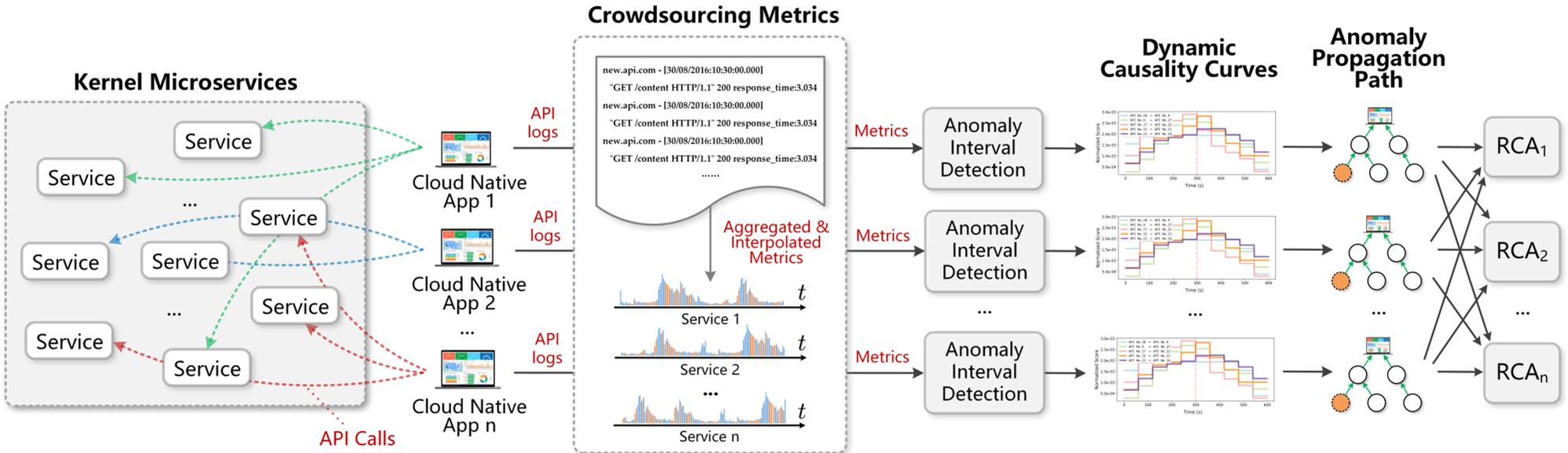 Figure 1: The DyCause Framework, showcasing the flow from crowdsourcing to backtrace analysis.
2. Crowdsourcing Graph Fusing
The breakthrough lies in collaborative intelligence. One application might only interact with a "Security API," while another interacts with a "Database API." By sharing "wisdom" (graphs), DyCause fuses local views into a comprehensive dependency map.
3. Backtrace Root Cause Analysis
Using the fused graph, the system performs a backward Breadth-First Search (BFS). It doesn't just look for high correlation; it looks for the Temporal Order. If Service A's latency peaked before Service B's, A is more likely the cause.
Experimental Results: Faster, Deeper, Easier
The authors tested DyCause on IBM Cloud (a massive production environment) and a simulated testbed.
- Higher Accuracy: Even from the "impoverished" user space, DyCause achieved a RankScore of 97.92%, beating kernel-space giants like CloudRanger (96.33%) and MonitorRank (90.39%).
- Data Sensitivity: Remarkably, DyCause maintains high precision even when metrics are sparse (low sampling rate) or when only a few minutes of data are available.
- Interpretability: The dynamic curves clearly show the "peak shift," allowing engineers to visualize the anomaly as it migrates through the system.
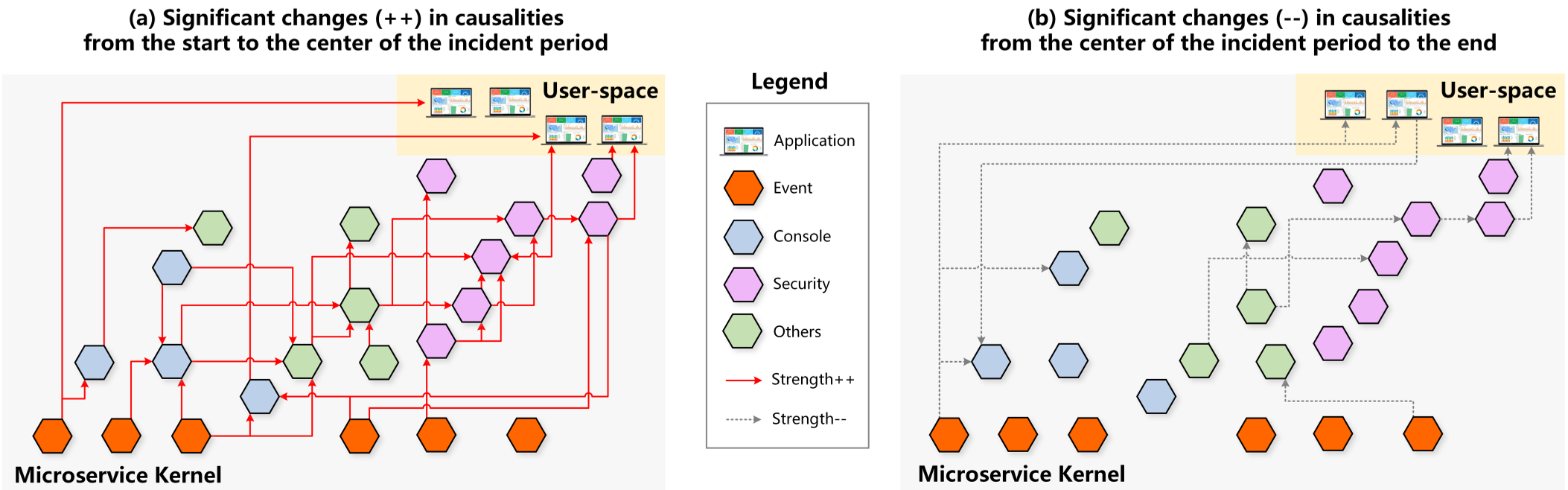 Figure 2: Visualizing the dynamic propagation chain from Event services to the UI.
Critical Insight: Why Dynamic Wins
The most striking evidence in the paper is the "Circuit Breaker" effect. In real-world systems, once a failure is detected, automated systems often disconnect the failing node. A static analysis would miss this transition, but DyCause's dynamic curves capture the weakening of the correlation as the system attempts to self-heal. This provides SREs with a much deeper narrative of the incident than a simple ranked list.
Conclusion & Future Outlook
DyCause demonstrates that we don't always need "god-view" kernel access to solve complex system problems. By treating diagnosis as a distributed sensing task, it opens the door for cross-organizational troubleshooting tools.
Limitations: While powerful, the method currently relies on API latency as a primary indicator. Future iterations could integrate throughput or error-code patterns to handle "gray failures" where latencies remain normal but logic fails.
Senior Editor's Note: This work is a significant milestone in "Black-box" observability. Its ability to outperform white-box methods suggests that the temporal dynamics of a failure are often more informative than the static architecture itself.