
And We Did It Our Way: Crowdsourcing Musicology via Digital Libraries
And We Did It Our Way: A Case for Crowdsourcing in a Digital Library for Musicology
This paper introduces "Popup Videos Respooled," a digital library (DL) project using Greenstone 3 that leverages crowdsourcing and HTML5 Web Audio API to annotate and analyze music videos. It transitions from a gamified "edutainment" tool inspired by VH-1's Pop-Up Video into a scholarly collaborative environment for musicologists.
TL;DR
What started as a nostalgic tribute to the 90s TV show Pop-Up Video has evolved into "Popup Videos Respooled"—a sophisticated digital library framework. By combining the Greenstone 3 toolkit with modern Web Audio APIs, researchers have created an environment where crowdsourced interaction (recording notes, adding trivia) is transformed into valuable, searchable metadata for musicological study.
Background: From Entertainment to Scholarly Insight
In the late 90s, VH-1’s Pop-Up Video revolutionized music consumption by "baking" info-nuggets into videos. However, these annotations were static and non-searchable. David Bainbridge’s work deconstructs this concept, using HTML5 to decouple information from fiber.
The core insight is simple yet profound: If you give users the tools to play along with a video, you are essentially tricking them into performing manual data entry (transcription) for you. This "edutainment" layer acts as a front-end for a robust scholarly back-end.
Methodology: The Architecture of Interaction
The system is built on the Greenstone 3 digital library toolkit, utilizing a browser-based metadata editor for decentralized, collaborative work.
1. The Multi-Layered Interface
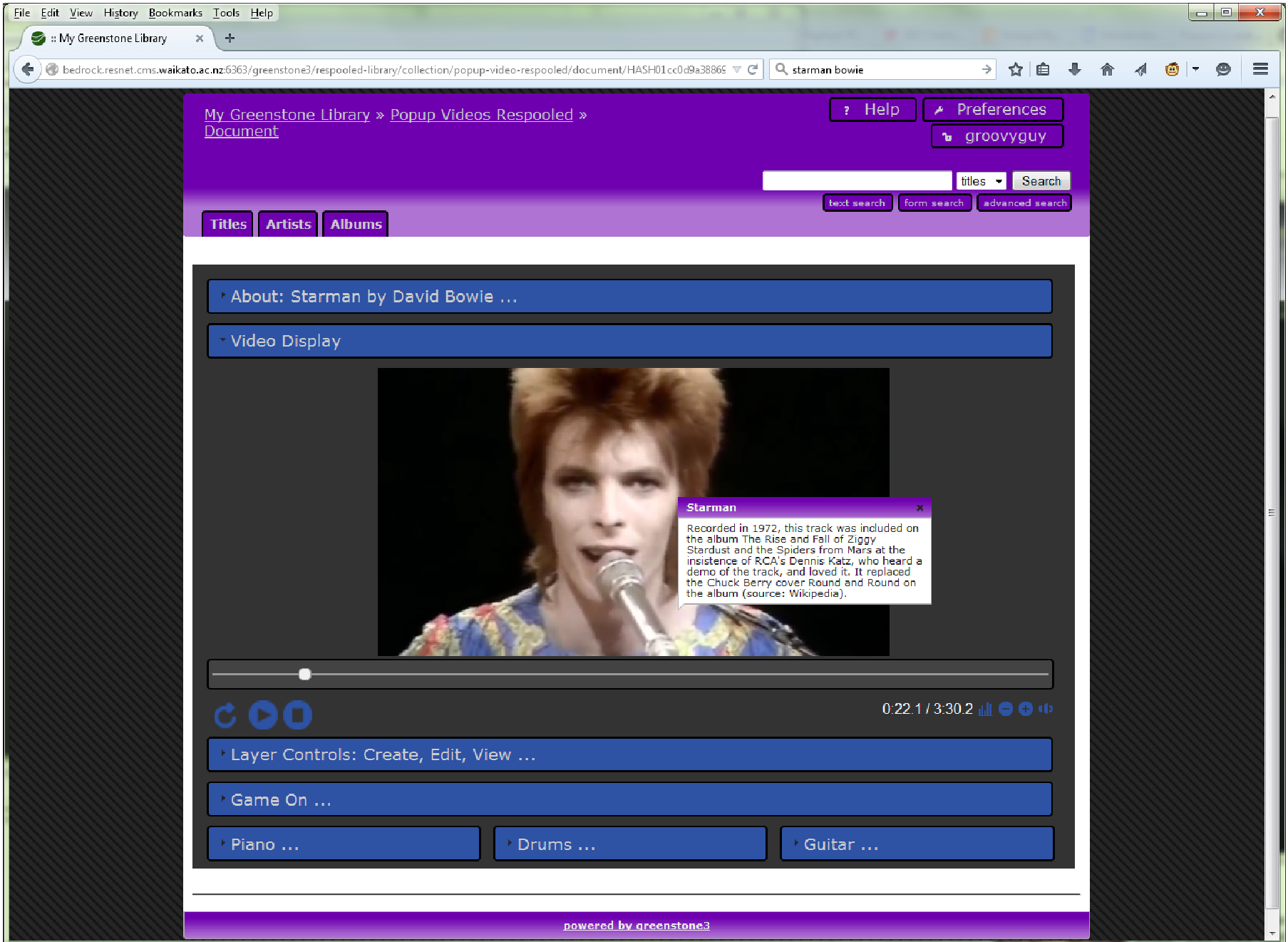
The UI uses "turnstyle bars" (collapsible sections) to manage complexity. Users can toggle between:
- Popup Layers: Contextual trivia or harmonic analysis that pops up in-situ.
- Game On: A scrolling piano-roll visualization reminiscent of Guitar Hero.
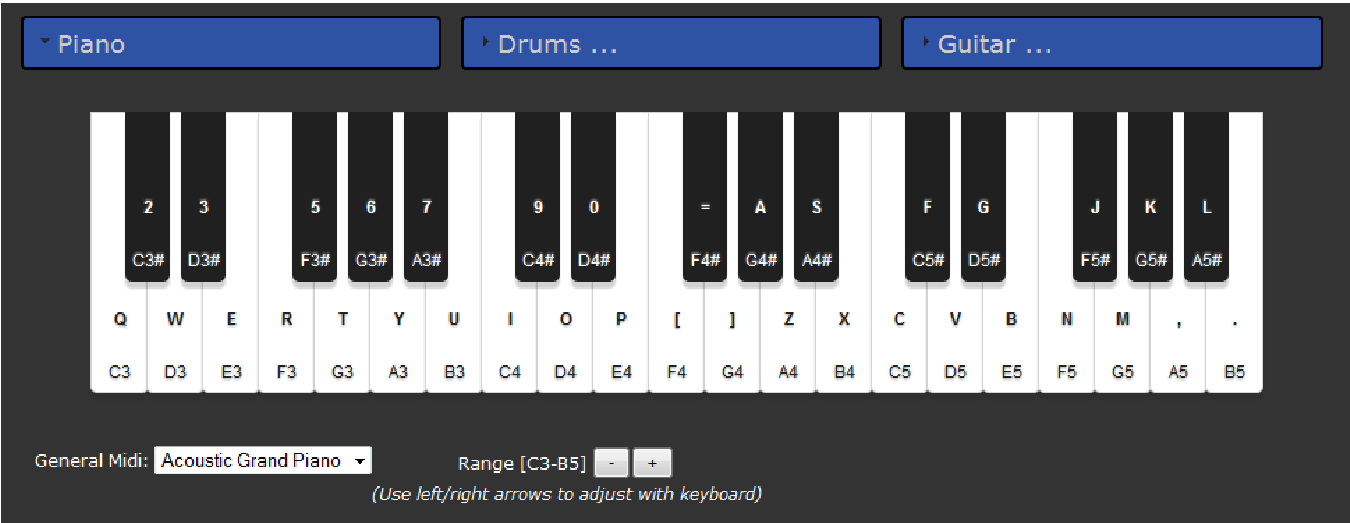
- Virtual Instruments: Web-native piano, drums, and guitar for capturing symbolic note-on/note-off data.
2. Capturing Symbolic Data
By leveraging the Web Audio API, the site allows users to "lay down a track." As a user plays the virtual piano on a touchscreen or keyboard, the system records the pitch and timing. This is the heart of the crowdsourcing model: instead of professional transcribers, the enthusiasts provide the raw data, which scholars can then audit and refine.
Experiments & Results: The Musicology Case Study
To prove the system's scholarly value, the author repurposed the "Game On" feature into a Music Notes Visualizer.
Key Breakthroughs:
- Structural Cloning: Users can record one chorus and "clone" it across the timeline, effectively mapping the song's structure (Intro -> Verse -> Chorus).
- Automated Key Detection: The prototype integrates the Krumhansl-Schmuckler algorithm, which predicts the musical key of a recorded block.
- Linked Data Integration: The system now connects document entries to MusicBrainz IDs, turning a simple video player into a node in the semantic web.

Critical Analysis & Conclusion
The project demonstrates a successful transition from a "frivolous" web app to an academic tool. The Inductive Bias here is that engagement leads to data. If the interface is fun, users will provide the manual labor (transcription) that musicology desperately needs.
Limitations & Future Work
- Participation: The approach's success depends entirely on community engagement; without scholars or enthusiasts, the library remains "vacuous."
- Model Complexity: Currently, crowdsourcing is somewhat "pedestrian." Future iterations could include "Input-Agreement" mechanisms (like the TagATune game) to ensure data validity.
- Next Steps: Implementation of Query-by-Humming (QBH) and microphone support for physical instruments would further bridge the gap between performance and digital archiving.
In the words of Sinatra, they did it "their way"—proving that even the most casual pop culture format can be re-engineered into a rigorous scholarly instrument.