
CrowdTruth: Why Disagreement is More Valuable Than Consensus in Semantic AI
Crowdsourcing Disagreement for Collecting Semantic Annotation
The paper introduces "CrowdTruth," a disagreement-aware crowdsourcing framework for semantic annotation. It rejects the "single ground truth" paradigm, proposing that annotator disagreement is an essential signal for capturing semantic ambiguity in text and tasks.
TL;DR
In the quest for "Ground Truth," we often force annotators to agree, effectively bleaching the nuance out of human language. This paper by Anca Dumitrache proposes a radical shift: embrace the disagreement. By using a framework called CrowdTruth, the research demonstrates that inter-annotator conflict is actually a high-signal feature that identifies linguistic ambiguity and improves the quality of machine learning training data, even when using lay workers instead of expensive experts.
The "Ground Truth" Fallacy
Most AI training starts with a "Gold Standard"—a dataset where experts have reached a consensus. However, this "consensus" is often artificial. In complex fields like medicine, or subjective fields like sentiment analysis, ambiguity is a feature, not a bug.
The author argues that traditional crowdsourcing (relying on majority vote) suffers from four faulty assumptions:
- A single "truth" exists for every sentence.
- Agreement equals quality.
- Disagreement is "noise" or "spam."
- Expert opinion is the only viable baseline.
Methodology: The Triangle of Reference
To capture the value of disagreement, the research employs a methodology based on the Triangle of Reference, linking the input text, the worker, and the resulting annotation.
Instead of forcing a single choice, the system aggregates crowd answers into answer vectors. If ten workers look at a sentence, and seven see a "cause-effect" relation while three see "symptom-of," the vector captures both.
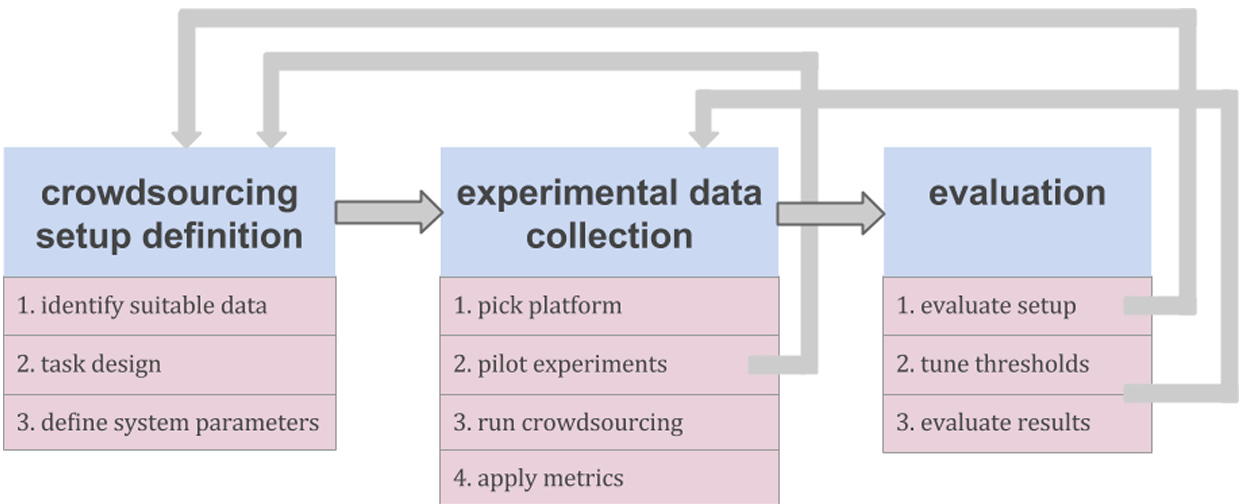
The core innovation lies in the Sentence-Annotation Score. By calculating the cosine similarity between worker vectors, the framework generates:
- Worker Quality Score: Can we distinguish a thoughtful dissenter from a random clicker (spammer)?
- Sentence Ambiguity Score: Is the text itself confusing?
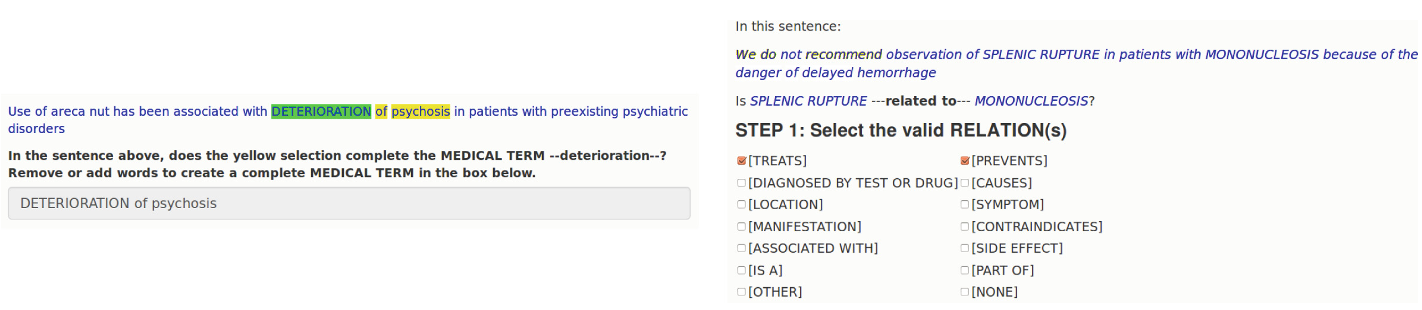
- Annotation Clarity Score: Is the definition of the relationship (e.g., "treats" vs. "prevents") too vague?
Experiments: Lay Crowds vs. Medical Experts
The project focused on Medical Relation Extraction for IBM Watson. In these experiments, lay workers on platforms like Amazon Mechanical Turk and CrowdFlower were asked to identify relations in medical literature.
Key Findings:
- Competitive Performance: When weighted with disagreement metrics, data from lay workers performed just as well as expert-annotated "Gold Standards" in training relation extraction classifiers.
- Scalability: This method allows for the processing of massive datasets (like Wikipedia or Twitter) where hiring doctors to label every line would be financially impossible.
- Ambiguity as Signal: Sentences that caused the most disagreement were objectively more complex, providing a "difficulty" map for the AI models.
Critical Insight: The Future of Semantic Web
The industry takeaway here is profound: Stop trying to eliminate disagreement.
Forcing a majority vote creates "brittle" AI that doesn't understand the grey areas of human communication. By modeling the distribution of human opinion rather than the average of it, we create more robust systems.
Limitations & Future Work
While the medical domain shows promise, the author notes that certain "knowledge-intensive" tasks (like botanical naming) still struggle with purely lay crowds. The next phase involves Nichesourcing—using the same disagreement metrics but within communities of experts through gamified platforms like "Dr. Detective."
Conclusion
This research shifts the perspective of crowdsourcing from a "cleaning" task to a "sensing" task. Disagreement isn't something to be fixed; it's the data we've been missing.