
INVITE: Transforming Students into e-Governance Architects via Crowdsourcing
Case Study: Crowdsourcing for e-Governance
The paper presents "INVITE" (Initiative to Nurture a Vibrant Information Technology Ecosystem), a large-scale crowdsourcing initiative in Gujarat, India, that engaged over 5,000 students to develop e-Governance applications. By leveraging a tri-pillar ecosystem of Government, Industry, and Academia, the project successfully delivered 20+ functional software solutions, with several reaching state-wide deployment.
TL;DR
The INVITE initiative in Gujarat, India, proved that crowdsouring is more than just a buzzword for the private sector—it is a viable strategy for public digital transformation. By mobilizing 5,000+ students to build e-Governance tools as part of their academic credit, the state successfully bridged the gap between student employability and government digitization.
Background: The "Catch-22" of Gujarat’s IT Sector
In the mid-2000s, Gujarat faced a paradox. Despite huge industrial growth, it lagged in IT. Students left the state for jobs elsewhere because they lacked "industry-ready" skills, while local government departments were starved of budget to experiment with digital services. The INVITE project (Initiative to Nurture a Vibrant Information Technology Ecosystem) was designed to break this cycle by making the "crowd" (students) the primary developers of state infrastructure.
The INVITE Methodology: A Tri-Pillar Ecosystem
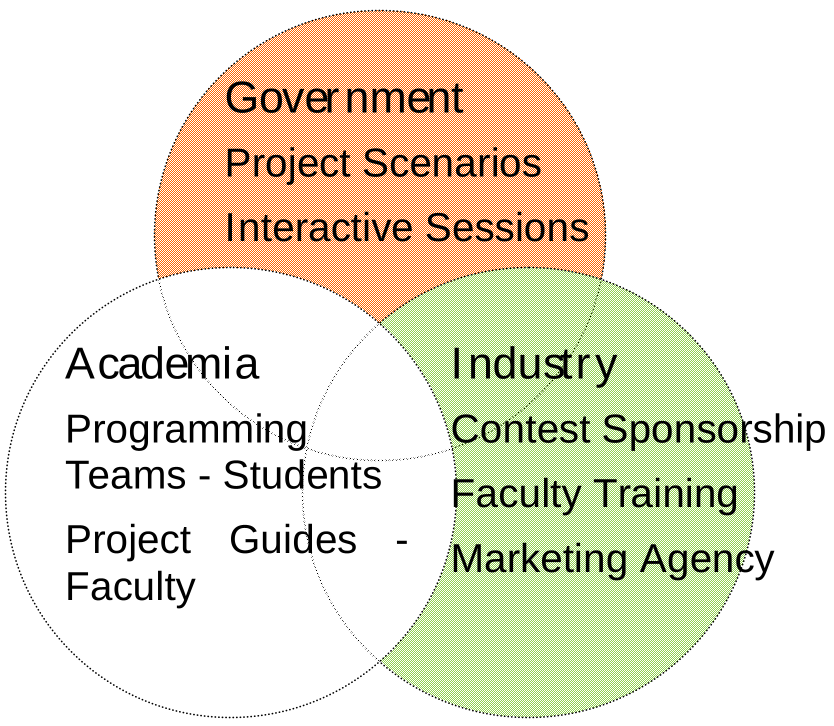
The core success of this initiative relied on a carefully balanced interaction between three entities:
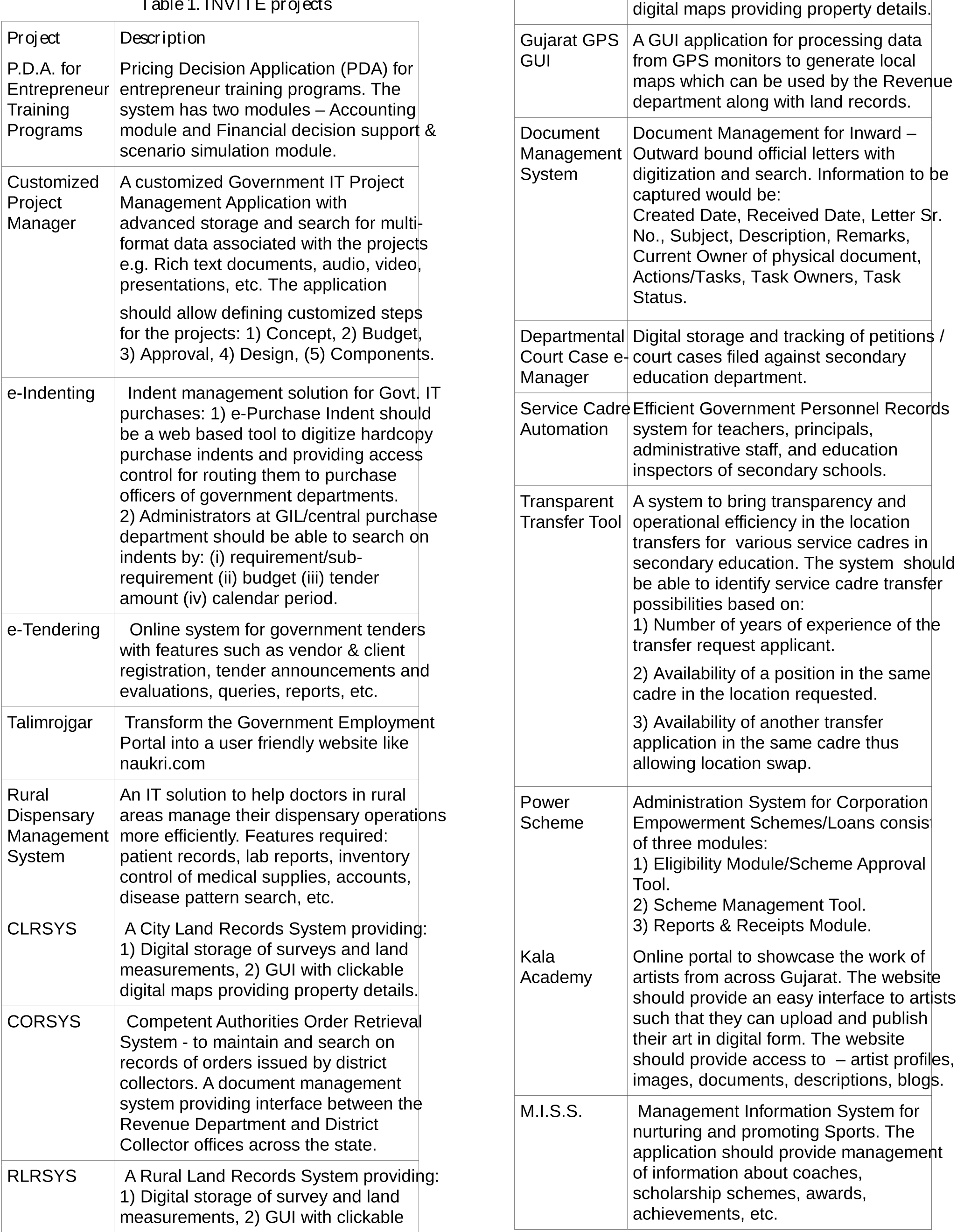
- Government (GIL): Provided 27 real-world scenarios (e.g., land records, rural dispensaries) and "Resource Persons" to clarify manual processes.
- Academia: Integrated the project into the official syllabus. A critical "game changer" was a government circular allowing these projects to count toward final-year course requirements.
- Industry (IBM/Sponsors): Provided technical training for faculty, funding for prizes, and the infrastructure for the competition.
Why it Worked: The Open Source & Curricular Alignment
Two strategic decisions ensured the program's longevity:
- Open Source Mandate: Using Linux, Java, and MySQL ensured the government owned the source code. This avoided "vendor lock-in" and allowed the government to modify the code later without legal hurdles.
- Academic Integration: By aligning the contest with the university semester, the authors ensured high participation (552 teams) without adding "extra" workload for the students.
Key Results & Real-World Impact
The initiative wasn't just an academic exercise; it resulted in production-ready software:
- Deployment: The employment portal "Talimrojgar" and the "Kala Academy" artist portal were fully launched by the state government.
- Democratization of Tech: Winners were not just from top-tier "elite" schools. Teams from rural colleges outperformed many urban counterparts, proving that high-quality software development talent is geographically distributed.
Critical Analysis & Future Outlook
While highly successful, the project noted that complexity has limits. Projects involving heavy legal or financial data (like land records) required more due diligence than a one-semester student project could provide.
Takeaway for Today's Tech Leaders: The INVITE model suggests that "Public-Private-Academic" partnerships can solve the tech talent shortage while modernizing legacy systems. For modern implementations, adding a "Mentorship" layer from senior industry developers could further increase the deployment rate of student-led projects.
Conclusion
INVITE fundamentally shifted the narrative from "outsourcing to vendors" to "crowdsourcing to the community." It remains a landmark case study in how to build a vibrant IT ecosystem with minimal capital investment by treating students as valuable contributors rather than just learners.