
CrowdFit: Can the Crowd Replace Your Personal Trainer?
Crowdsourcing Exercise Plans Aligned with Expert Guidelines and Everyday Constraints
This paper introduces CrowdFit, a crowdsourcing system designed to scaffold the creation of personalized exercise plans by non-expert crowd workers. By integrating expert guidelines (ACSM) and real-time feedback into a planning interface, the system enables crowd workers to produce plans that rival or exceed those of professional personal trainers in actionability and adherence to core exercise principles.
TL;DR
Professional personal training is expensive, but generic exercise apps often lack the "human touch" of personalization. Researchers from the University of Washington developed CrowdFit, a tool that guides ordinary crowd workers to create high-quality, expert-aligned exercise plans. The results are surprising: crowd-generated plans were often more actionable and understandable than those created by certified experts.
Background: The Planning Gap
While national physical activity guidelines (like those from the ACSM) are widely available, less than 23% of the global population meets them. Why? Because generic advice fails to account for everyday constraints—busy schedules, minor injuries, or lack of gym access. Experts bridge this gap by tailoring plans, but their services are a luxury. CrowdFit explores whether we can democratize this expertise by scaffolding it for non-experts.
The Problem: Knowledge vs. Intuition
Previous research shows that while crowd workers are good at empathy and basic tasks, they lack the technical "science" of exercise (e.g., the correct ratio of cardio to strength, or the principle of progressive overload). Unsupported crowd plans often over-prescribe exercise or provide vague instructions that aren't actionable.
Methodology: Embedding Expertise into the UI
CrowdFit doesn't ask crowd workers to be experts; it gives them an interface that acts as an expert consultant.
1. The Scaffolding Workflow
Planners are guided through a tutorial on the five pillars of exercise science: Amount, Progression, Balance, Compatibility, and Pattern.
2. Real-time Feedback Mechanics
As planners drag and drop exercises onto a client’s calendar, the system provides live visualizations:
- Calorie Progress Bar: Ensures the total workload meets national guidelines.
- Balance Chart: A cardio-vs-strength visualizer to prevent lopsided planning.
- Conflict Detection: Matches activities against the client’s existing work/life schedule.
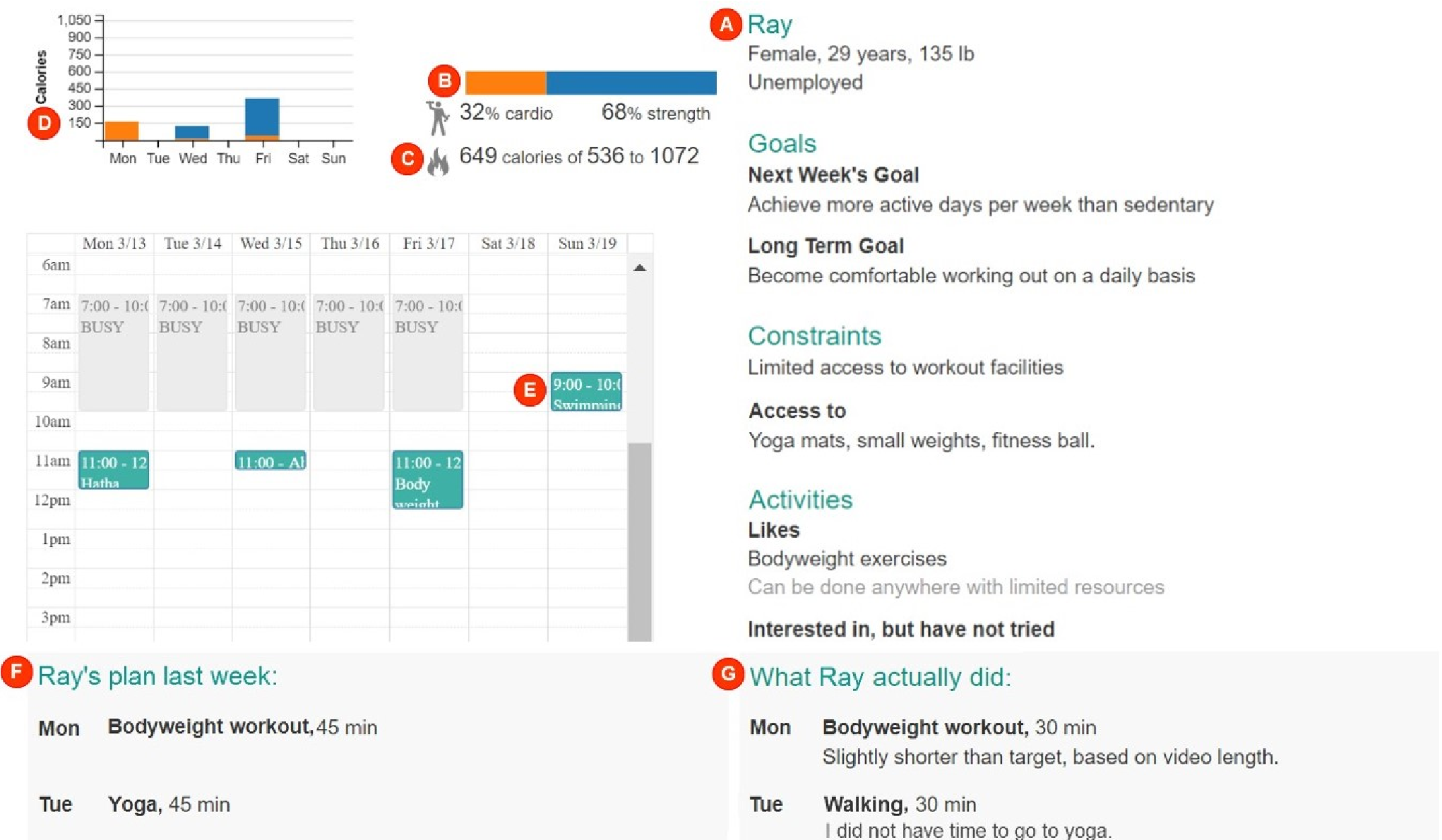 Figure 1: The CrowdFit planner interface featuring real-time feedback on calories, balance, and scheduling.
Experiments & Key Findings
The researchers conducted a field study comparing three groups:
- Baseline Crowd: Workers using Google Docs.
- Expert Planners: Certified personal trainers.
- CrowdFit Planners: Workers using the new system.
The "Understandability" Edge
One of the most striking results was that CrowdFit plans were rated more understandable than expert plans. Experts often used industry jargon (e.g., "clean and jerk," "hypertrophy") that confused novices. Crowd workers used "everyday language" that made the routines feel more accessible.
Bridging the Quality Gap
As shown in the evaluation charts, CrowdFit significantly boosted the performance of non-experts in technical areas like Resistance Training and Specificity.
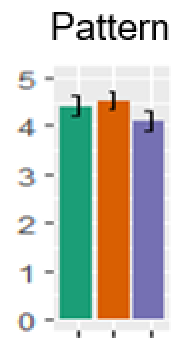 Figure 2: Comparative ratings showing CrowdFit matching or exceeding experts in key actionability metrics.
Deep Insight: Navigating Competing Constraints
The real value of CrowdFit wasn't just in "following rules," but in helping humans navigate conflicting priorities. If a client wants to run a marathon but only has 20 minutes a day, an algorithm might fail. A crowd worker, however, can use the system's feedback to "negotiate" a compromise—satisfying the client’s preference while the UI nudges them to keep the plan safe and balanced.
Conclusion & Future Outlook
CrowdFit demonstrates that Expertise-as-a-Service can be crowdsourced. By embedding scientific heuristics into the design of the tool itself, we can transform low-cost labor into high-value personalized support.
Takeaway for the Future: As we move into the AI era, this research suggests that the most effective "digital coaches" might not be fully autonomous AI, but rather "centaur" systems where human intuition handles personal constraints while the system enforces scientific rigour.
Paper: Crowdsourcing Exercise Plans Aligned with Expert Guidelines and Everyday Constraints (CHI '18)