
Beyond Static Ratings: Fuzzy Information Enrichment via Mobile Crowdsourcing
Crowdsourcing Based Fuzzy Information Enrichment of Tourist Spot Recommender Systems
The paper introduces a "Information Enrichment System" (IES) for Tourist Spot Recommender Systems (TSRS) using location-aware crowdsourcing and fuzzy logic. It dynamically re-ranks tourist attractions by integrating real-time contextual data (e.g., traffic, weather, crowdedness) gathered from users physically present at the locations.
TL;DR
Static recommendations are often "blind" to the present. This paper proposes a system that enriches Tourist Spot Recommender Systems (TSRS) by leveraging location-aware crowdsourcing and fuzzy inference. By asking people currently at a location about the weather, traffic, and crowdedness, the system recalculates proximity-based ranks to reflect real-world conditions, boosting user satisfaction from 6.4 to 7.7.
The "Context Gap" in Recommendation
Most travel apps recommend a "top-rated" museum regardless of whether the street leading to it is currently flooded or if the queue is three hours long. Prior works focused on Personalization (what you like) and Position (where you are), but they lacked Immediacy (what is happening now).
The authors argue that traditional sensors (GPS, thermometers) cannot capture nuanced human observations like "security alerts" or "worth-visiting" status. Their insight? Treat the crowd as a distributed sensor network, but process their subjective (fuzzy) feedback through a rigorous mathematical framework.
Methodology: Crowdsourcing Meets Fuzzy Logic
The architecture consists of a feedback loop between the core recommender and an Information Enrichment System (IES).
1. The Human Sensor Network
When a registered user enters a 300-meter radius of a popular spot, the platform "pushes" a task. Users provide linguistic feedback (e.g., Weather: "Bad," "OK," "Good").
2. Handling Trust and Reliability
Crowdsourced data is noisy. The authors implement a Trustworthiness Metric that balances:
- Promptness: How fast the user responds.
- Reputation: A history-based score rewarded for consensus and penalized for outliers.
3. The Fuzzy Integrator
Since concepts like "heavy traffic" or "high security" have no crisp boundaries, the system uses a Mamdani Fuzzy Inference System.
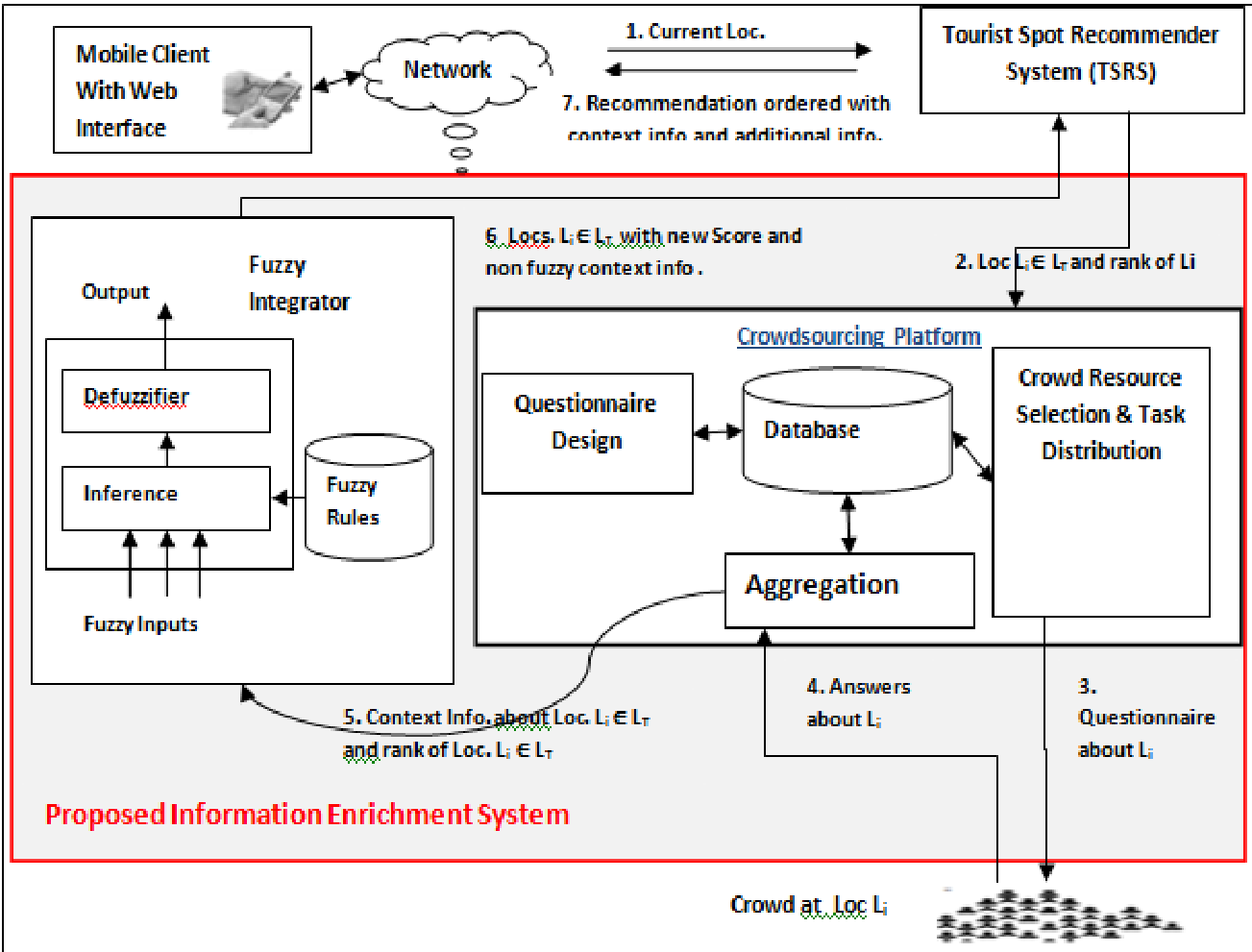 Figure 1: The interaction between the Mobile Client, TSRS, and the IES.
The system processes five fuzzy variables (Weather, Traffic, Security, Crowdedness, and the original Personalized Rank) through 200 "If-Then" rules to produce a single New Rank.
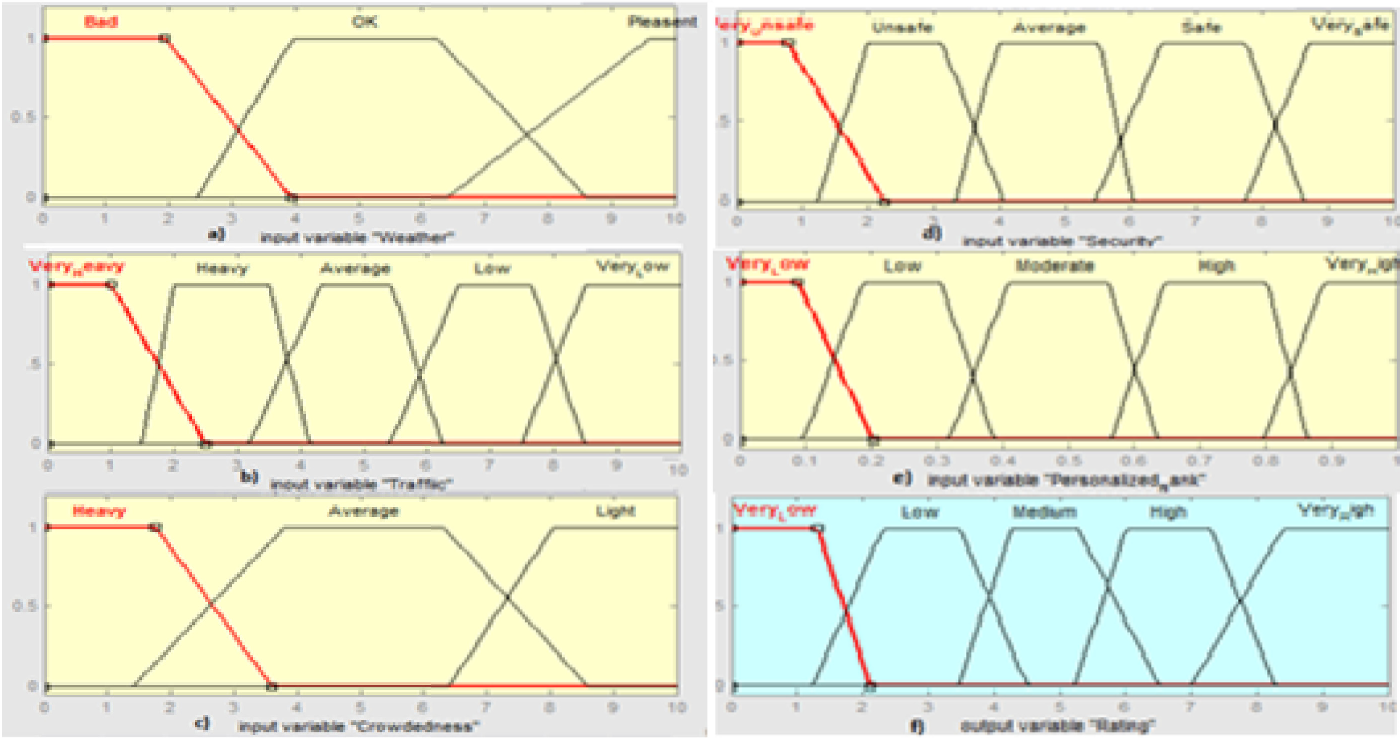 Figure 2: Membership functions mapping crisp inputs to fuzzy sets.
Experiments and Real-World Impact
The study was conducted with 104 volunteers in Delhi over two weeks. The results demonstrated a clear shift in rankings. For example, a "Theme Park" originally ranked #1 based on profile matching was downgraded to #2 because real-time crowd data suggested the "Tughlaqabad Fort" was currently a better experience due to evening weather and lighter crowds.
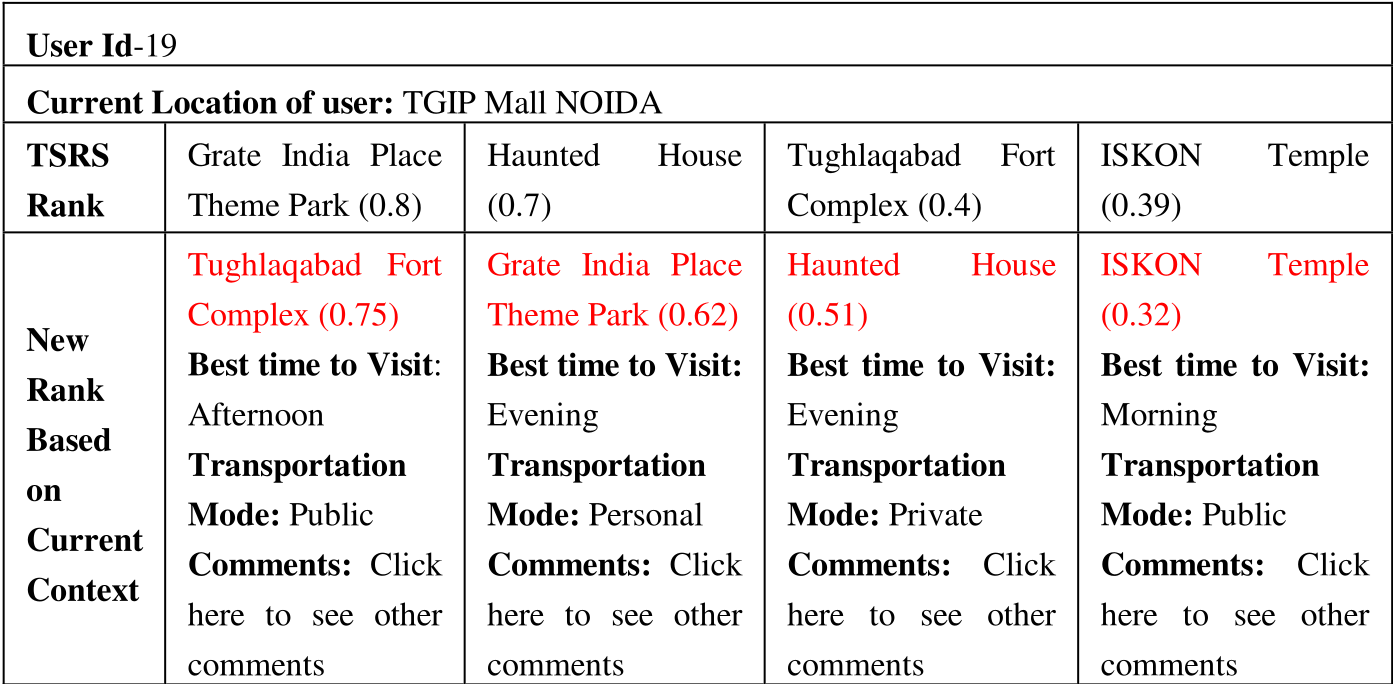 Table 1: Comparison of original TSRS Rank vs. Context-Enriched Rank for User 19.
Key Metrics:
- User Satisfaction: 89% of users found the enriched information useful.
- Accuracy: Maintained at 0.94.
- Latency: Near-zero, thanks to a proactive 15-minute background polling of the crowd.
Critical Insight & Future Outlook
The brilliance of this work lies in its modularity. The IES acts as a "plugin" that can be wrapped around any existing recommender (Collaborative Filtering, Content-Based, etc.).
However, the system faces the classic "Cold Start" problem: if there is no crowd at a spot, there is no information enrichment. Future iterations might solve this by integrating State Space Models (SSMs) to predict context based on historical patterns when live data is unavailable. This paper significantly shifts the focus of LBS from "what is popular" to "what is accessible," a vital distinction for the future of smart cities.
Takeaway
By merging human intelligence (crowdsourcing) with mathematical ambiguity management (fuzzy logic), this system bridges the gap between digital preferences and physical reality.