
Digital Jihad: How Inspire Magazine Weaponized Crowdsourcing and Gamification
Crowdsourcing and gamification techniques in Inspire (AQAP online magazine)
This paper explores how Al-Qaeda in the Arabian Peninsula (AQAP) utilizes crowdsourcing and gamification within its English-language online magazine, Inspire. It presents a customized analytical framework to identify how extremist narratives are transformed into "virtual games" to recruit and train lone-wolf attackers globally.
TL;DR
This research by Edna F. Reid uncovers the chilling efficiency with which Al-Qaeda in the Arabian Peninsula (AQAP) transformed terrorism into a "virtual game." By dissecting Inspire magazine, the study reveals a sophisticated framework of crowdsourcing (outsourcing tasks to the masses) and gamification (using game-design elements) used to recruit and train English-speaking "lone wolves."
The Shift: From Organizations to Platforms
Traditional terrorism relied on hierarchical structures. However, the author argues that AQAP initiated a "paradigm shift." Influenced by strategic thinkers like Abu Musab al-Suri, they realized the Internet could "militarize" the masses. The problem for AQAP was how to get untrained, Western-based individuals to execute attacks. Their solution wasn't just propaganda; it was Social Media Technology.
The insight here is profound: Inspire doesn't just ask for support; it treats the "Global Resistance" as a massive open-call project, much like a DARPA challenge or a crowdsourced business venture.
Methodology: The Core Framework
The paper introduces a taxonomy of crowdsourcing tailored for extremist contexts, moving from broad narratives to specific "kills."
1. The Crowdsourcing Taxonomy
- Macrotasks: Crafting deceptive narratives (e.g., "The West is at war with Islam") and broadcasting "Open Calls" to the crowd.
- Microtasks: Breaking down the "problem" (killing unbelievers) into manageable units, such as "How to make a bomb in the kitchen of your mom."
- Crowddonation: Asking for donations of time, skill, and ultimately, one's life (martyrdom).
2. The Gamification Loop
The author identifies a recurring loop designed to foster "addictive behavior" in recruits.
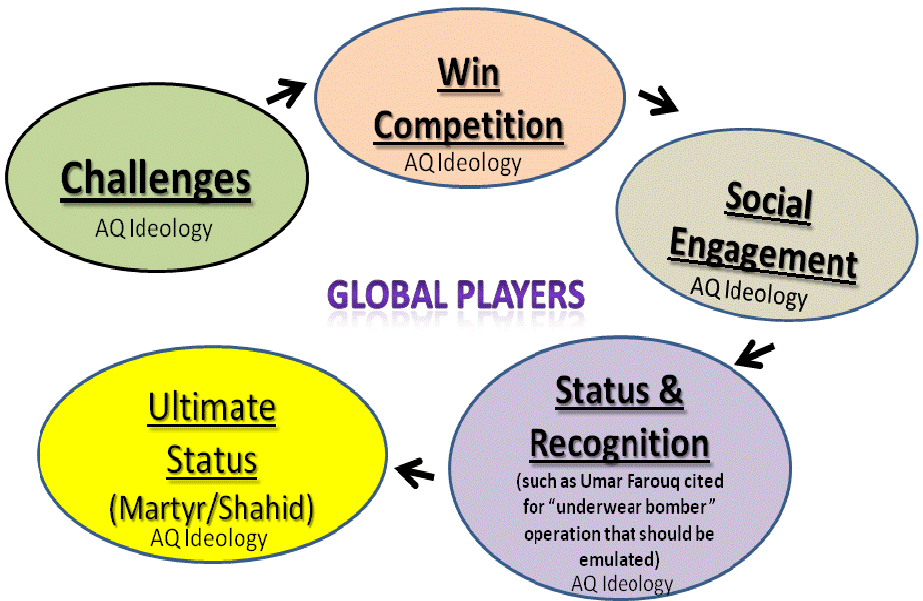
This loop functions by setting Challenges (e.g., "Practice cleaning an AK-47"), defining Win Conditions (e.g., successfully executing a "mowing machine" attack with a truck), and providing Status/Recognition through mentions in the magazine.
Engineering the "Killer" Personality
The paper categorizes participants into four gaming personalities, showing a clear radicalization trajectory:
- The Participant: Responds to the initial call.
- The Socializer: Becomes familiar with the jihadi culture and community.
- The Explorer: Investigates targets and prepares logistics.
- The Killer: Executes the attack to achieve the ultimate "status."
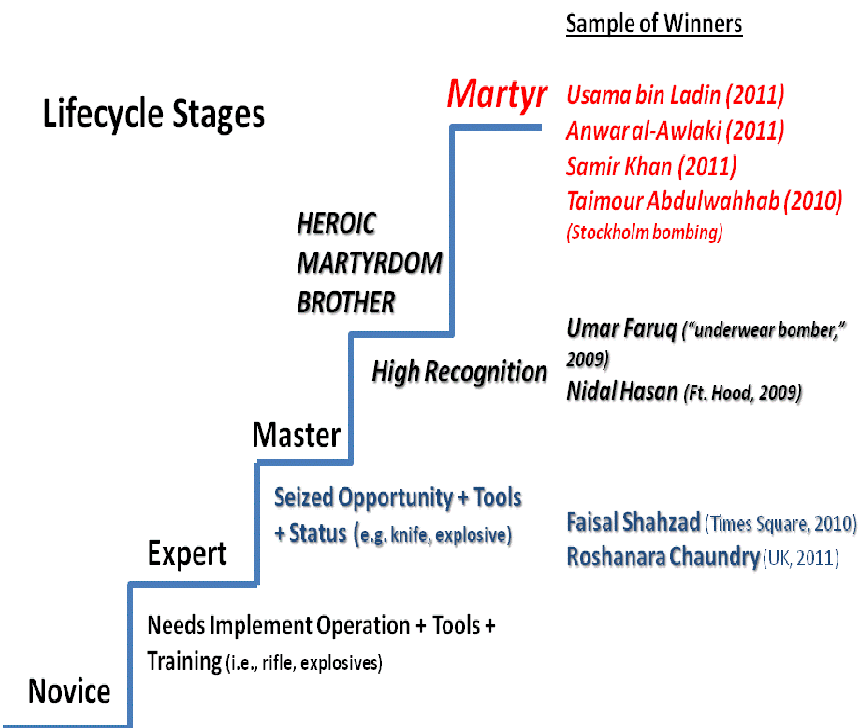
The magazine uses "heroic" figures like the "underwear bomber" as high-score benchmarks for new "players" to emulate.
Quantitative Impact and Experimental Evidence
The effectiveness of this approach is evidenced by the "Open Source Jihad" (OSJ) section. AQAP noted that "Operation Hemorrhage"—the 2010 cargo plane bomb plot—cost only $4,200 to execute but caused massive economic disruption. This demonstrates the ROI (Return on Investment) of crowdsourced, low-tech terrorism over traditional, expensive operations.

Critical Insight & Conclusion
The genius—and the danger—of Inspire resides in its ability to simulate the "thrilling satisfaction" of a game. By reducing the complexity of an attack to a series of "achievements," AQAP effectively lowered the psychological and technical barriers to violence.
Future Outlook: The scientific community must use these frameworks for Red Team exercises. By understanding the game mechanics of radicalization, intelligence agencies can better identify "gaming personalities" in online forums before they transition from "Explorer" to "Killer." The study serves as a stark reminder that in the age of social media, the most dangerous weapon isn't the bomb—it's the platform that makes building one feel like winning a game.