
MERCI: Harnessing Collective Intelligence for Hip Joint MRI Segmentation
A crowdsourcing web platform - hip joint segmentation by non-expert contributors
This paper introduces MERCI (MEdical imaging processoR based on Collective Intelligence), a crowdsourcing web platform designed for the interactive segmentation of hip joint structures from MRI scans by non-expert volunteers. The study demonstrates that aggregated contributions from a "crowd" can match the accuracy of sophisticated semi-automatic algorithms like GrabCut.
TL;DR
Segmenting medical images is traditionally a choice between "fast but inaccurate" (automatic) and "accurate but slow" (expert manual). MERCI breaks this trade-off by proving that a crowd of non-experts, using a simple web interface, can produce hip joint segmentations comparable to high-end semi-automatic tools.
The "Human Intuition" Gap
Despite the rise of AI, computers still struggle with the ambiguity of Magnetic Resonance Imaging (MRI). In conditions like Femoro-Acetabular Impingement (FAI), identifying the exact collision point between the femur and acetabulum is critical for surgery. However, noise and poor contrast in MRI scans often baffle automatic algorithms.
The authors' core insight is that visual recognition is a "Human Computation" task. Just as reCAPTCHA uses humans to digitize books, MERCI uses the collective effort of volunteers to map human anatomy, turning a tedious medical chore into a distributed, solvable problem.
Methodology: The MERCI Platform
The system follows a client-server architecture (HTML5/JS/PHP) allowing users to interact with MRI slices directly in their browsers.
The Workflow:
- Preprocessing: Global contrast enhancement makes the femur easier to identify.
- Interactive Segmentation: Users select vertices to form a polygon. The UI allows "drag-and-drop" refinement.
- Algorithmic Sketching: To guide non-experts, the system provides a "shape sketch" (detected via Hough transform) to help them locate the bone.
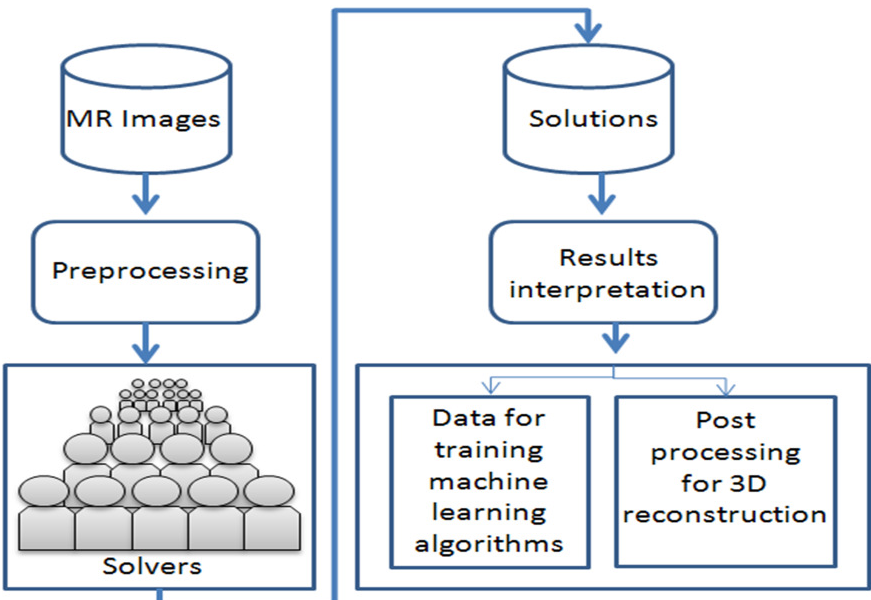 Fig 1: The General Architecture of the MERCI System.
Ensuring Quality from Non-Experts
How do you trust a non-doctor to outline a bone? The authors used a Curve Evolution Strategy. By calculating a significance measure K for each vertex (based on the turn angle and segment lengths ), they could simplify complex polygons while preserving the "visual essence" of the shape.
This formula ensures that sharp corners (high K-value)—which are most critical for human recognition—are kept, while redundant points on straight lines are removed.
Experiments & Results
In a trial with 11 non-expert users, the system successfully filtered out "nonsensical" segmentations (e.g., open paths or extreme outliers) using Euclidean distance checks.
The Crowdsourcing Edge
When compared against a fully automatic algorithm (Back Projection/Morphology) and the sophisticated GrabCut (a semi-automatic tool), the crowd-sourced results were strikingly accurate.
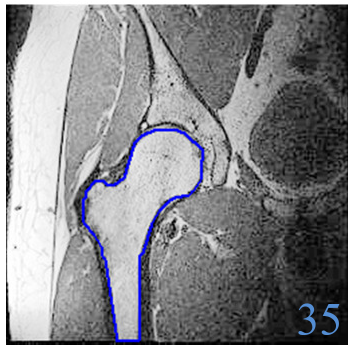 Fig 2: Comparison between (a) Automatic, (b) Collaborative/Crowd, and (c) GrabCut methods.
The study also revealed a fascinating behavioral pattern: 59% of users started their segmentation at the most "significant" vertex (the point with the highest K-value). Humans naturally gravitate toward sharp corners as anchors for visual tasks.
Critical Insight & Future Outlook
The value of MERCI isn't just in the segmentations it produces today, but in the Knowledge Base it builds for tomorrow. This data can be used to:
- Train Deep Learning Models: Providing the "Ground Truth" labels that neural networks crave.
- Optimize UI/UX: By understanding that humans prefer clockwise, bottom-up segmentation starting at sharp corners, developers can build more "natural" medical software.
Limitations: While the femur is a relatively distinct "ball" shape, more complex tissues like the labrum or thin cartilage layers will likely require more rigorous "expert-in-the-loop" verification even within a crowdsourced framework.
Conclusion
MERCI proves that "Collective Intelligence" isn't just for labeling cats on the internet—it has a profound place in medical imaging. By bridging the gap between human intuition and computational scale, we can accelerate surgical planning and improve patient outcomes for hip joint pathologies.