
Crowdsourcing Interactions: A Paradigm Shift in Interactive IR Evaluation
Crowdsourcing interactions: using crowdsourcing for evaluating interactive information retrieval systems
The paper introduces a novel experimental methodology for evaluating Interactive Information Retrieval (IIR) systems by leveraging crowdsourcing platforms (e.g., Amazon Mechanical Turk). It proposes a framework for capturing rich user interaction logs and qualitative feedback, demonstrating that crowdsourced studies can replicate laboratory results at significantly lower costs.
TL;DR
Evaluating how users interact with search engines has traditionally required expensive, small-scale laboratory studies. This paper proves that crowdsourcing can serve as a robust alternative. By embedding search systems into platforms like Amazon Mechanical Turk, researchers can gather 5x the data at 50% of the cost, reaching a more diverse global audience while maintaining the validity of psychological and technical insights.
The "Laboratory" Bottleneck
In the world of Information Retrieval (IR), we often rely on the Cranfield paradigm: a static collection of documents and expert judgments. However, Interactive IR (IIR) is different—it cares about the process: how a user reformulates a query, how long they dwell on a snippet, and their subjective satisfaction.
Until now, the gold standard for IIR was the lab study. But lab studies are:
- Expensive: High hourly rates and facility costs.
- Homogeneous: Often limited to "local university students."
- Small-scale: Usually restricted to dozens of participants, making statistical significance for subtle UI changes hard to reach.
The Methodology: Bringing the Lab to the Crowd
The authors propose a framework to transform a standard crowdsourcing task (HIT) into a fully instrumented search session.
1. The Architecture of Observation
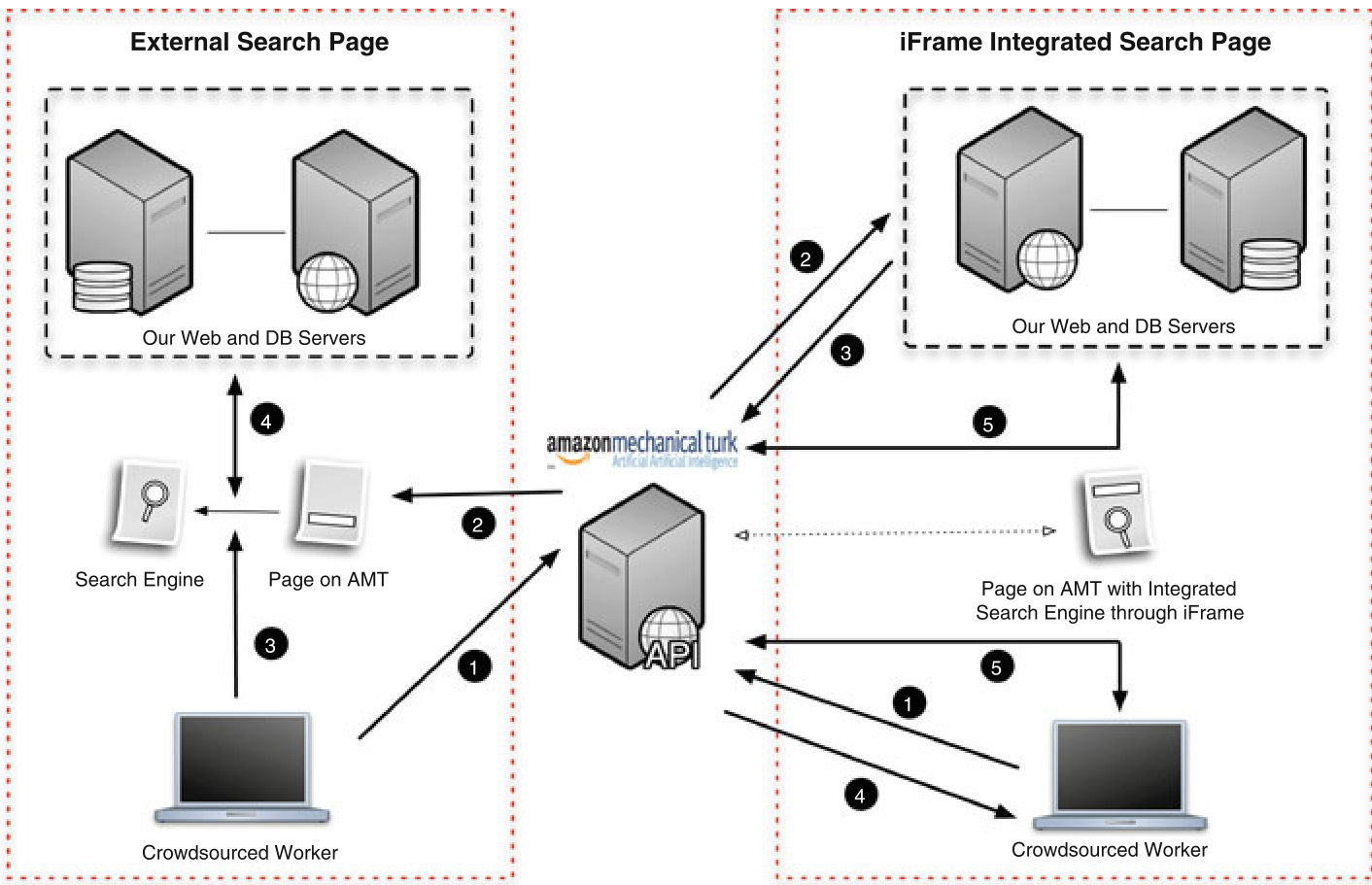
To capture "in the wild" behavior without losing technical precision, the authors recommend using an iFrame-based approach. This allows the researcher's server to host the search engine while it appears seamless within the crowdsourcing platform (see Figure 1). Each "fingerprint" of the user—every click and query—is logged in real-time.
2. Guarding Against "Worker Laziness"
Crowdsourcing introduces the risk of "malicious" or "lazy" workers who optimize for speed over quality. The authors implemented clever Inductive Biases to prevent this:
- Image-Based Questions: Questions were displayed as images so workers couldn't simply copy-paste them into the search box. This forced "cognitive effort" in query formulation.
- Qualification via Psychometrics: Instead of just demographic questions (which are often faked), they used IQ and aptitude tests to categorize the population's reasoning skills.
Case Study: System S1 vs. System S2
The researchers compared a standard search system (S1) against a diversification system (S2) that uses query suggestions to broaden results.
Experimental Evidence
In both the lab and the crowd (at appropriate payment levels), the results converged: System S2 helped users provide more correct answers and was rated as more effective.
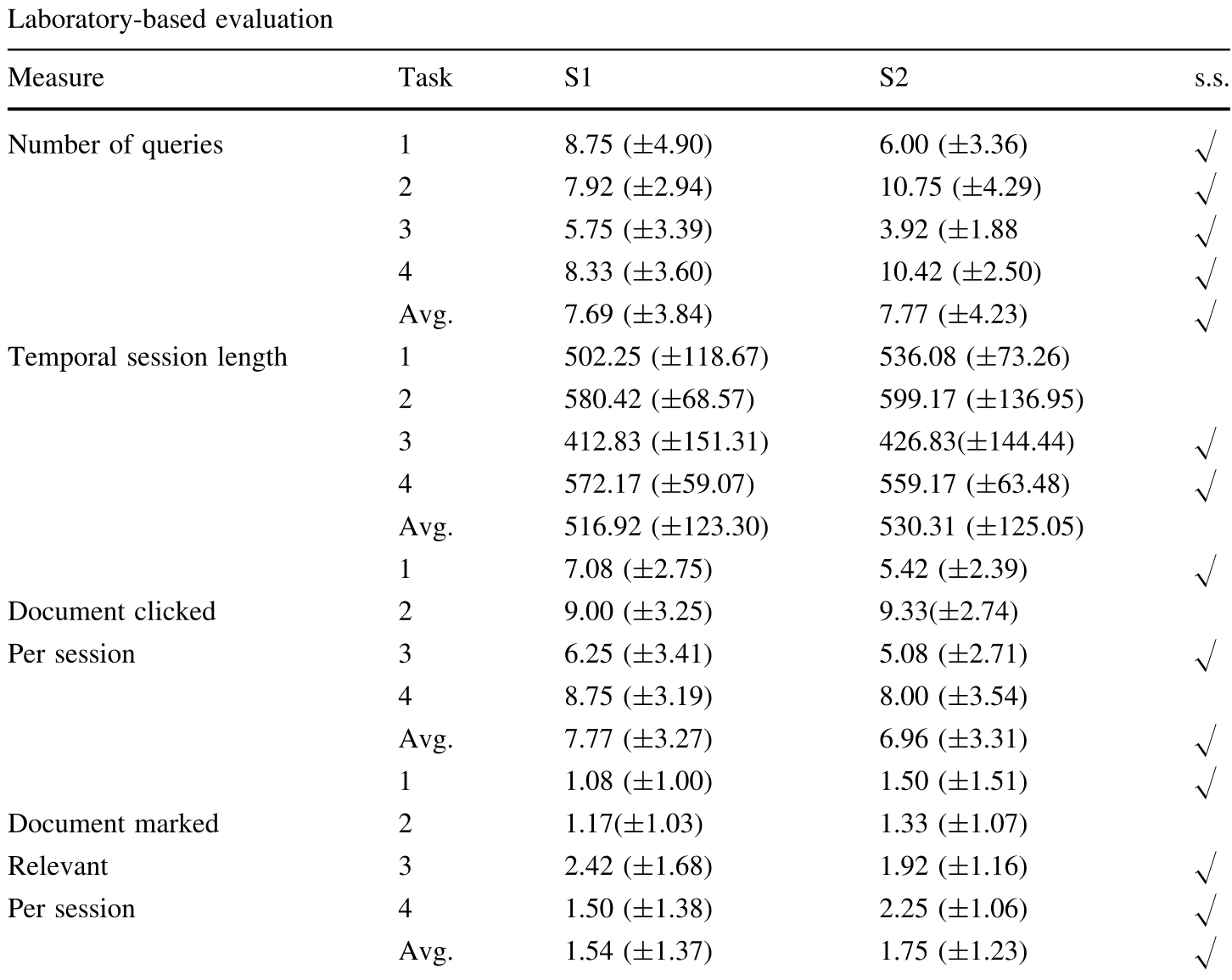
Key Insight from the Data: Crowdsourced workers actually interacted less (fewer queries, shorter time) but were often more efficient at finding correct answers than lab participants, who may have felt "obligated" to stay for the full duration of the session.
The "Price of Truth"
One of the paper's most significant contributions is analyzing how payment levels affect data reliability.
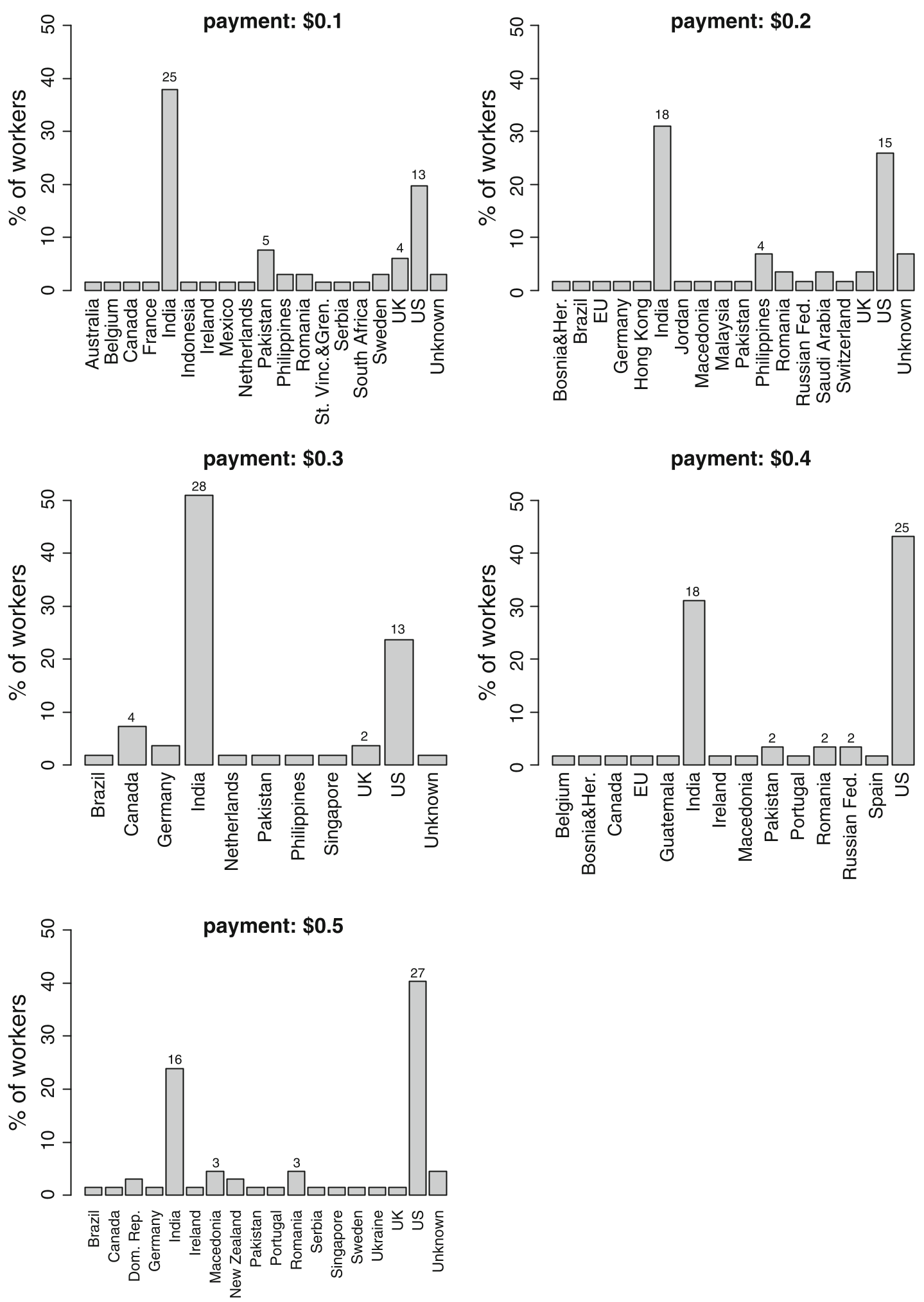
- $0.1 HITs: Attracted lower-quality interactions and results that often conflicted with lab data.
- 0.5 HITs: Resulted in high-quality data, more detailed qualitative feedback, and a demographic shift toward North American and Western European workers (see Figure 2).
Critical Insight & Outlook
This work marks a transition from "Systems-centered IR" to "User-centered Big Data Evaluation." By moving IIR evaluation into the crowd, we can finally test search theories on thousands of users across different cultures and skill levels.
Limitations: The authors acknowledge that researchers still cannot perfectly verify demographics like gender or age due to platform privacy policies.
Future Impact: As we move toward AI-driven search (LLMs), this crowdsourcing framework provides the necessary blueprint for evaluating how humans interact with "Generative Search" at scale, where the "correct answer" is more subjective than a simple link click.