
Virtual Museums 2.0: Empowering the Crowd to Curate History
Crowdsourcing and Knowledge Co-creation in Virtual Museums
The paper introduces a comprehensive framework for crowdsourcing and knowledge co-creation in Virtual Museums (VMs). It leverages the ViMCOX (Virtual Museum and Cultural Object Exchange Format) metadata standard to enable nonprofessionals and specialists to collaboratively build digital 2D/3D exhibits, plan exhibitions, and restore cultural artifacts.
TL;DR
Museums are no longer just places we visit; they are digital ecosystems we help build. This paper presents a robust architecture for Virtual Museums (VMs) that utilizes crowdsourcing to solve the "digitization bottleneck." By using the ViMCOX standard, the authors enable volunteers to capture 3D models via smartphones, curate their own tours, and even assist in the delicate restoration of eroded artifacts.
Background: Beyond the Static Gallery
Virtual Museums (VMs) are crucial for education and preservation, but they face a major hurdle: the high cost of 3D modeling. Traditional curation is a top-down process where experts handle every polygon and metadata entry. This paper argues for a paradigm shift toward co-creation, where the boundary between "curator" and "visitor" is blurred through collaborative technology.
The Pain Point: The Expert Bottleneck
Creating a high-fidelity virtual museum requires:
- Digital Reconstruction: Often manual and time-consuming.
- Semantic Enrichment: Linking metadata (history, artist, material) to 3D objects.
- Sustainability: Maintaining a digital archive that complies with international standards.
Existing systems are often "silos" that don't allow visitors to contribute their own insights or photographs to improve the collection.
Methodology: The ViMCOX Framework
The core of this work is ViMCOX (Virtual Museum and Cultural Object Exchange Format). This is not just a file format; it is a semantic bridge between 3D geometry and cultural history.
1. The Co-Curation Pipeline
The authors break down the crowdsourcing process into three critical stages:
- Co-curating: Volunteers use tools like Mobile Object Catcher to digitize physical objects using smartphones.
- Interactive Exploration: Visitors don't just walk; they zoom, rotate, and even deconstruct models to understand their composition.
- Content Enhancement: Users leave "reflections" and provide additional metadata, correcting historical inaccuracies or providing new perspectives.
2. Digital Shape Restoration
Perhaps the most innovative aspect is using the crowd to fix chipped or eroded 3D shapes. When automated algorithms cannot find the symmetry of a broken statue, a human volunteer can "flag" errors and manually align symmetry planes through a simple web interface.
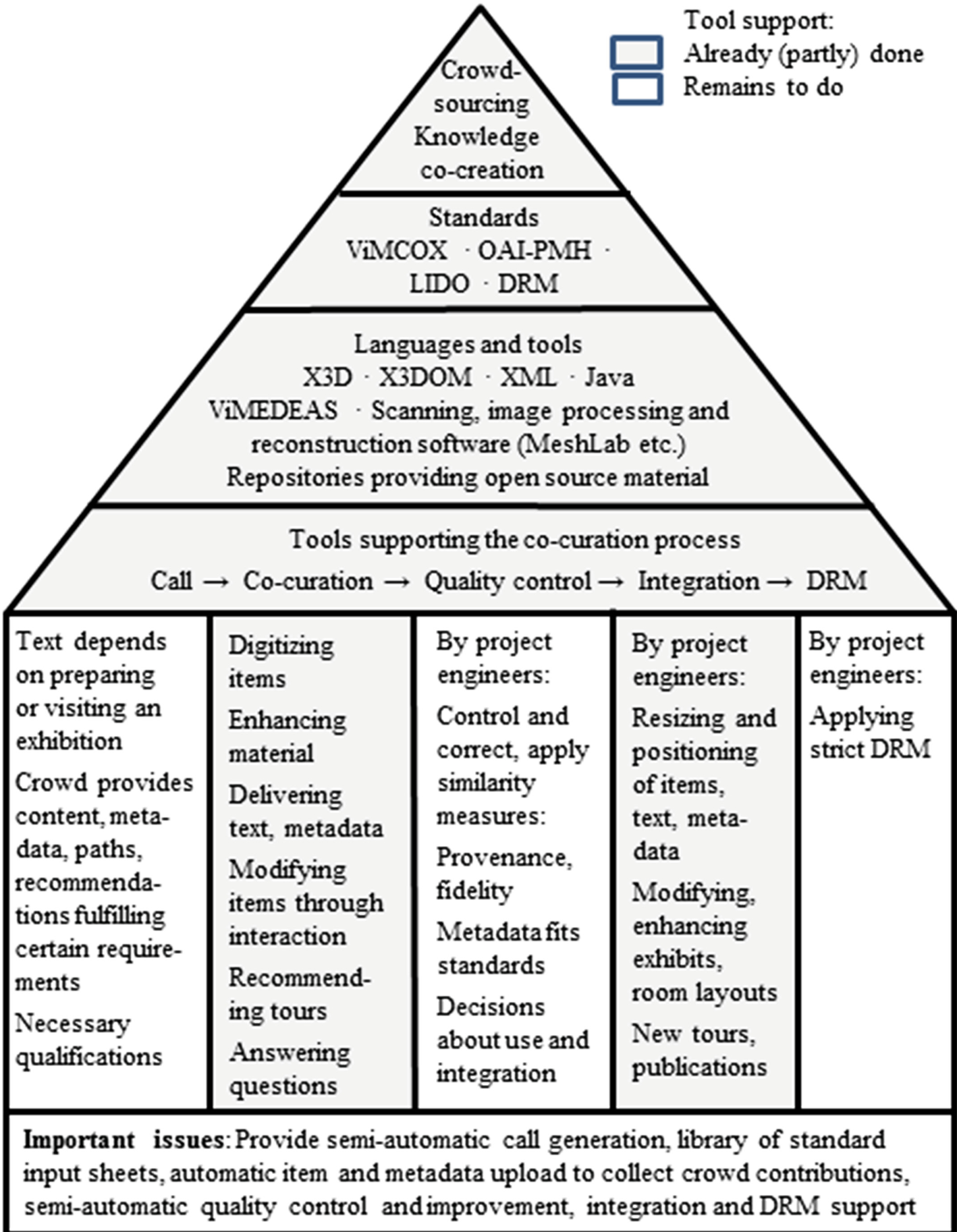 Figure 1: The cyclic process of co-curation, from task definition to crowd contribution and validation.
Experiments: Proving the Concept
The framework was tested in real-world scenarios, most notably the Virtual Leopold Fleischhacker Museum, dedicated to the Jewish sculptor.
- The Power of Volunteers: Over 3 years of human labor were crowdsourced.
- Artifacts Digitized: 29 complex tombstones and hundreds of 2D/3D assets were integrated.
- Technological Flexibility: The project transitioned from heavy X3D plugins to modern X3DOM (WebGL), allowing users to visit the museum on smartphones using simple VR tools like Google Cardboard.
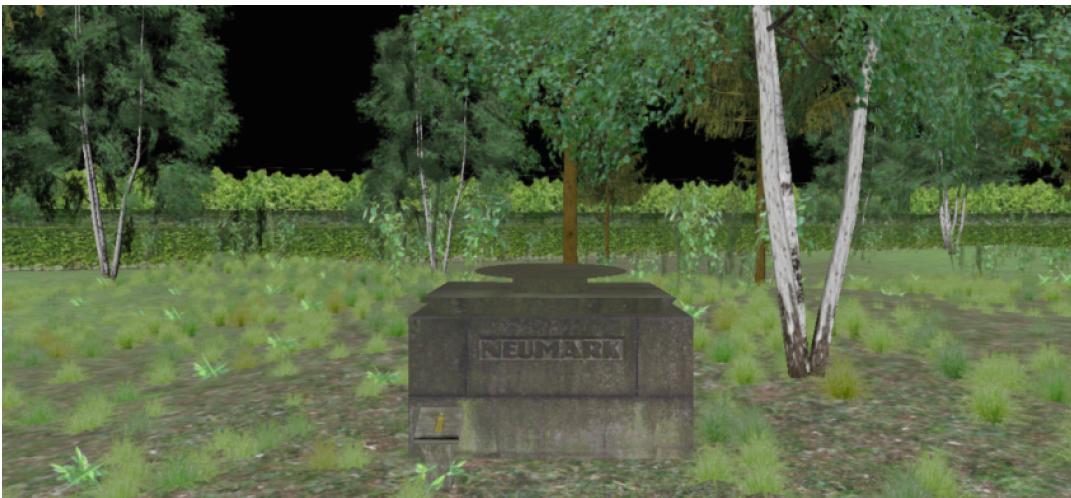 Figure 2: A reconstructed virtual cemetery in the Fleischhacker Museum, created largely by volunteer efforts.
Critical Insight: Why This Matters
The "Secret Sauce" here is Incentivization. The authors suggest that museum staff can encourage participation by providing users with extra features—like personalized electronic catalogs or the ability to publish their own "storytelling" tours on the museum's official platform.
Limitations
- Quality Control: The "crowd" is not always accurate. The paper highlights the need for robust "quality gates" where experts validate crowd-contributed metadata.
- DRM (Digital Rights Management): Copyright remains a thorn in the side of open-access digital heritage.
Conclusion
This paper serves as a blueprint for the future of digital heritage. By standardizing the way we describe 3D exhibitions (ViMCOX) and providing accessible tools for the public, we can move from "observing history" to "actively preserving it."
Future Outlook: The next step is a massive crowdsourcing project to reconstruct the Armenian ecclesiastical heritage, prove that these methods can scale to entire cultural landscapes.