
Collective Intelligence in Education: Building Knowledge Graphs via Crowdsourcing
Construction and Application of Teaching System Based on Crowdsourcing Knowledge Graph
This paper proposes a crowdsourced teaching system that integrates Knowledge Graphs (KG) with human-in-the-loop mechanisms. It introduces two main methods—Crowdsourced Task Distribution and Reverse Captcha Generation—to construct a hierarchical educational KG encompassing schools, teachers, students, and courses, ultimately achieving an 80% user satisfaction rate.
TL;DR
Knowledge Graphs (KG) are the backbone of modern intelligent education, yet keeping them accurate and comprehensive is notoriously difficult. This paper introduces a "crowdsourcing" approach that turns students and teachers into active contributors. By leveraging task distribution and innovative Reverse Captchas, the system builds a dynamic educational network that powers personalized learning recommendations and collaborative teaching.
Problem & Motivation: The Bottleneck of Manual vs. Auto
Building a Knowledge Graph typically follows two paths:
- Automated Construction: Efficient but struggles with "atlas data" that updates rapidly and often fails at nuanced entity disambiguation.
- Manual Annotation: Highly accurate but extremely expensive and fails to capture the "diversity and complexity" of individual human knowledge.
The authors argue that in education, knowledge is inherently social and historical. To capture the mobility and interconnection between data points (as advocated by the "Education Informatization 2.0" initiative), we need the "Wisdom of Crowds."
Methodology: The Crowdsourcing Engine
The core innovation lies in how the authors mobilize users to refine the graph without making it feel like "work."
1. Hybrid Extraction Framework
The system starts with technical extraction using models like TransE, CNN, and LSTM+CRF to identify entities and relations. However, these are treated as "candidates" until verified by the crowd.
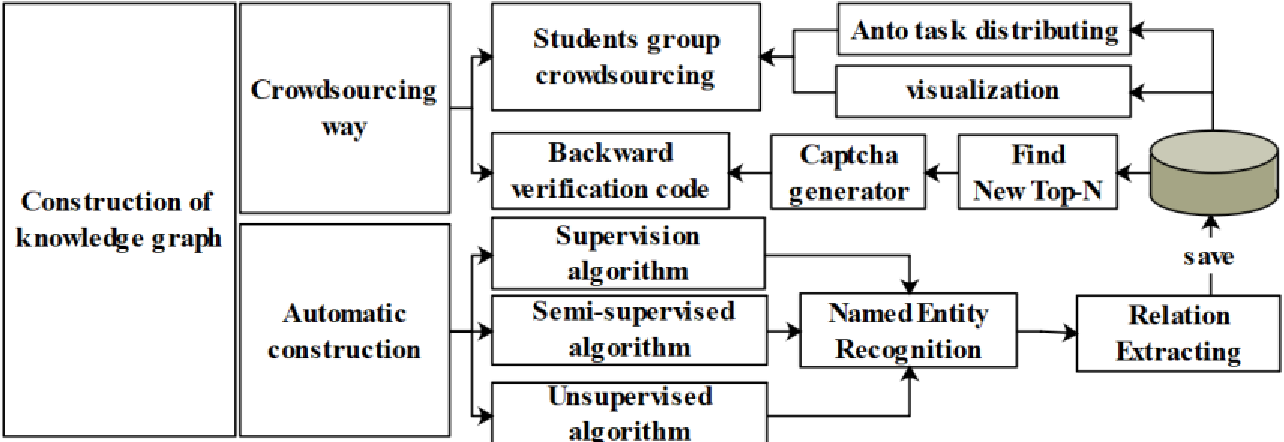
2. Reverse Captcha Generation
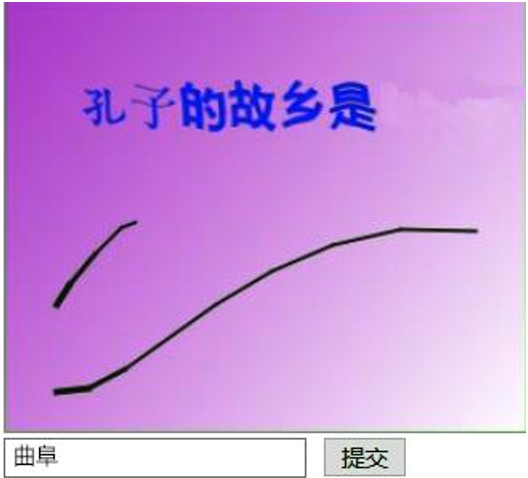
This is the paper's most creative "nudging" mechanism. Instead of identifying blurry traffic lights or typing alphanumeric codes to log in, users are presented with a "Fill-in-the-blank" or "Relationship judgment" question derived from a KG triple.
- Logic: If multiple users provide the same answer at login, the "weight" and credibility of that triple increase in the database.
3. Ambiguity Resolution (Relaxation Strategy)
Crowdsourcing often leads to conflicting data. The authors propose a threshold-based relaxation strategy:
- If a specific disagreement surpasses a 35% threshold, the system treats it as a "multi-answer task" (preserving both views), effectively capturing the subjective nature of human knowledge.
Experiments & Results: Beyond Simple Nodes
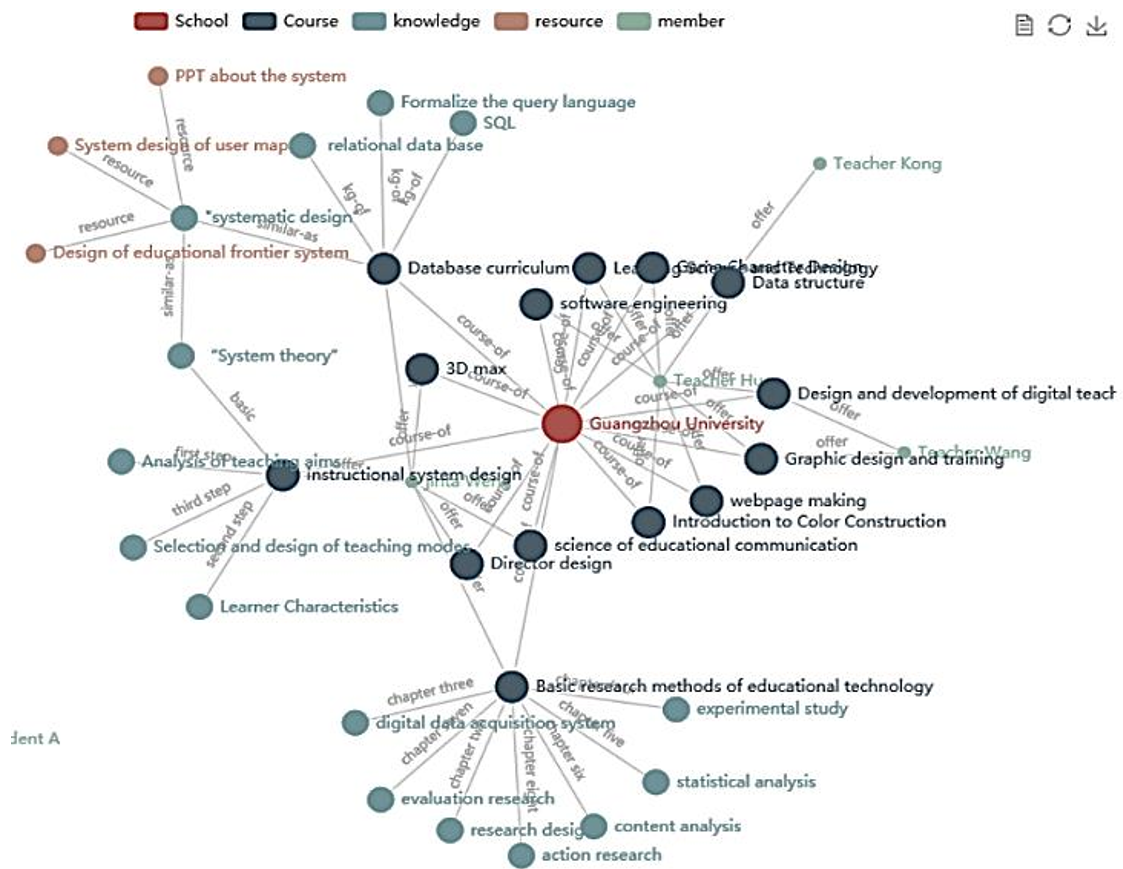
Using "Educational Technology" as a domain, the authors constructed a graph visualized via Echarts 3.0.
- Teacher Analytics: By extracting subgraphs, the system can visualize teacher cooperation networks and ability types based on the courses they offer.
- Adaptive Learning: The system generates "learning routes" by calculating the distance between knowledge points.
- Recommendation Algorithm: A specific formula calculates the Learning Situation (LS) by weighing the resource completion rate (R) against the error rate (E):
Critical Analysis & Conclusion
The evaluation (Scale of 1-5) showed a strong average score of 3.94, indicating high satisfaction among the 20 test subjects.
Takeaway: The "Reverse Captcha" and task-rotation models solve the cold-start problem of domain KGs effectively.
Limitations: The paper honestly notes that students often lack an inherent interest in "knowledge structures," focusing instead on content. To scale this, future work must focus more on User Mobilization and ensuring that "teacher guidance" doesn't become a new bottleneck in the system.
This research marks a significant step toward "Big Source" education, where knowledge is not a static textbook but a living, breathing network built by those who use it most.