
Designing for the Wild: How to Motivate the Crowds for Ecological Monitoring
Crowdsourcing Large-Scale Ecological Monitoring: Identifying Design Principles to Motivate Contributors
This conceptual paper proposes a framework of design principles for mobile crowdsourcing systems in large-scale ecological monitoring. It integrates research from crowdsourcing and Human-Computer Interaction (HCI) to enhance participants' intrinsic motivation through "motivational affordances" rooted in Self-Determination Theory.
TL;DR
To combat the resource limitations of large-scale environmental tracking, we need the "crowd." This paper identifies that the secret to successful citizen science isn't money, but intrinsic motivation. By designing mobile apps that support Autonomy, Competence, and Relatedness, organizations can transform one-time contributors into long-term ecological stewards.
Background: The Scalability Crisis in Conservation
Monitoring shifts in biodiversity and pollutants over vast geographies is prohibitively expensive. While mobile technology allows anyone with a smartphone to become a data sensor, the "participation cliff"—where users drop off after the first contribution—threatens the reliability of these datasets. The authors argue that we must move from simple "outsourcing" to high-engagement "crowdsourcing" by understanding the psychology of the contributor.
Problem & Motivation: Beyond "Pointsification"
Many current systems rely on "extrinsic" rewards like badges or small payments. However, research shows that in creative or scientific tasks, these can actually decrease long-term interest. The challenge lies in sustained participation. Why do people contribute to Wikipedia for years without pay? Because it satisfies deeper psychological needs. The authors seek to port these "motivational affordances" into the realm of ecological monitoring.
Methodology: The Motivational Affordance Framework
The paper proposes a framework based on Self-Determination Theory (SDT), identifying three pillars that must be supported by the mobile app's architecture:
1. Autonomy and the Self
The system should allow users to choose when and where they contribute. Mobile phones facilitate "Kairos"—the perfect moment to act (e.g., spotting a rare bird while on a hike).
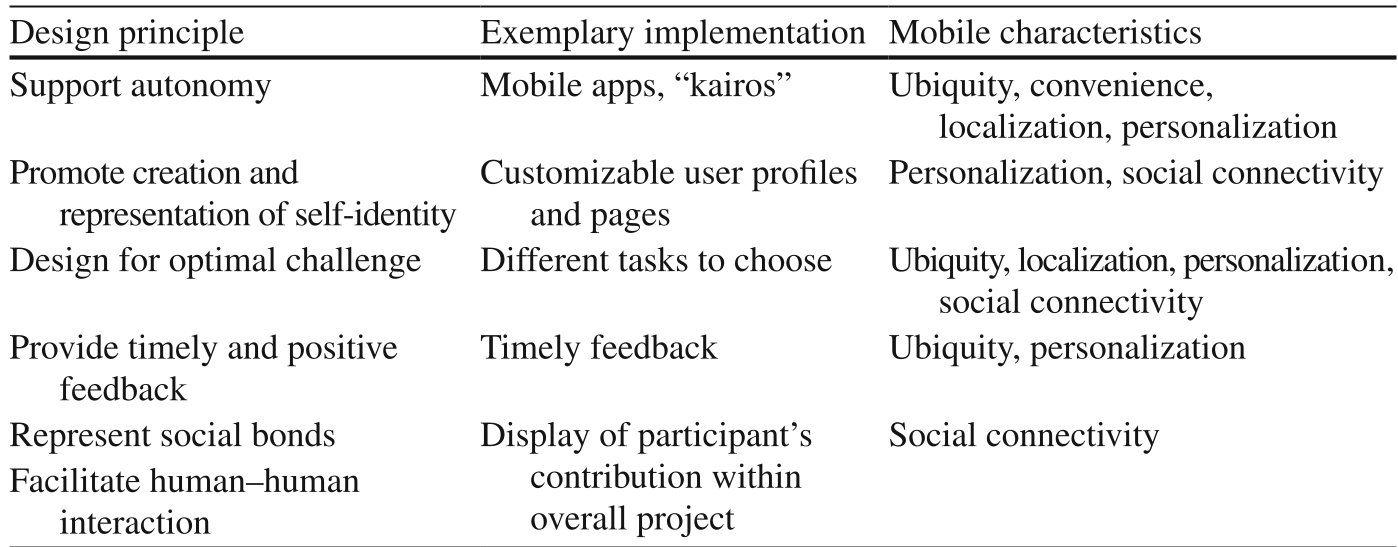
- Design Principle: Support autonomy through flexible task selection and promote self-identity via customizable profiles that showcase an individual's expertise.
2. Competence and Achievement
Borrowing from Flow Theory, the authors suggest that tasks should stay in the "Goldilocks zone": neither too boring nor too difficult.
- Design Principle: Design for "Optimal Challenge." Use localization to offer specific missions (e.g., "Project Noah") and provide "Timely and Positive Feedback" to confirm the value of the user's data.
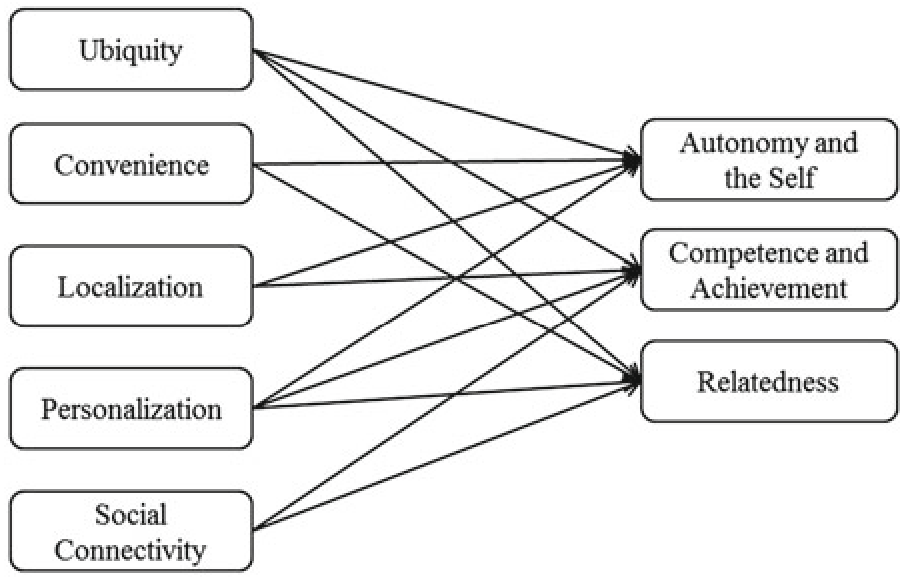
3. Relatedness
Humans are social animals. Monitoring is a solitary act, but it should feel like a collective mission.
- Design Principle: Facilitate human-to-human interaction through comments and forums. Represent social bonds by showing how a single user's photo contributes to a global map or a major research finding.
Experiments & Insights: Mapping Principles to Mobile Features
The authors synthesize their findings into a strategic table, showing exactly how mobile-unique traits (Ubiquity, Localization, Personalization) enable these psychological affordances:
Key Insight: Intrinsic motivations like "self-worth" and "enjoyment in helping" are significantly more powerful than reputation or money in the context of crowdsourcing platforms like Amazon Mechanical Turk and Taskcn.com.
Critical Analysis & Conclusion
While the paper provides a robust conceptual roadmap, it opens the door for critical future questions:
- Data Quality: Does higher intrinsic motivation lead to more accurate data? The authors hypothesize "yes," but empirical validation is needed.
- The Gamification Trap: Designers must be careful not to fall into "pointsification"—meaningless rewards (stars/badges) eventually lose their luster. The reward must be meaningful, such as getting an expert to help identify a species in the user's photo.
Takeaway for Tech Leaders: If you are building a platform for the "public good," don't lead with rewards. Lead with identity, community, and challenge. The goal is not just to collect data, but to build a movement.