
Unmasking the Digital Footprint: The Crowdsourced Vulnerabilities of Sina Weibo
Crowdsourcing Leakage of Personally Identifiable Information via Sina Microblog
This paper presents a large-scale empirical study on "Crowdsourcing Privacy Leakage" (CPL) within Sina Weibo, China's prominent microblogging platform. By analyzing a dataset of 20 million nodes, the authors quantify the inadvertent disclosure of personally identifiable information (PII) including emails, locations, and social IDs.
TL;DR
Researchers analyzed a massive dataset of 20 million Sina Weibo users to quantify how "trivial" personal information—like your gender, birthday, or even account creation time—leaks into the public domain. The study introduces a Crowdsourcing Privacy Leakage (CPL) model to prove that these disparate data points can be aggregated to reconstruct identities, facilitating identity theft and spam campaigns.
The "Triviality" Trap: Why This Matters
In the post-Snowden era, cybercrime has evolved. We often guard our passwords but ignore our "data exhaust." The core motivation of this study is the Inadvertent Disclosure Paradox: users share significant personal information because individual items seem harmless. However, when 20 million nodes are analyzed, these trivialities become a potent weapon for malicious third parties to group, mix, and exploit.
Methodology: The CPL Vector Model
The authors define Crowdsourcing Privacy Leakage (CPL) as an M-dimensional vector:
CPL := {k1/n1, k2/n2, ..., km/nm}
- ki/ni: Represents the density of a specific privacy item (e.g., email) within a node group.
By segmenting 6 million profiles into 600 groups, the research tracks how different types of information "vibrate" across the platform.
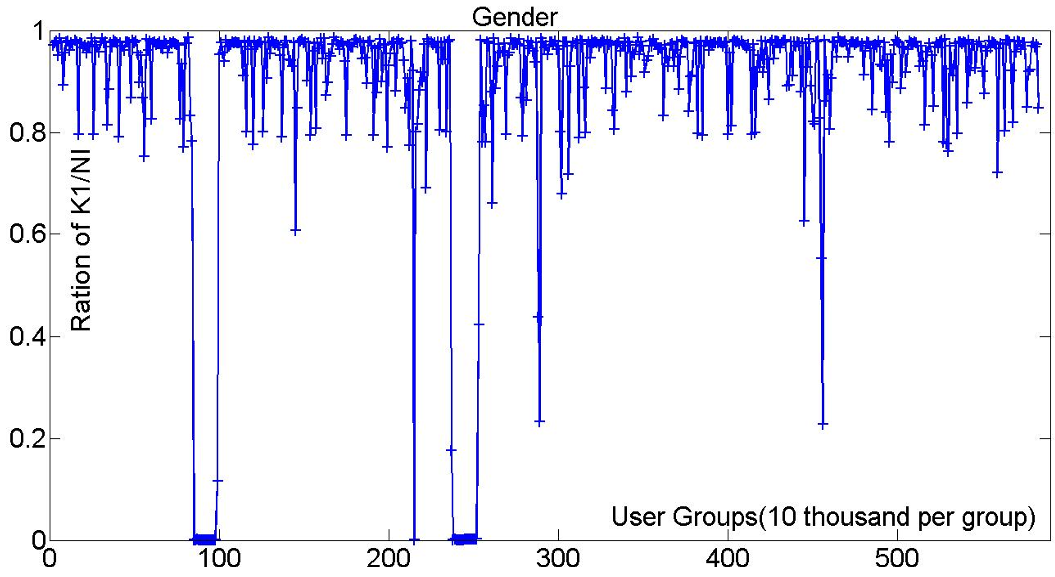 Figure 1: Gender information density across node groups, showing an average leakage rate of 94%.
Key Findings: The Anatomy of a Leak
The study highlights several counter-intuitive patterns in how Chinese microblog users disclose information:
- High-Density Baselines: Gender and Address information are nearly ubiquitous, with average disclosure rates of 94% and 93% respectively. This provides a geographical and demographic foundation for any attacker.
- The "Correlation" Insight: As shown in the study's comparison of gender and self-description, fluctuations in disclosure often mirror each other, suggesting that certain user clusters are categorically more "transparent" than others.
- Anomalous Bursts: While private identifiers like QQ numbers and Emails have low average disclosure (0.87% and 0.13%), the research found specific groups where these rates spiked to 70-80%.
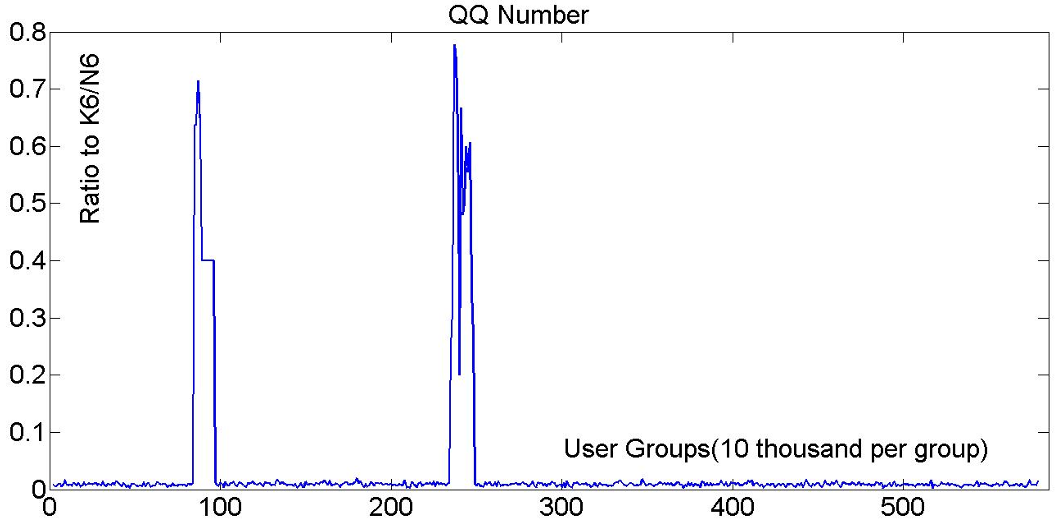 Figure 2: The sharp "bulges" in sensitive social ID leakage indicate concentrated risks for specific user segments.
Critical Analysis & Conclusion
Takeaway
The research confirms that "anonymity" in social networks is a fragile illusion. The cumulative effect of sharing your education, career, and birthday is a unique identifier that bypasses traditional privacy settings.
Limitations
While the quantitative analysis is robust, the study primarily focuses on profile metadata. The true "gold mine" for attackers—and the subject of the authors' future work—lies in semantic leakage: the political beliefs, moods, and relationships hidden within the actual content of tweets (the "textual exhaust").
Future Outlook
As AI and Large Language Models (LLMs) advance, the ability to correlate these "trivial" leakage points will only become faster and more accurate. This paper serves as a foundational warning: protect your metadata as fiercely as your content.
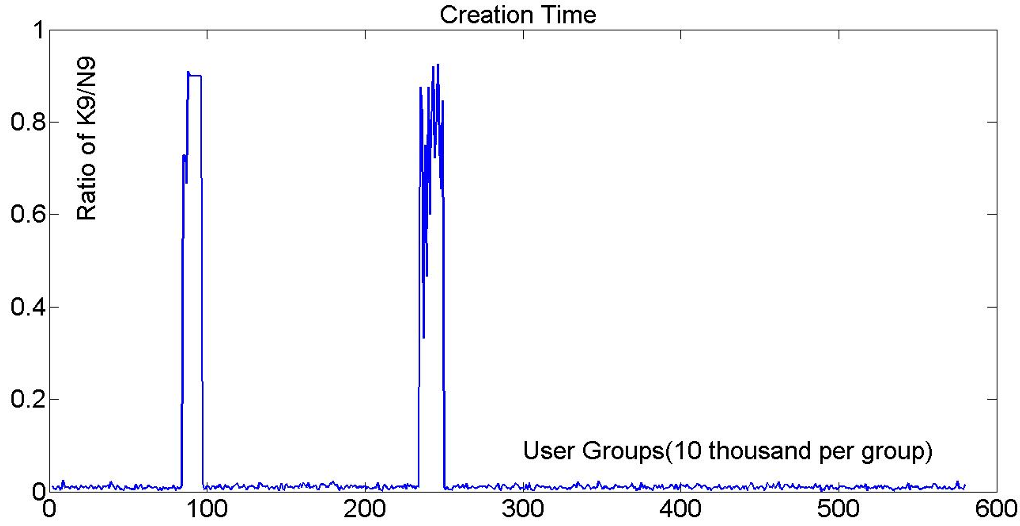 Figure 3: Even account creation time shows structured patterns of disclosure that can help in user profiling.