
Beyond Opinions: Empowering the Crowd with Real-Time Urban Analytics
Crowdsourcing with online quantitative design analysis
The paper introduces a cloud-based urban design system that integrates 3D crowdsourcing with real-time quantitative analysis. By coupling the Unity3D engine with the Hiersynth/Concinnity workflow platforms, it allows non-experts to explore design variants and receive immediate feedback on sustainability KPIs.
TL;DR
This research bridges the gap between expert-led urban optimization and public participation. By deploying a cloud-based 3D environment, the authors allow citizens and stakeholders to adjust urban "levers"—such as solar strategies or parking mandates—and receive immediate feedback on 8 Key Performance Indicators (KPIs), turning urban design into a collaborative, data-driven exploration.
Background Positioning
In the landscape of "Smart Cities," most crowdsourcing tools are glorified suggestion boxes. This paper marks a shift toward Evidence-Based Participatory Design. It moves beyond visual aesthetics to include hard metrics (Carbon, Energy, Capex), positioning itself as a technical framework for distributed multi-disciplinary optimization.
The Problem: The "Black Box" of Design Performance
Urban master planning is a balancing act of competing concerns. Currently, a design team might analyze only 2 or 3 variants due to the complexity of the math involved. When the public is involved, they are usually shown a "finished" vision. They cannot see why a certain building shape was chosen or how adding a park impacts the city's district heating efficiency. This lack of transparency leads to friction and sub-optimal urban environments.
Methodology: The Cloud-Powered Architecture
The core innovation is the coupling of a high-performance gaming engine (Unity3D) with a heavy-duty analytical backend (Concinnity/Hiersynth).
Architecture Breakdown
- The Frontend: A WebGL-based 3D interface where users "toggle" 49 different sustainability strategies.
- The Middleware (REST API): Validates user scenarios and manages a job queue for intensive calculations.
- The Backend (Cloud Workers): Executes Integrated Resource Management (IRM) models. These aren't just simple formulas; they are coupled discipline models where a change in water fixtures affects energy consumption (pumping costs).
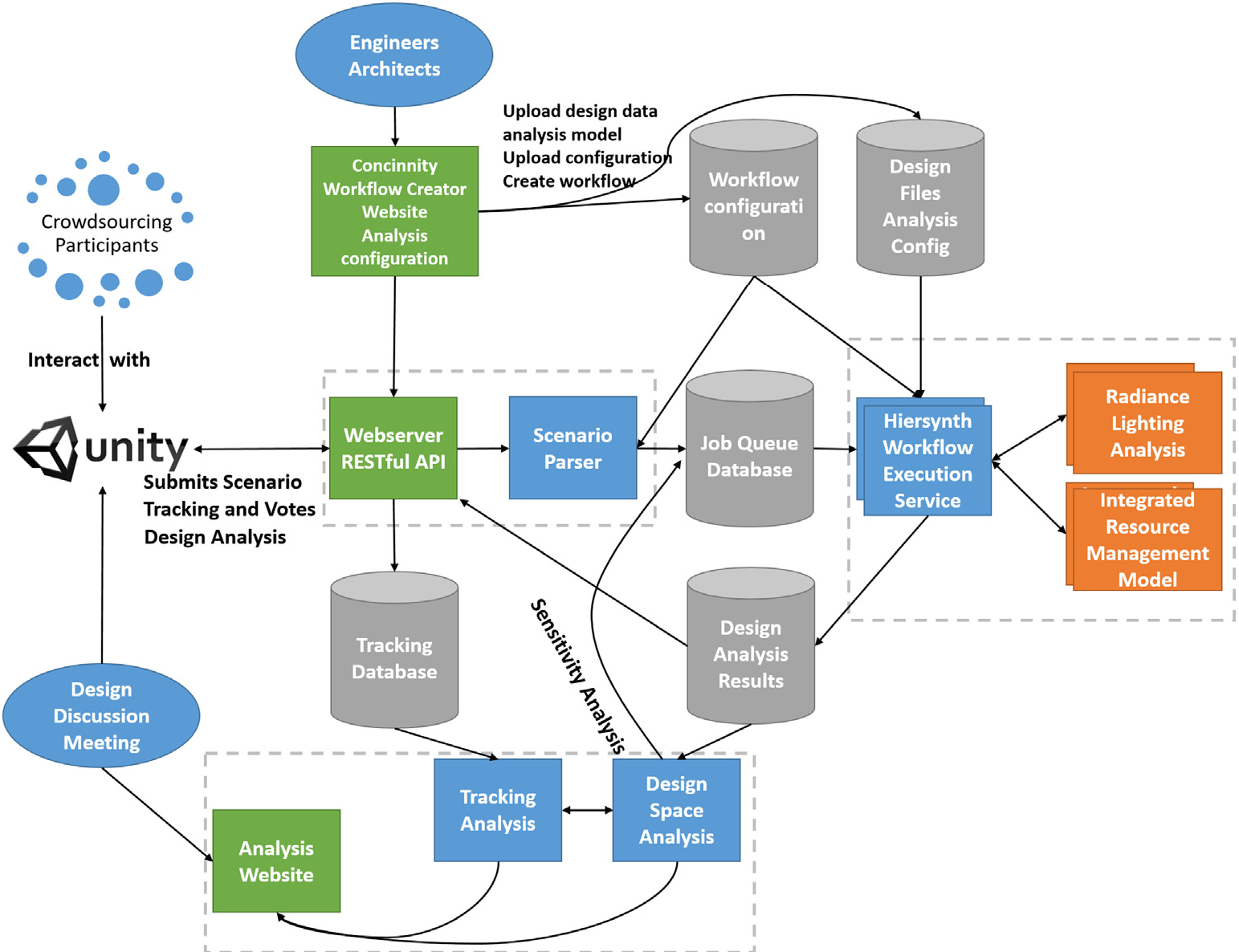 Fig 1: The architecture enabling the fusion of crowdsourced insight with real-time cloud analysis.
Exploring the Design Space
With 49 strategies, there are possible design combinations—a space far too large for any architect to explore manually. The authors treat the crowd as "intelligent agents" in a Genetic Algorithm. Unlike a computer, each human has a unique "fitness function" (priorities).
- Researchers might prioritize green space and carbon.
- Residents might prioritize daylight and mobility.
- Developers might prioritize Capital Expenditure (Capex).
By tracking where users move and what they analyze, the system builds a "Heatmap" of stakeholder interest.
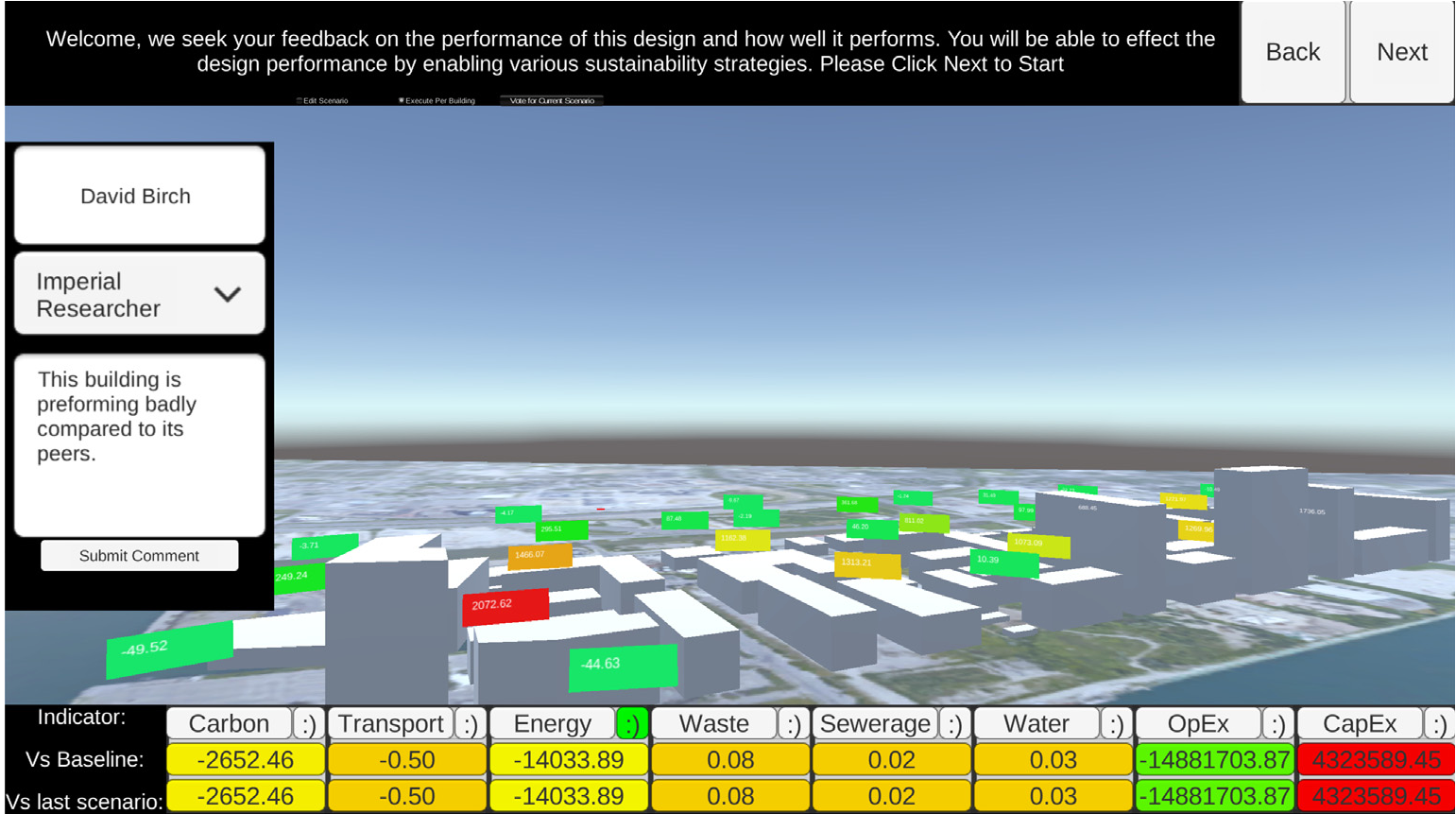 Fig 2: The visualization tool showing per-building carbon emissions and spatial performance metrics.
Experimental Insights: What did the "Crowd" find?
The pilot study on a North American business district yielded fascinating results:
- KPI Priorities: Carbon emissions were the #1 concern (38% of views), followed by operational costs.
- Implicit vs. Explicit: While users said they cared about sustainability, their navigation paths showed frequent checks on "Operational Expenditure," revealing a practical underlying bias toward cost-efficiency.
- Synergy Discovery: The crowd successfully identified clusters of strategies (like combining passive demand strategies with renewable energy) that pushed the design toward the "Pareto Front"—the state where no further improvement can be made in one KPI without sacrificing another.
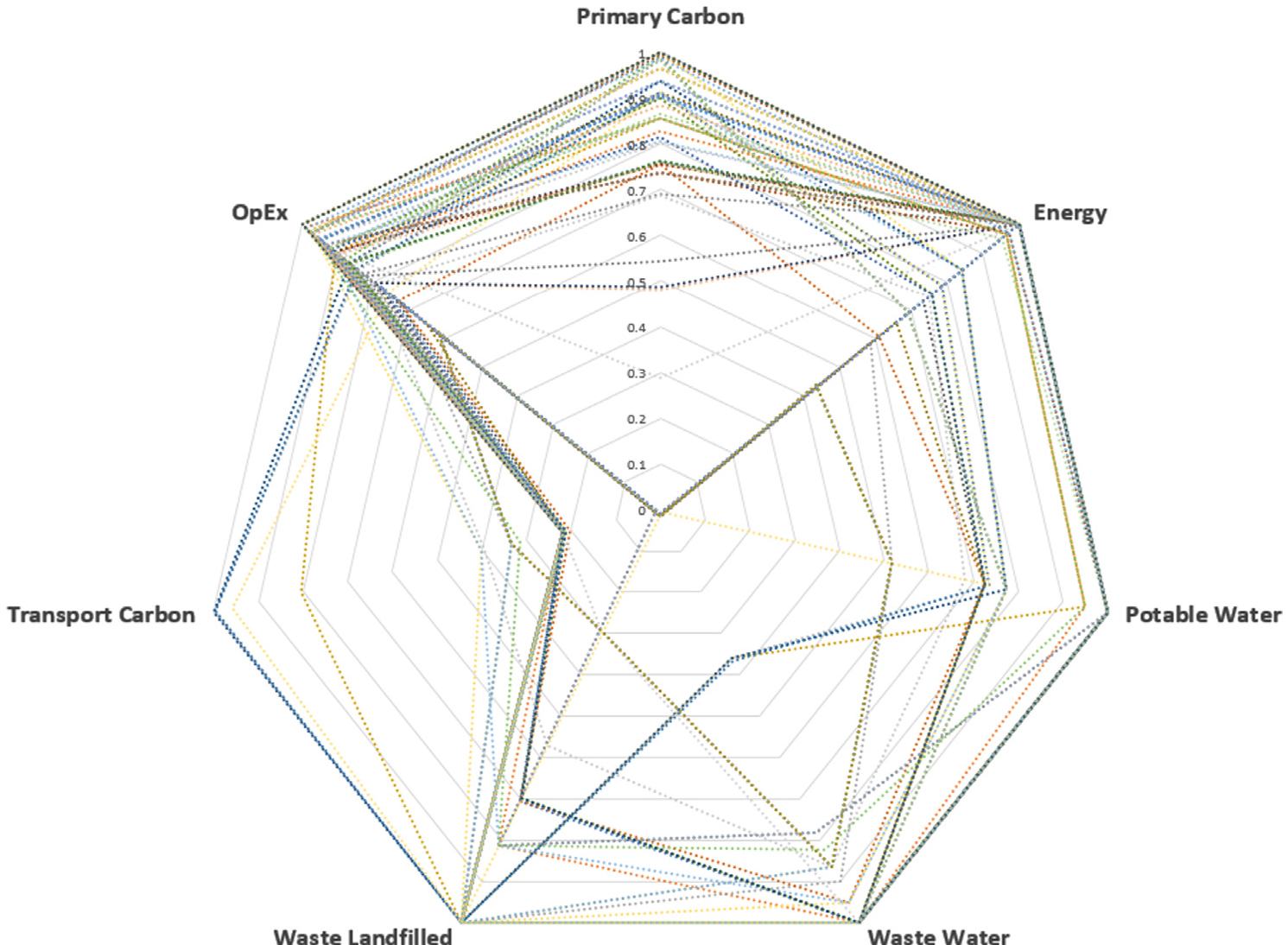 Fig 3: Radar plot showing the normalized performance of 86 crowdsourced design variants vs. the baseline.
Critical Analysis & Conclusion
Takeaway
The value of this work isn't just in the 839 simulations performed; it's in the data-rich feedback loop. Instead of guessing what the community wants, planners get a database of what the community values when faced with hard trade-offs.
Limitations
- Latency: Complex ray-tracing for lighting can take minutes, breaking the "flow" of the user experience.
- Geometry Constraints: Users can only toggle predefined strategies rather than "drawing" new building shapes—a major hurdle for true architectural freedom.
Future Outlook
The authors suggest Gamification. Imagine a leaderboard where citizens compete to find the "lowest carbon city" for a real-world development project. This could turn public consultation from a bureaucratic chore into a collective civic challenge. It moves the needle from "participatory" to "collaborative" urbanism.