
The Prosumer Revolution: Orchestrating Open Innovation via Crowdsourcing Platforms
Crowdsourcing-Based Open Innovation Processes on the Internet
This paper proposes a theoretical and practical model for "Open, Networked Innovation Processes" leveraging Internet-based crowdsourcing. It explores how companies transition from closed R&D to collaborative ecosystems, utilizing Open Innovation Platforms (OPIs) to transform consumers into active "prosumers" who contribute to value creation and product development.
TL;DR
Innovation is no longer a localized R&D activity; it is a networked social process. This paper by Małgorzata Dolińska details a model for Open, Networked Innovation, where companies utilize the Internet to engage "prosumers"—users who both produce and consume knowledge. By analyzing giants like LEGO and Dell, the research reveals how structured crowdsourcing platforms can transform a chaotic "crowd" into a precision-engineered engine for product foresight, design, and viral marketing.
Background: From Fortress R&D to Open Ecosystems
In the 20th century, companies operated like fortresses. In the "Closed Innovation" model, internal R&D was the only path to market. Today, these walls are dissolving. The paper positions this work within the Open Innovation paradigm, where purposive inflows and outflows of knowledge accelerate internal growth. The core shift is from being firm-centric to network-centered, utilizing the global brain via the Internet.
The "Why": Why Does the Crowd Outperform the Lab?
The author argues that traditional firms suffer from a "knowledge vacuum" regarding emerging market signals. The crowd provides:
- Complementary Resources: Specialized skills that the company doesn't need to hire full-time.
- Prosumer Intuition: Users are the best judges of their own future needs (Foresight).
- Intrinsic Motivation: Many users contribute for reputation, fun, or altruism, lowering the "cost of creativity" for the firm.
Methodology: The Networked Innovation Process
The paper proposes a specific model for creating "knowledge-based relationships" with external partners. This isn't just a suggestion box; it is a four-stage integration:
1. The Collaborative Framework
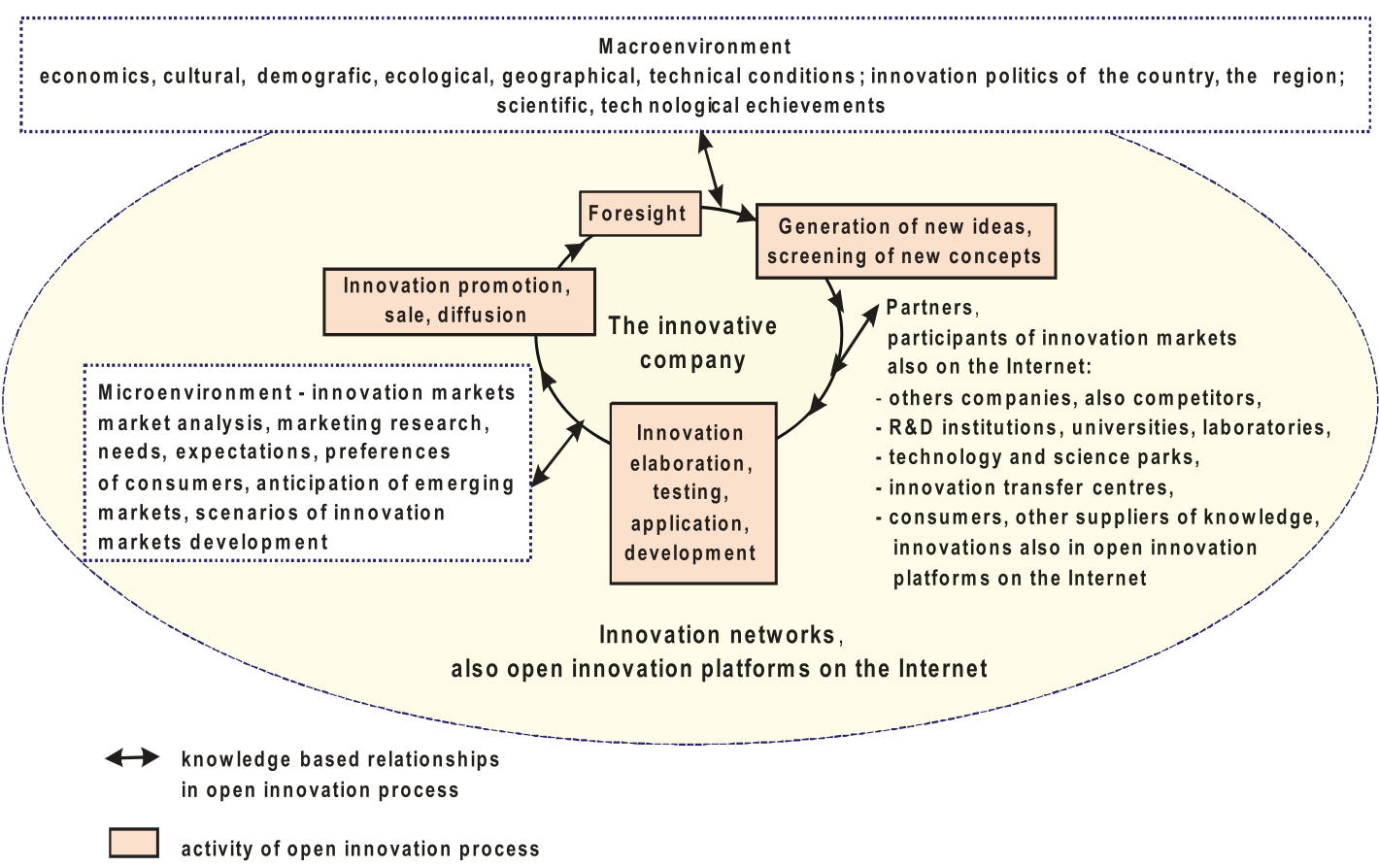
The model identifies different stakeholders—from universities to competitors—connected via OPIs (Open Innovation Platforms).
2. The Four-Stage Pipeline
The paper breaks down the innovation lifecycle on these platforms:
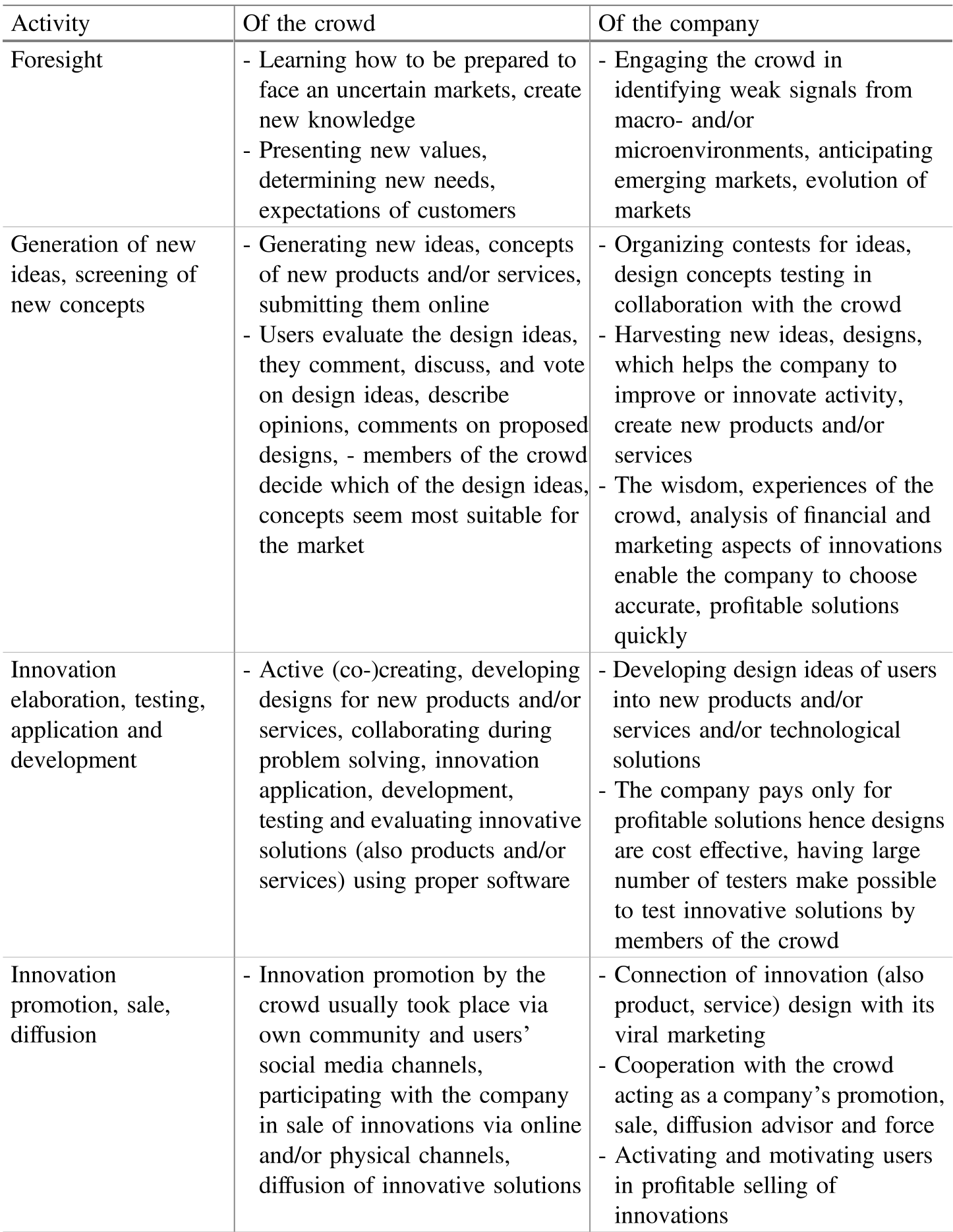
- Foresight: Using the crowd to spot "weak signals" in the macroenvironment.
- Generation & Screening: Harvesting thousands of ideas and using the "wisdom of the crowd" (voting) to filter them.
- Elaboration & Testing: Co-creating prototypes and utilizing the crowd as a massive, distributed QA team.
- Commercialization: Leveraging the crowd's social media for "viral marketing," turning prosumers into a sales force.
Evidence: Case Studies in Economic Practice
The validity of the model is backed by three distinct implementations:
| Platform | Core Achievement | Key Mechanism |
|---|---|---|
| LEGO Cuusoo | SOTA Market Validation | 10,000-vote threshold ensures market fit before manufacturing. |
| Dell IdeaStorm | Scale of Implementation | Over 730,000 votes and 417 implemented innovations. |
| CrowdSpirit | R&D Intermediary | Transitioned from a sales model to a service-based open innovation platform. |
Critical Insight: The Motivation Balance
A central takeaway of the paper is that crowdsourcing fails without a nuanced understanding of human psychology. The author categorizes motivations into:
- Extrinsic: Cash, career benefits, or free products.
- Intrinsic: Creativity, sense of belonging, and the "fun" of collaborative work. Effective platforms (like LEGO) mix these by offering both a share of net revenue (1%) and the social status of being recognized as a "Product Creator."
Critical Analysis & Conclusion
This work provides a rigorous structural map for what is often seen as an informal process. However, it also highlights limitations: the success of these platforms depends heavily on the "manager's ability to motivate." If the crowd feels exploited or if the voting system is gamed, the quality of innovation collapses.
Future Outlook: As we move further into the 2020s, the "Open networked innovation" described here is likely to merge with AI—where crowds don't just provide "ideas" but also "data" for machine learning, creating a hybrid human-AI prosumer ecosystem.
Final Takeaway: For modern companies, the crowd is no longer a demographic to be studied—it is a department to be managed.