
PolicyScape: Breaking the Filter Bubble through Crowdsourced Stakeholder Perspectives
Crowdsourcing Perspectives on Public Policy from Stakeholders
This paper introduces PolicyScape, a crowdsourcing platform designed to facilitate personal deliberation on public policies by surfacing diverse stakeholder perspectives. Unlike traditional media or social networks, the system identifies specific stakeholder groups and crowdsources the perceived socio-economic effects of policies directly from those affected, achieving novel stakeholder identification beyond mainstream news coverage.
TL;DR
PolicyScape is an innovative online platform that helps citizens understand the complex web of winners and losers in public policy. By crowdsourcing actual "effects" from diverse stakeholder groups and using a "perspective-taking" interaction, the system reveals hidden societal impacts that mainstream news often misses, fostering more rational and empathetic personal deliberation.
Background: The Crisis of Personal Deliberation
In a healthy democracy, public deliberation requires individuals to first engage in Personal Deliberation—the internal process of reflecting on diverse information to form a rational argument. However, our current info-ecosystem is broken:
- Media Bias: Newspapers often focus on high-profile "key players," ignoring marginalized groups.
- Filter Bubbles: Social media algorithms reinforce our existing biases, shielding us from the "other side."
- Abstract Policy Descriptions: Most platforms discuss policies in theoretical terms, failing to show how they actually change people's lives on the ground.
Methodology: Insights through the Eyes of Others
PolicyScape shifts the focus from "What is your opinion?" to "Who are you, and how does this affect you?"
1. Identifying the "Who" (Stakeholder Tags)
The system uses a bottom-up approach where users tag their own identities (e.g., "Family of a patient," "Future taxpayer"). This allows the platform to build a dynamic map of stakeholders that is far more granular than the broad categories used by experts.
2. Guarding Against Bias: Perspective-Taking
To combat "selective perception," PolicyScape introduces a unique interaction: before you see what others think, you are asked to guess how a policy might affect a different stakeholder group. This forced empathy helps users recognize their own blind spots.
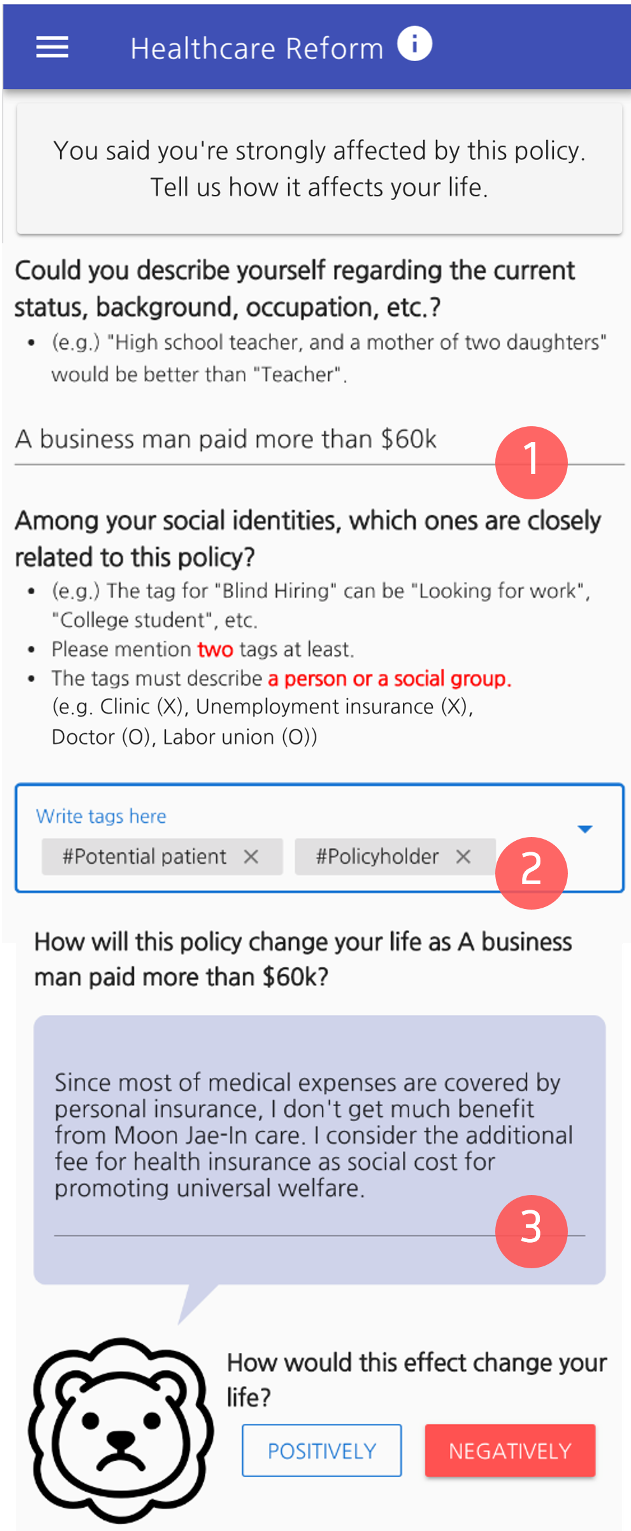 Figure 1: The input interface where users identify their stakeholder status and describe the specific policy effects they experience.
Experimental Evidence: Finding the "Invisible" Stakeholder
The researchers tested PolicyScape on two controversial South Korean policies: Blind Hiring and Healthcare Reform.
- Novelty: For the Blind Hiring policy, the crowd identified 26 stakeholder groups that were completely absent from the six major news articles analyzed.
- Validity: Despite being crowdsourced, government officials verified that nearly all novel effects (30 out of 31) were factually valid and realistic.
- User Impact: Users reported that the system helped them see "realistic stories rather than theoretical ones," transitioning from a self-centered view to a societal one.
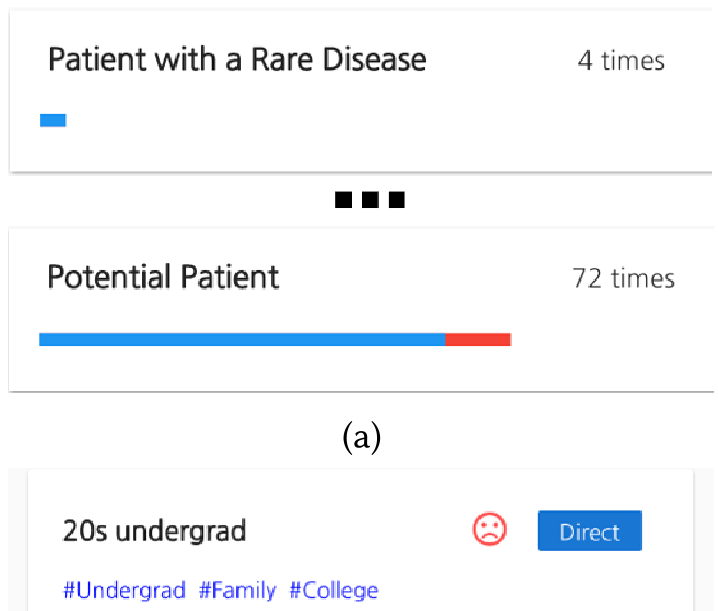 Figure 2: The system visualizes the ratio of positive to negative effects per stakeholder group, providing an immediate overview of social conflict.
Critical Insight & The Path Ahead
The core value of PolicyScape lies in its Inductive Bias toward lived experience over political rhetoric. By anchoring discussion in specific "effects," it makes the trade-offs of public policy visible and undeniable.
Limitations to Address:
- Semantic Noise: Users often create duplicate tags (e.g., "Doctor" vs. "Medical Staff"). Future versions need hierarchical tag management.
- Verification: Authentic identity remains a challenge. How do we ensure a user claiming to be a "small business owner" actually holds that status?
Conclusion
PolicyScape proves that the "wisdom of the crowd" isn't just for solving math problems or predicting markets—it can be used to map the human landscape of public policy. By helping us "put ourselves in others' shoes," this tool moves us one step closer to a more empathetic and rational public sphere.