
Predicting Crowdsourcing Quality: A Robust Random Forests Approach
A Crowdsourcing Quality Prediction Model Based on Random Forests
This paper proposes a crowdsourcing quality prediction framework that combines a regression-based trust model with a Random Forests classifier. By analyzing historical contractor behavior and characteristics, the model achieves high-accuracy classification and quality forecasting on tasks like mobile data collection.
TL;DR
To solve the persistent issue of low-quality submissions and "cheating" workers in crowdsourcing, this paper introduces a dual-stage model. By combining a regression-based trust evaluation with a Random Forests classifier, the system can predict the quality of work with an impressive error rate of only 4.67%, allowing employers to filter participants effectively.
The "Low Quality" Paradox in Crowdsourcing
Crowdsourcing offers a "low cost, high return" model by gathering global intelligence. However, its greatest strength—open participation—is also its greatest weakness. Contractors often submit arbitrary or low-quality results to maximize monetary rewards with minimal effort. Prior works focused on "Gold Standards" (comparing answers to known truths), but these fail when the task is subjective or exploratory.
Methodology: From Trust to Trees
The authors break down the solution into two logic-driven steps:
1. The Trust Model (Quantitative Baseline)
Before jumping into machine learning, the paper uses Multiple Linear Regression to establish a "Trust Rate" (). This rate is calculated by looking at the ratio of completed tasks () to the reservation limit ().
2. Random Forests Ensemble
The Random Forest algorithm was chosen because it excels at handling high-dimensional data and resists overfitting through Bagging and random subspace selection.
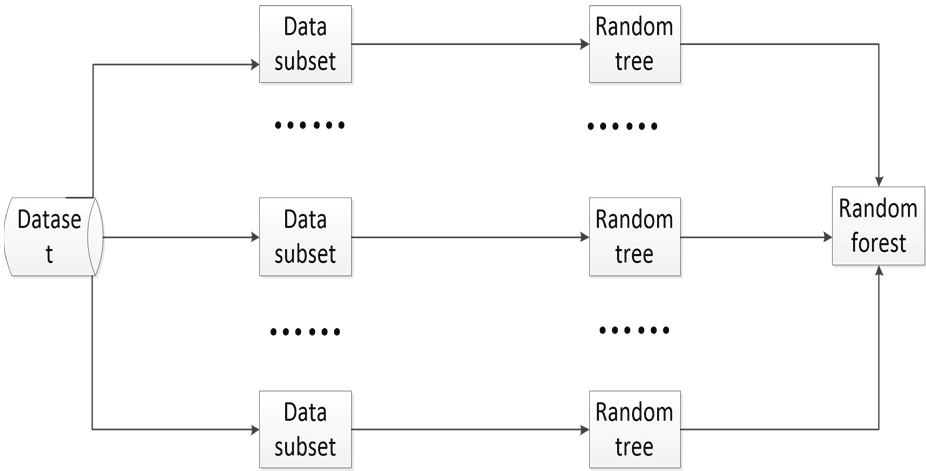
The model was optimized by tuning two critical hyperparameters:
- mtry (Node Features): Found to be optimal at 4 features.
- ntree (Number of Trees): Stabilized at 800 trees.
Experiments and Key Findings
Using data from a nationwide "Money for Photos" mathematical modeling competition, the authors compared various features including GPS coordinates, pricing, and reputation.
Feature Importance
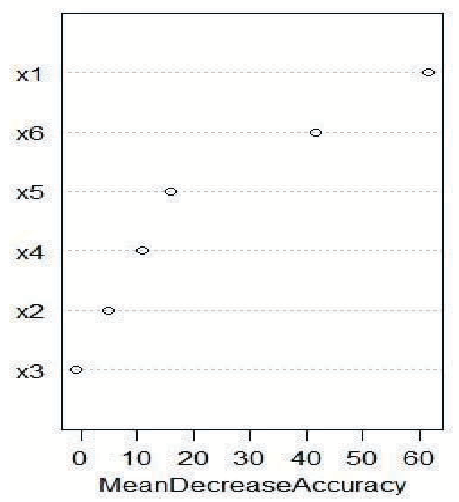
Using the Gini Index, the study confirms a professional intuition: a worker's Reputation Value is the single most important predictor of their future output quality.
Prediction Accuracy
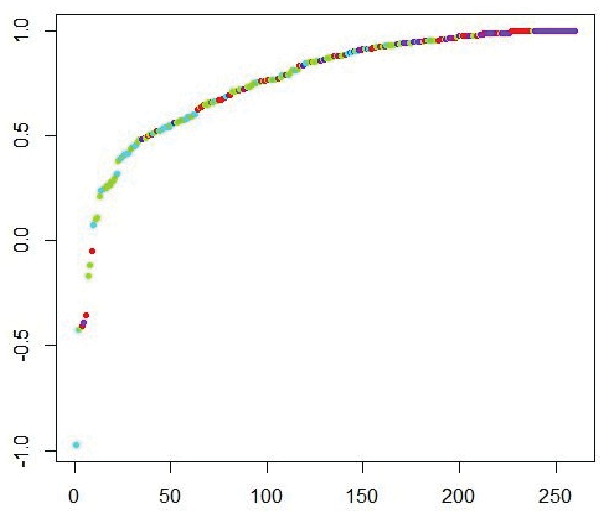
The model's classification error rate stayed within 4.67%, proving that ensemble methods are far more reliable than traditional single-metric filters.
Critical Insight & Conclusion
While the Random Forests model is robust, the paper honestly identifies a limitation: it currently doesn't account for Prior Probability (the inherent difficulty of a specific task type).
The takeaway for the industry is clear: Don't just verify the result; verify the worker. By shifting from "Result Review" to "Predictive Trust Modeling," platforms can massively reduce administrative overhead and improve their ROI.
Future Work: Integrating Bayesian updates to the trust model could allow the system to adapt more quickly to new, unknown workers who don't yet have a high reputation score.