
Beyond Determinism: Randomized Auctions for Diverse Mobile Crowdsensing
Crowdsourcing Sensing to Smartphones: A Randomized Auction Approach
This paper introduces a randomized combinatorial auction mechanism designed for mobile crowdsourcing sensing tasks. It addresses the social cost minimization problem using an approximate-truthful framework that leverages a fractional VCG mechanism and the ellipsoid method to ensure device diversity and prevent user starvation.
Executive Summary
TL;DR: This paper tackles the "starvation" problem in mobile crowdsourcing—where a few low-cost users dominate tasks while others are ignored—by introducing a Randomized Combinatorial Auction. By treating task allocation as a probabilistic distribution rather than a fixed selection, the authors achieve approximate truthfulness, individual rationality, and significantly higher device diversity.
Background: In the landscape of mobile sensing, incentive mechanisms have shifted from simple fixed-price rewards to complex VCG-based (Vickrey-Clarke-Groves) auctions. However, the field has been stuck in a "deterministic" trap where the most cost-efficient users are always picked, leading to a loss of data variety and long-term user churn. This work moves mobile crowdsensing into the realm of randomized algorithms.
The Problem: The "Rich Get Richer" Paradox in Sensing
Deterministic auctions are mathematically clean but practically flawed for mobile sensing. If Smartphone User A always bids $1.00 and User B bids $1.10, User A will win every time. Consequently:
- User B Starves: User B eventually stops participating because they never win.
- Lack of Diversity: The platform only gets data from User A's specific device model and location, which may lead to biased datasets (e.g., specific sensor noise or spatial gaps).
The challenge is that minimizing the Social Cost (the sum of real costs) is an NP-hard problem. Standard truthful mechanisms require optimal solutions to prevent strategic manipulation, which is computationally impossible for large-scale sensing tasks.
Methodology: The Fractional-to-Integer Bridge
The researchers' core insight is to decouple the "truthfulness" requirement from the "integer" constraint. They propose a four-step pipeline:
1. Fractional VCG Allocation
Instead of forcing a user to either win (1) or lose (0), the platform first solves a linear relaxation (LP). This allows for fractional winners (e.g., User A wins 0.7 of a task), which can be solved optimally in polynomial time to ensure the baseline for truthfulness.
2. Dual Fitting and the Integrality Gap ()
To map these fractional results back to the real world (where tasks are atomic), they calculate the Integrality Gap. Using a greedy approximate algorithm and dual fitting, they prove that the gap —the ratio between the best integer solution and the best fractional solution—is bounded by , where is the number of tasks.
3. Decomposition via Ellipsoid Method
This is the "magic" step. The platform finds a set of integer allocation profiles and assigns them probabilities () such that the expected allocation equals the scaled fractional optimal.
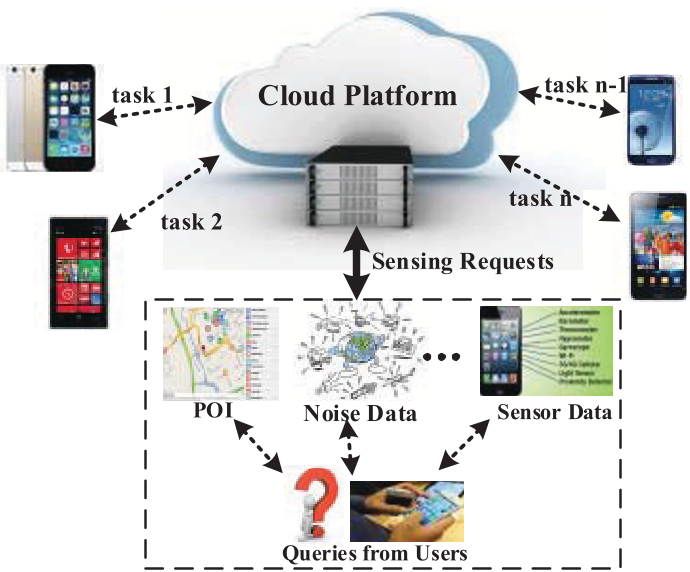 Fig 1: The mobile crowdsourcing system lifecycle, moving from task announcement to randomized allocation.
4. Scaled Payment
To keep users honest about their costs, the payment is calculated as the fractional VCG payment multiplied by the gap . This ensures that even though the results are randomized, the expected utility for a truthful bidder is maximized.
Critical Results: Verification of Fairness and Cost
The authors validated their approach through extensive simulations with varying numbers of users (100–900) and tasks (20–180).
- Truthfulness & Rationality: Fig 5 demonstrates the Cumulative Distribution Function (CDF) of payoffs. Crucially, no user receives a negative payoff, confirming the Individual Rationality of the randomized approach.
- Efficiency: The social cost remains close to the theoretical upper bound, meaning the platform doesn't "overpay" significantly for the sake of diversity.
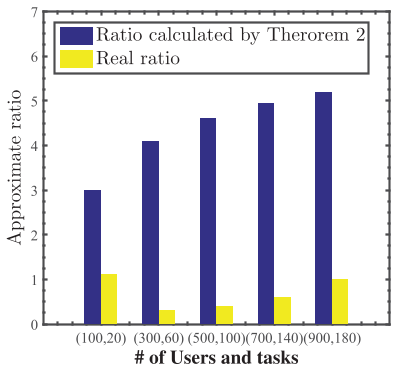 Fig 2: The CDF shows that all rewards are non-negative, validating that users have no disincentive to participate.
Deep Insight & Conclusion
Takeaway
The transition from deterministic to randomized auctions is a paradigm shift for Participatory Sensing. By introducing controlled "noise" into the selection process, the system actually becomes more robust. It successfully mimics a "fair" marketplace where higher-cost users still have a non-zero probability of winning, thus maintaining a healthy pool of diverse sensing nodes.
Limitations
The use of the Ellipsoid Method for decomposition, while theoretically polynomial, can be computationally heavy for real-time mobile platforms with thousands of users. Future research might need to look at faster approximation methods for the decomposition step (e.g., multiplicative weight updates).
Future Perspective
As mobile crowdsensing evolves toward 5G/6G and massive IoT, randomized mechanisms like this will be essential for managing "energy-aware" sensing, where rotating users is necessary to save battery life across the entire network.