
Scaling the Unstructured: How Crowdsourcing Resurrects Low-Resource Languages
Crowdsourcing Speech and Language Data for Resource-Poor Languages
This paper explores the efficacy of crowdsourcing for building speech and language resources for resource-poor languages, focusing on Dialectal Arabic (DA). It proposes systematic job design and quality control (QC) frameworks across tasks like OCR, Machine Translation, ASR, and text classification, achieving professional-grade quality at significantly lower costs.
TL;DR
Building high-quality datasets for "resource-poor" languages like Dialectal Arabic (DA) has long been a bottleneck for AI. This research demonstrates that through rigorous Quality Control (QC) and intelligent HIT (Human Intelligence Task) design, we can utilize non-expert crowds to produce data that rivals professional linguists—at 1/7th of the cost and 5x the speed.
Contextual Positioning
In the hierarchy of NLP, resource-rich languages like English dominate, while dialects—which billions speak daily—are often ignored due to lack of standard orthography. This work by Hamdy Mubarak acts as a strategic blueprint for data acquisition, transforming crowdsourcing from a "cheap but messy" option into a "scientific and scalable" pipeline for Modern Standard Arabic (MSA) and its various dialects.
The Core Challenge: Why is Dialectal Arabic Hard?
The primary hurdle isn't just a lack of data; it’s the lack of standards.
- Orthography: There is no "official" way to write a dialect. One spoken word might have five valid spellings.
- OCR Degradation: Historical manuscripts suffer from document aging and irregular fonts.
- Context Loss: Showing a worker a single line of text or a 2-second audio clip often leads to misinterpretation.
Methodology: The "Forgiving" Pipeline
The author’s insight lies in Process Engineering. Instead of trusting the crowd blindly, the paper introduces several architectural safeguards:
1. Optimized OCR Design
To transcribe historical books, the author found that providing a single line was insufficient, while a whole page was overwhelming. The solution was a "Sliding Window" interface: showing the target line with the previous and next lines as visual anchors.
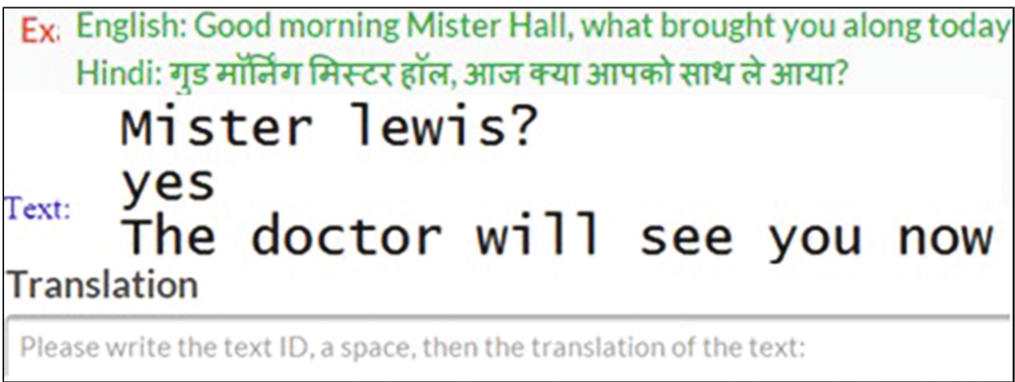 Fig 1: Job design for OCR showing contextual lines to improve transcription accuracy.
2. The "Forgiving Edit Distance" for Speech
Classic QC uses "Exact Match," which fails for dialects. The author implemented a custom code layer within the CrowdFlower platform that calculates a forgiving edit distance. This allows for minor spelling variations while rejecting "keyboard smashing" or non-Arabic characters.
3. Image-Based MT Tasks
To prevent workers from cheating by using Google Translate for English-to-Hindi tasks, text was presented as images. This forced human cognition over copy-pasting.
Experimental Breakthroughs
The results provide a compelling economic argument for this methodology:
| Task | Crowdsourcing Cost | Professional Cost | Speed Comparison |
|---|---|---|---|
| Speech Transcription | $42 / hour | $300 / hour | 18 hrs vs 4 days |
| OCR (per page) | $1.00 | $2.00 | Significant Scalability |
| DA to MSA Pairs | < $200 (6k sentences) | N/A (Expert only) | 90% Agreement |
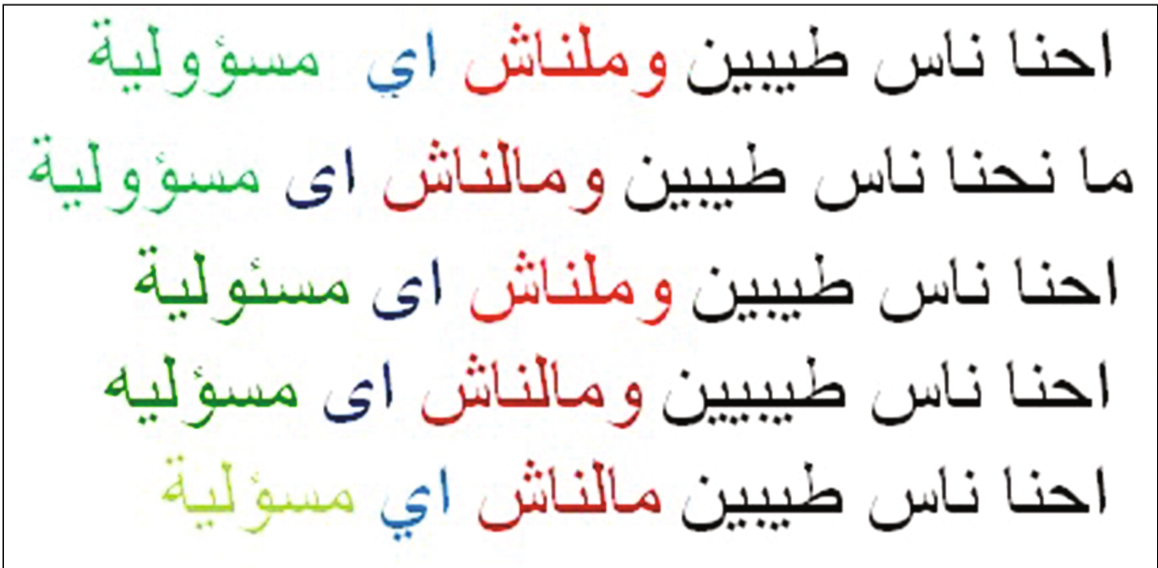 Fig 2: Example of the high variance in dialectal transcriptions that the QC system must navigate.
Deep Insight: Beyond the Data
The most profound takeaway is the Text Classification experiment on social media. By capturing "vulgar" and "offensive" language in Egyptian tweets, the author created a unique corpus that reflects real-world usage. The recommendation here is vital: User Psychology Matters. Warning workers about offensive content and keeping thread contexts intact (showing the whole conversation) leads to higher labeling accuracy than isolated tweets.
Conclusion & Future Horizon
Mubarak’s work proves that "Low-Resource" is a temporary state. By applying:
- Pilot Jobs to map human error.
- Algorithmic QC (Edit Distance/ASR comparison).
- Contextual HIT Design.
We can bridge the digital divide for languages that currently sit in the "AI dark." The next step for this field will likely involve Hybrid RLHF, where these crowdsourced labels are used to fine-tune Large Language Models to act as the next generation of automated annotators.
Limitations: The study notes that linguistic density varies—Egypt (the most populous) has many more available annotators than other regions, meaning "resource-poor" can also be a demographic challenge, not just a linguistic one.