
VizWiz-Fashion: Decoding the Visual Language of Style via Crowdsourcing
Crowdsourcing Subjective Fashion Advice Using VizWiz: Challenges and Opportunities
This paper explores "VizWiz-Fashion," a crowdsourcing approach to provide subjective fashion advice to people with vision impairments. It leverages a mobile application to connect blind users with sighted "trusted strangers" who provide near real-time feedback on clothing coordination, fit, and social appropriateness.
TL;DR
Fashion is a silent language of social signals, but for the visually impaired, it is a locked code. This research presents a system where blind users take photos of clothing and receive subjective advice (e.g., "Does this look professional?" or "Do these patterns clash?") from a crowd of sighted volunteers. The study proves that for high-stakes social tasks, subjective human intuition often outweighs modern automated sensors.
Context: Beyond Simple Color Identification
In the world of Assistive Technology (AT), we often focus on "objective" tasks: What color is this shirt? What does this label say? However, fashion is deeply subjective. A shirt isn't just "blue"; it’s "faded," "outdated," or "mismatched with those plaid pants."
Current tools like color identifiers often fail because:
- They lack context (daytime vs. evening wear).
- They cannot detect "flaws" like stains or wrinkles that lead to social embarrassment.
- They don't understand cultural norms.
The "Trusted Strangers" Methodology
The researchers utilized the VizWiz platform—an iPhone app originally designed for quick visual questions—and pivoted it toward fashion.
The Workflow
- Capture: The user takes a photo and records a voice question.
- Route: The query is sent to a pool of "trusted strangers" (volunteers).
- Respond: Volunteers provide text-based, descriptive feedback.
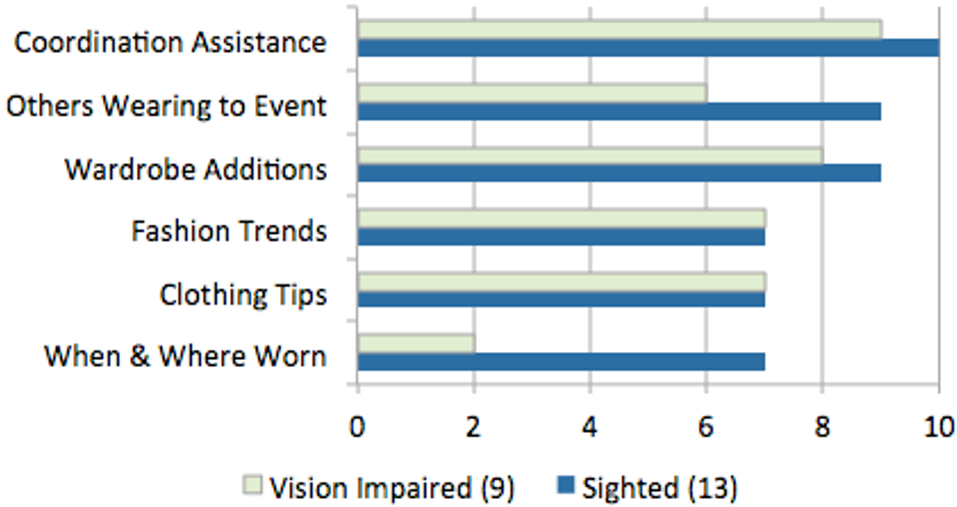 Figure 1: Survey results showing that "Coordination" is the most sought-after information for users with vision impairments.
The study introduced a "Human-in-the-loop" mechanism where users received descriptions of the volunteers (e.g., "Volunteer 1: Youthful, casual style"). Interestingly, while demographics helped, consistency and accuracy were the primary drivers of user trust.
Experimental Insights: From Facts to Opinions
Over two weeks, the researchers observed a fascinating "trust curve." Users initially asked "trap" questions—things they already knew the answer to—to test if the volunteers were lying or incompetent. Once the volunteers passed, the questions became significantly more complex.
Key Findings:
- Complex Queries: Users moved from "What color is this?" to "Can I wear this sweater with business attire?"
- The "Third-Party" Use Case: One user used the app to check if their child's outfit was appropriate, highlighting that fashion accessibility affects the user's role as a caregiver.
- Conflicting Advice: In some cases, volunteers disagreed on colors due to lighting (e.g., one saying "dark orange," another saying "red"). This highlighted the inherent subjectivity and technical limitations of mobile photography.
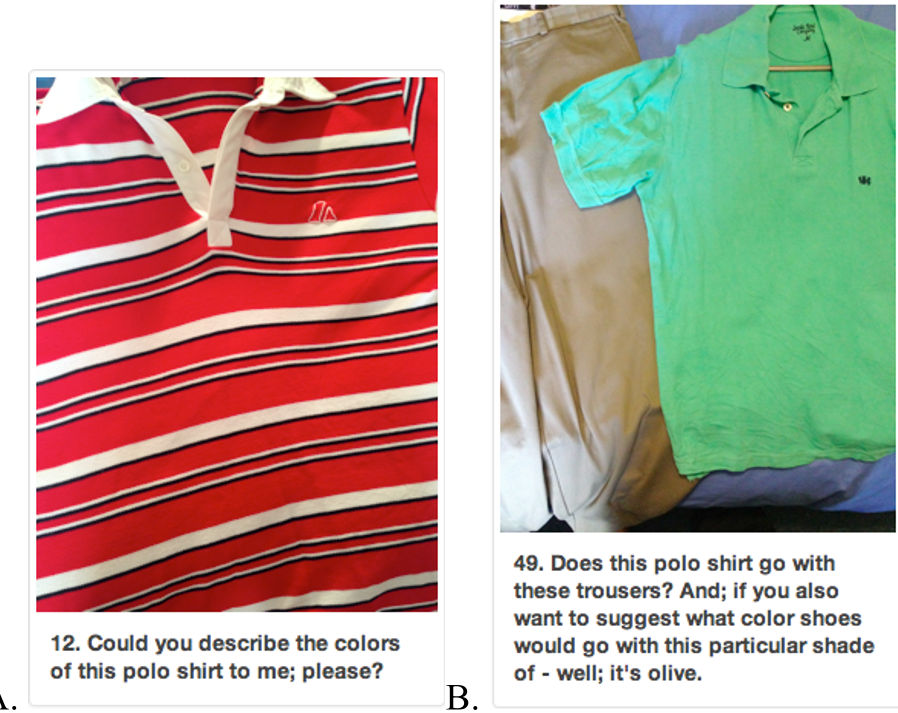 Figure 2: Examples of low-tier (Objective) vs. high-tier (Subjective) fashion questions processed during the study.
Critical Analysis & Challenges
While the system was highly valued, two major bottlenecks remain:
- The Photography Gap: If a blind user takes a blurry or poorly lit photo (as seen in Figure 5), the crowd cannot help. The study suggests a need for "real-time photo quality feedback."
- The Latency Problem: Participants expected answers within ~5 minutes. Relying on volunteers requires a massive, rotating "crowd" to ensure 24/7 coverage.
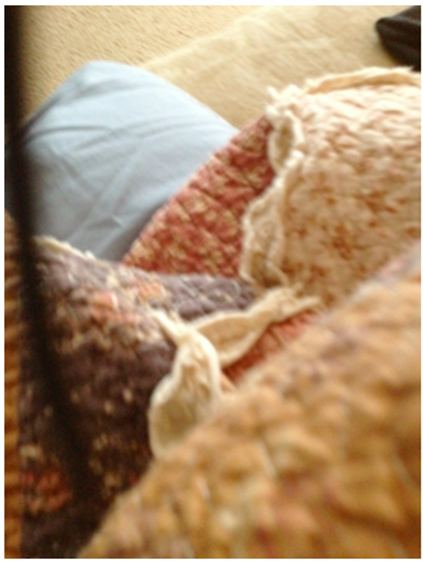 Figure 3: Ambiguous results caused by poor lighting, showcasing the fragility of human-based visual interpretation.
Conclusion: A New Standard for Social Inclusion
This paper serves as a vital reminder that social independence is as important as functional independence. Feeling confident in one's appearance is a fundamental human desire. By bridging the gap between blind users and sighted "fashion friends," VizWiz-Fashion demonstrates that crowdsourcing can solve the "nuance problem" that traditional AI often misses.
Future Outlook: With the rise of Multimodal LLMs (like GPT-4o), we may soon see a hybrid model where AI handles the "objective" patterns and humans are called in for the final "aesthetic" verdict.