
Leveraging the Crowd for Elasticity: How CSD Smashes Traditional Project Timelines
Leveraging crowdsourcing for team elasticity: an empirical evaluation at TopCoder
This paper presents an empirical evaluation of Crowdsourced Software Development (CSD) using data from the TopCoder platform to assess team elasticity. It investigates worker characteristics, availability, and performance across different skill "rating belts," ultimately demonstrating that mass parallel development in the crowd significantly accelerates project schedules.
TL;DR
Is crowdsourcing just for simple labels and logos? Not anymore. This empirical study of TopCoder data reveals that Crowdsourced Software Development (CSD) isn't just about cost-saving—it's a powerful engine for Team Elasticity. By leveraging a global pool of experts, projects can achieve a 1.82x schedule acceleration compared to traditional in-house methods, responding to task calls in under 24 hours.
The Resource Bottleneck in Agile
Agile development is the gold standard for modern software, but it has a "human" problem:
- Fixed Resources: Hiring specialized talent is slow and expensive.
- Low Commitment: Internal teams often suffer from fluctuating motivation or "silos."
The authors argue that CSD solves this by providing "Elasticity"—the ability to scale human resources up and down instantly. But can we trust a "crowd" with complex coding tasks?
The Anatomy of the Crowd (Methodology)
The researchers analyzed over 4,900 tasks and categorized workers into TopCoder’s "Rating Belts," ranging from Gray (entry-level) to Red (top-tier experts).
Key Metrics Defined:
- Response Time (RT): How fast does a worker register after a task is posted?
- Relative Velocity (RV): How much of the allotted time does a worker actually use?
- Submission Ratio (SR): What percentage of registrants actually deliver code?
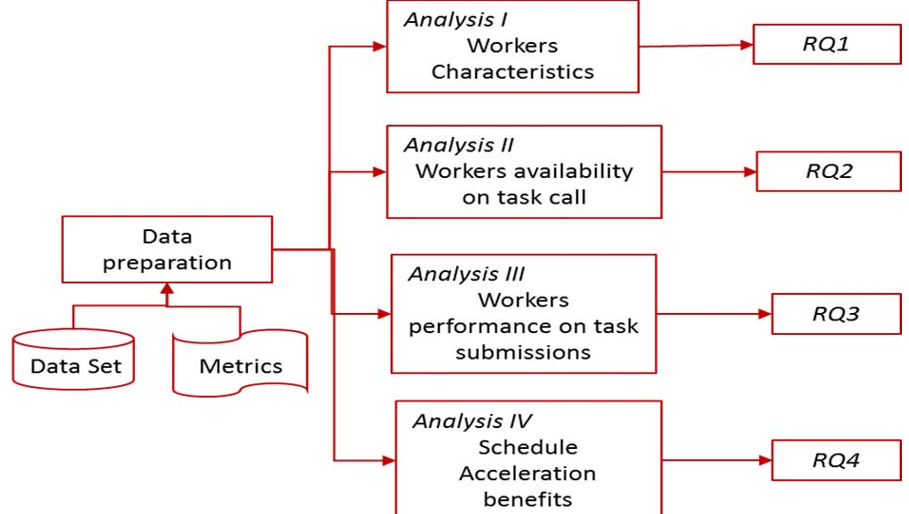 Figure 1: The proposed framework linking worker characteristics to project-level acceleration.
Insight 1: Speed is the Crowd's Superpower
One of the most striking findings is the speed of registration.
- 59% of workers jump on a task within the first day.
- The "First Registrants" are highly motivated; if they register early, there is a 60% chance they will submit a high-quality solution.
Interestingly, higher-rated workers (Red and Yellow) are surgical in their approach. They don't just register for everything; they select specific task types (like First2Finish) and dominate them with superior quality.
Insight 2: Performance vs. Reliability
Does a high rating mean reliability? Not necessarily. The data shows that Green and Blue belts (the "middle class" of developers) often show higher reliability (submission rates) than the elite Red belt workers, who are more selective and competitive. However, when elite workers do submit, their quality score is nearly perfect (100% success rate).
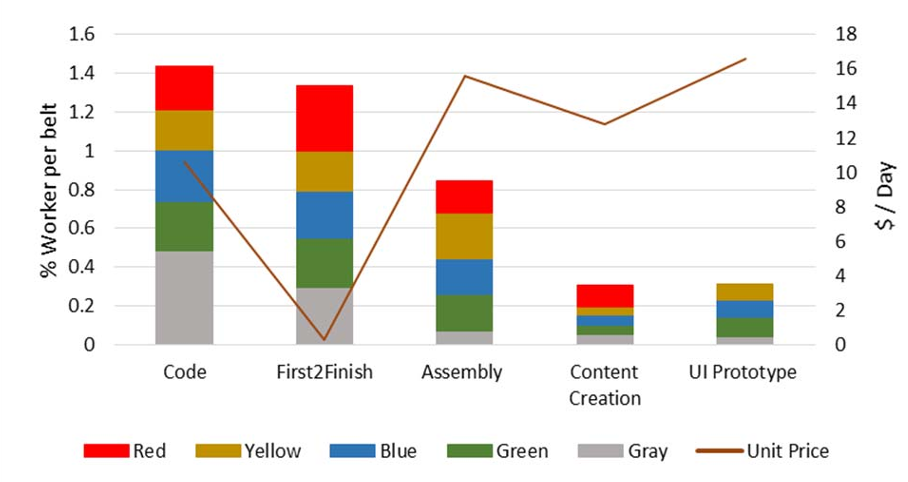 Figure 2: Reliability distribution across different rating belts.
The Grand Slam: 1.82x Acceleration
The core of the paper compares CSD projects to three classical estimation models: COCOMO II, CORADMO (Agile), and McConnell.
On average, projects that would have taken 18-20 months in a traditional setting were completed in 9-14 months via TopCoder. This leads to a Schedule Acceleration Rate (SAR) of 1.82.
Why does this happen?
It's not just that the workers are faster; it's Mass Parallelism. In a traditional team, you can't have 20 people working on 20 different micro-components of a project simultaneously without massive overhead. The CSD platform acts as a "buffer" and "manager," allowing for extreme concurrency.
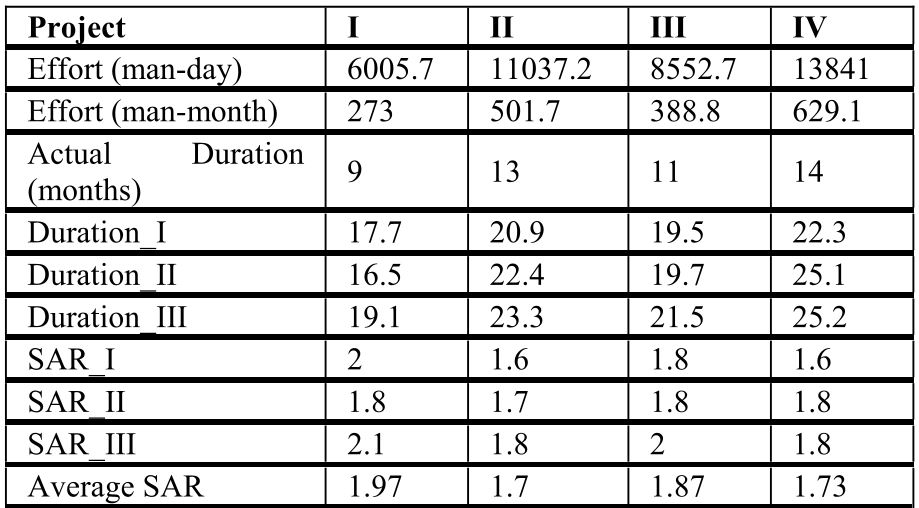 Table 1: Schedule Acceleration Rates (SAR) across four major CSD projects.
Critical Analysis & Conclusion
Takeaway
For software managers, this paper is a blueprint for Team Elasticity. If you have a project with high modularity, "offloading" tasks to a crowd can effectively double your delivery speed.
The Catch (Limitations)
- Management Overhead: The study doesn't fully account for the internal time spent by a company's manager to review and integrate crowd-submitted code.
- Task Decomposition: CSD only works if tasks are perfectly modularized. If your architecture is a "big ball of mud," the crowd won't help.
- The Pyramid Problem: 90% of the crowd is "Gray" (inexperienced). Success depends heavily on attracting the top 10% through high awards and clear specifications.
Final Thought: CSD isn't just a way to save money—it’s a strategic tool to achieve velocity that is physically impossible for a traditional, fixed-size team.