
Urban Narratives: Solving the Participation Crisis through Collective Intelligence
Crowdsourcing Urban Narratives for a Post-Pandemic World
The paper introduces a Collective Intelligence (CI) model that integrates crowdsourcing with social storytelling to facilitate bottom-up participatory urban planning. By transforming urban design into a "Planning Narrative," the model empowers citizens to co-create collective stories and address city-wide issues, specifically demonstrated in a post-pandemic university campus scenario.
TL;DR
Participatory urban planning is often broken—either stuck in technocratic top-down silos or lost in the noise of uncoordinated social media posts. This paper proposes a new Collective Intelligence (CI) model that combines the data-gathering power of Crowdsourcing with the emotional and contextual depth of Social Storytelling. By treating a city project as a "Planning Narrative," it allows citizens to contribute everything from simple photos to complex collective visions for a post-pandemic world.
The Problem: Why Digital Participation Often Fails
Despite the proliferation of "e-participation" platforms, two major hurdles remain:
- The Professional Barrier: Most urban design contests require 3D models or architectural drawings, effectively silencing the average citizen who lacks these skills.
- The Context Vacuum: Social media engagement is often fragmented. An angry tweet about a pothole lacks the narrative context needed for a planner to understand how that pothole affects the community's broader mobility story.
The authors argue that we need a "bottom-up" approach where the community controls the goals, rather than just reacting to a government-set agenda.
Methodology: The Architecture of a Collective Story
The core of the paper is a structural model that organizes participation into a logical hierarchy. Unlike a flat comment section, this model uses a structured flow:
1. The Planning Narrative
Think of this as the "Project Container" (e.g., "The Future of our University Campus"). It hosts multiple competing stories.
2. Collective Stories & Events
Within a project, different groups build narratives (e.g., "The Pedestrian-First Campus"). These are built using Events, which can be Statements or Questions.
3. Microtask Crowdsourcing
To back up these stories, citizens perform tasks:
- Mapping: Identifying dangerous intersections.
- Sensing: Taking photos of poorly ventilated classrooms.
- Voting: Prioritizing which issues matter most.
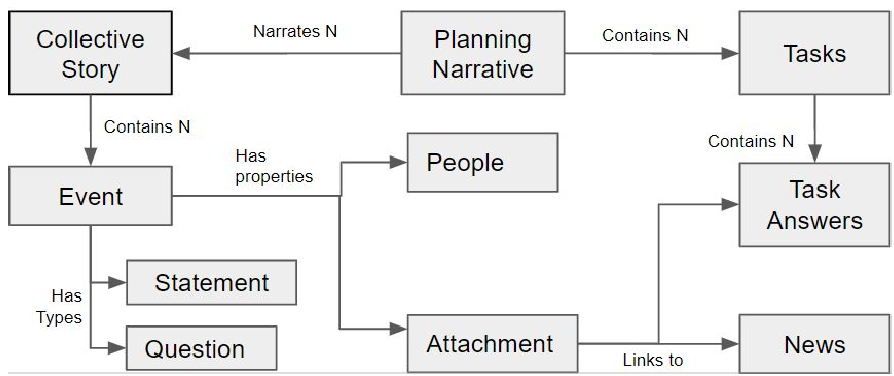 Figure 1: The entities and relationships within the proposed CI model.
Why People Participate: Fun, Glory, and Social Cause
The model identifies that different users need different incentives. The authors categorize participants into:
- Citizens: The general public who contribute data and ideas.
- Curators: High-reputation users who organize the stories and validate tasks.
The motivation engine is a mix of Intrinsic (the social cause of improving one's neighborhood) and Extrinsic (Reputation/Glory within the system). By removing monetary rewards and focusing on "Reputation Units," the model ensures higher data trustworthiness.
Experimental Scenario: Rethinking UFRJ Post-Pandemic
The authors apply their model to a hypothetical scenario at the Federal University of Rio de Janeiro (UFRJ).
- The Context: Re-imagining campus life after COVID-19.
- The Process: A professor (Requester) initiates a narrative. Students (Citizens) take photos of classrooms with poor ventilation (Tasks). These photos are then embedded into a story titled "Open Windows or Take Classes to Open Spaces!"
- The Outcome: Rather than just a list of complaints, the university council receives a Legitimate Narrative backed by visual evidence, 1,200 engaged participants, and a diverse set of perspectives.
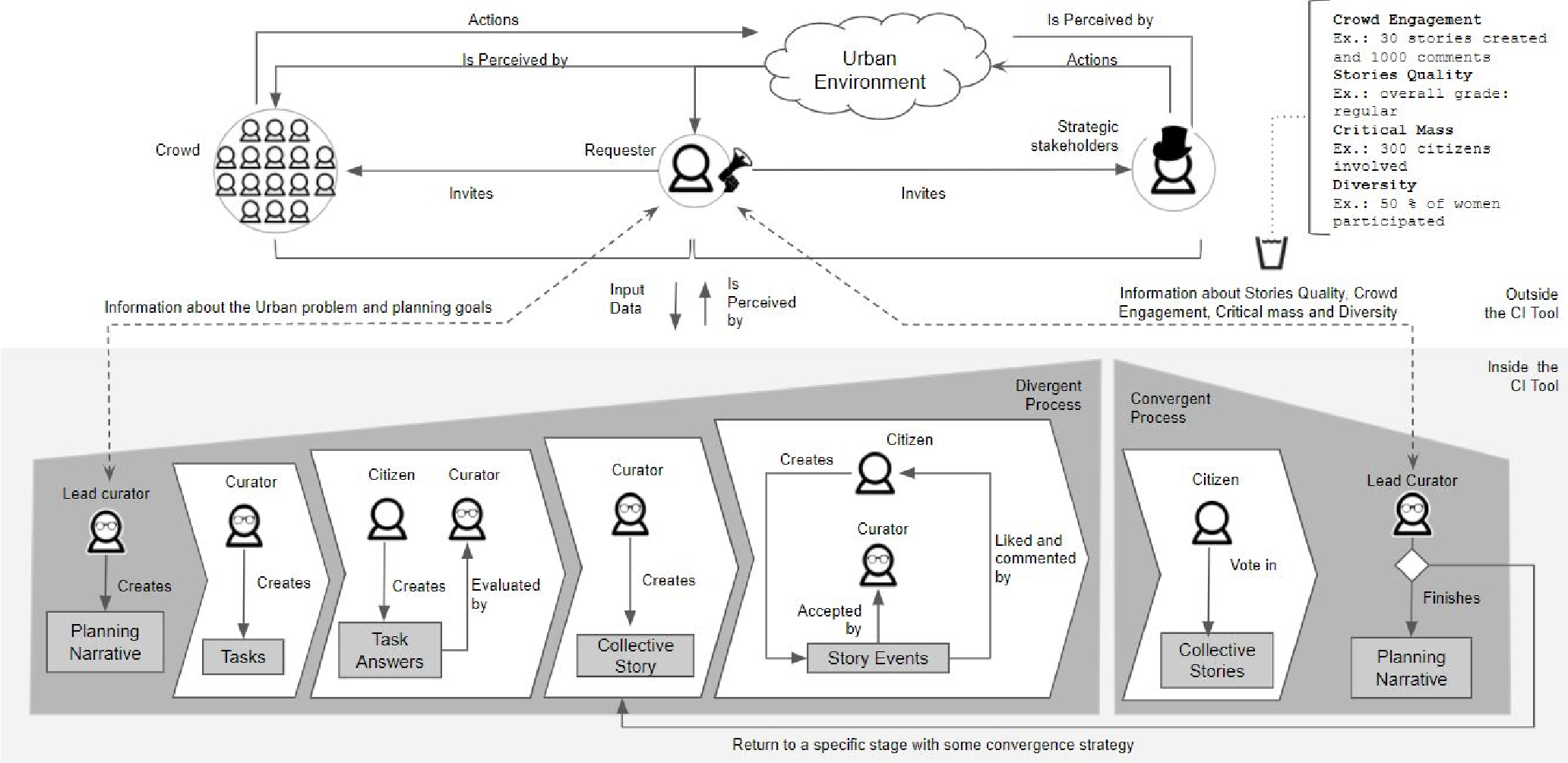 Figure 2: The flow of information between citizens, curators, and strategic stakeholders.
Critical Insights & Future Outlook
The true innovation here is the Story Turn. By transforming urban planning into social curation, the authors address the "non-technical barriers" of digital illiteracy and political apathy.
Key Takeaways:
- Low Barrier to Entry: By using simple tasks (photos/mapping), the model achieves Critical Mass.
- High Context: By weaving those tasks into stories, the model achieves Plurality of Views.
- Limit: The paper acknowledges that "Social Storytelling" requires moderation (Curators). Without skilled curators, the narrative could become messy or biased.
The next phase of this research involves a Proof of Concept (PoC) to test if citizen involvement in small tasks (like photo taking) actually leads to higher long-term engagement in the more difficult "storytelling" phases. If confirmed, this could redefine how we design "Smart Cities" not just as sensors, but as living, breathing human narratives.