
Crowdsourcing Wi-Fi Radio Maps: Balancing Scalability with Temporal Decay in AAL
Evaluation of Crowdsourcing Wi-Fi Radio Map Creation in a Real Scenario for AAL Applications
The paper evaluates the effectiveness of crowdsourcing for creating Wi-Fi radio maps in Ambient Assisted Living (AAL) environments. Using Bayes Network, Random Forest, and KNN algorithms, it demonstrates that collaborative data gathering can achieve room-level indoor positioning without specialized infrastructure.
TL;DR
Indoor positioning is the backbone of Ambient Assisted Living (AAL). This paper investigates whether "crowdsourcing"—gathering Wi-Fi signal data from multiple users—can solve the labor-intensive problem of creating radio maps. Through a two-week real-world trial, the authors found that while merging user data generally boosts accuracy, Wi-Fi signals are notoriously "unstable," leading to significant performance drops in just 14 days.
The Localization Dilemma
In AAL, knowing which room a person is in can be a lifesaver. It allows for the detection of "wandering" in dementia patients or changes in gait speed. While Wi-Fi fingerprinting is popular because it uses existing infrastructure, the "Radio Map" creation is a nightmare. It requires manual recording of Received Signal Strength Intensity (RSSI) at every point in a building.
The authors identify three main hurdles:
- Effort: Mapping an entire facility is too slow for one person.
- Device Diversity: Different Wi-Fi chips see the world differently.
- Time: Wi-Fi signals fluctuate based on furniture movement, human presence, and atmospheric changes.
Methodology: A Multi-User Approach
To test the feasibility of crowdsourcing, the researchers used a sensorized apartment at Middlesex University. They equipped three users with identical Sony Android Smartwatches to control for device hardware variables.
The Machine Learning Toolbox
Instead of relying solely on the standard K-Nearest Neighbours (KNN), the study compared:
- KNN: Simple and intuitive.
- Bayes Network: Excellent for independent data variables.
- Random Forest: Robust decision-tree ensembles.
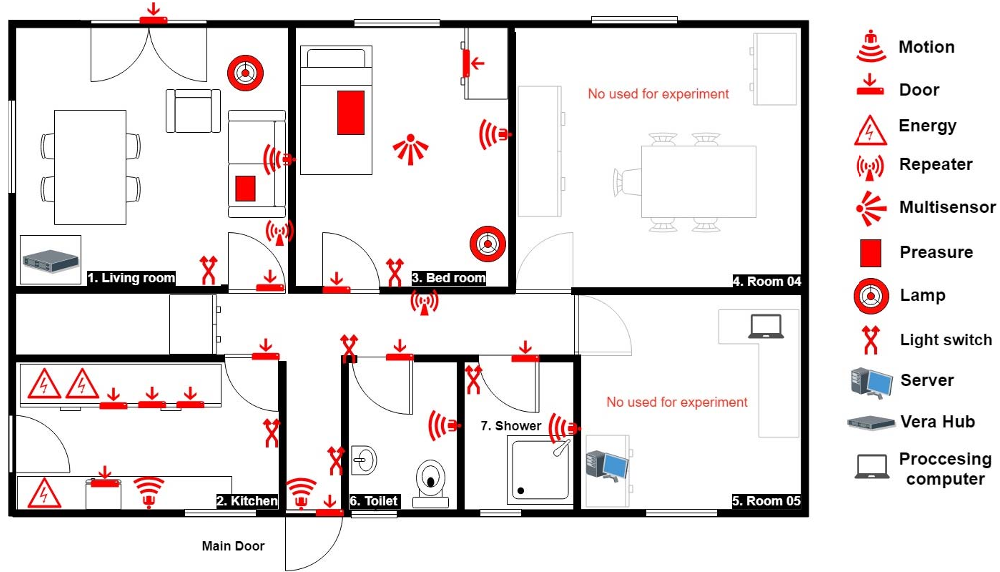 Fig 1. The temporal behavior of Wi-Fi signals shows significant "noise" and variability over time.
Experimental Insights
1. Does Crowdsourcing Work?
Yes. The study found that in most scenarios, training a model on "User 1 + User 2" data and testing it on "User 3" yielded better results than using a single user's map. Bayes Network and Random Forest consistently outperformed KNN when datasets were merged.
2. The Identical Device Paradox
Even with identical smartwatch models, the RSSI histograms (see below) revealed that different devices "perceived" the same environment differently. This suggests that "hardware identicality" is a myth in low-cost IoT sensors; individual calibration remains a hurdle.
 Fig 5. Comparison of RSSI distributions across three identical watches. The shift between Phase 1 (light blue) and Phase 2 (dark blue) highlights temporal instability.
3. The Two-Week Decay
The most critical finding was the temporal decay. Data collected in Week 1 was significantly less accurate when used to predict locations in Week 2.
| Algorithm | Phase 1 Accuracy (%) | Phase 2 Accuracy (%) |
|---|---|---|
| Random Forest | ~94.8% | ~87.0% |
| Bayes Network | ~95.8% | ~88.7% |
Note: This drop occurred even when testing on the same user, highlighting that the environment—not the user—is the source of the drift.
Critical Analysis & Future Outlook
This paper provides a sobering reality check for AAL developers. While crowdsourcing can bootstrap a system, static radio maps are doomed to fail.
Key Takeaways:
- Random Forest is the most reliable classifier for room-level Wi-Fi positioning.
- Recalibration is Mandatory: A system that isn't updated every few weeks will eventually become useless.
- Context Matters: Future research must focus on "unsupervised" recalibration—where the system learns to update its radio map automatically as users move naturally through the space.
In the context of nursing homes, this means residents and staff can collaboratively maintain the system, but the backend must be smart enough to handle the inevitable signal "drift" of our wireless world.