
CrowdSync: Overcoming the Chaos of User-Generated Content via Human Perception
CrowdSync: User generated videos synchronization using crowdsourcing
CrowdSync is a novel framework for synchronizing User Generated Videos (UGV) using human-in-the-loop crowdsourcing and the Dynamic Alignment List (DAL) structure. It achieves a 88% Pairwise Alignment Score (PAS) on challenging datasets where traditional automatic methods, struggling with camera motion and heterogeneity, only reach 23%.
TL;DR
The explosion of User-Generated Videos (UGV) from concerts and protests offers a goldmine of perspectives, but synchronizing them is an algorithmic nightmare due to shaky cameras and varying quality. CrowdSync introduces a crowdsourcing framework and a specialized data structure called the Dynamic Alignment List (DAL) to solve this. By treating humans as "temporal couplers," the system achieves an 88% alignment accuracy, nearly 4x better than previous automatic methods.
The Motivation: Why Algorithms Fail Where Humans Succeed
Traditional synchronization relies on shared audio "fingerprints" or visual feature tracking. However, UGV content is notoriously "dirty":
- Camera Motion: Users move, zoom, and shake their devices.
- Occlusions: People walking in front of the lens.
- Heterogeneity: Different devices have different frame rates and resolutions.
While these factors confuse a computer, a human can easily recognize that two videos show the same goal at a soccer match, regardless of the angle or blur. The challenge lies in scaling this human intuition without requiring thousands of hours of manual labor.
Methodology: The Dynamic Alignment List (DAL)
The heart of the paper is the DAL, a structure designed to orchestrate the crowd and minimize redundant tasks.
1. Task Splitting
Instead of watching 10-minute videos, crowd workers are given 5-second chunks. They simply identify if two chunks overlap and estimate the time offset ().
2. Delta Inference
This is the system's "efficiency engine." If the crowd synchronizes Video A with Video B, and Video A with Video C, the DAL mathematically infers the relationship between B and C without asking a human to look at them.
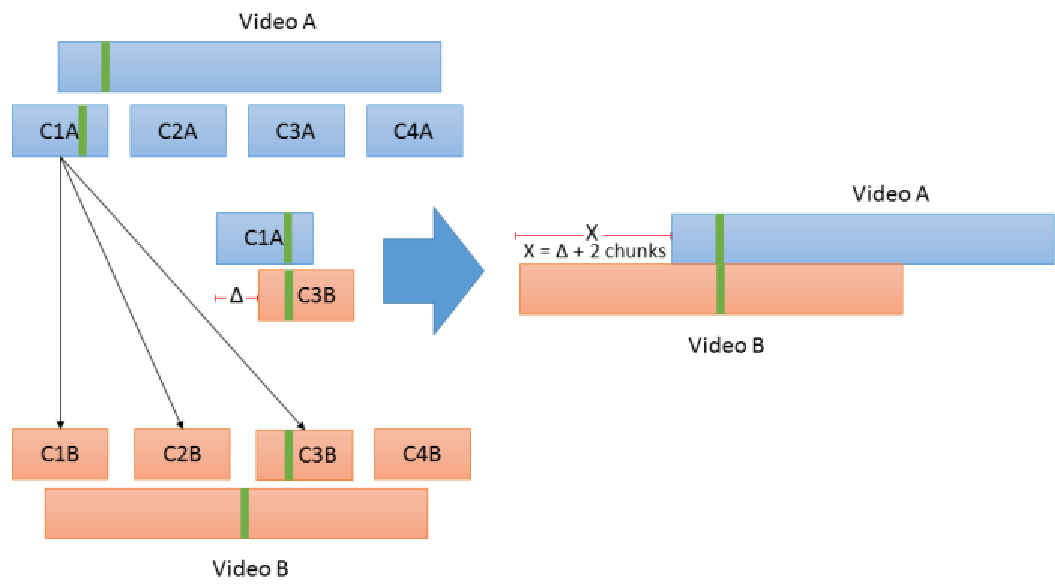 Figure 1: The synchronization method workflow and chunk-based comparison.
3. Convergence & Trust
To handle "malicious" workers, the system uses a Convergence Threshold. A synchronization point is only accepted if multiple workers agree on the same . If contributions diverge, the confidence score drops, and the task is re-queued.
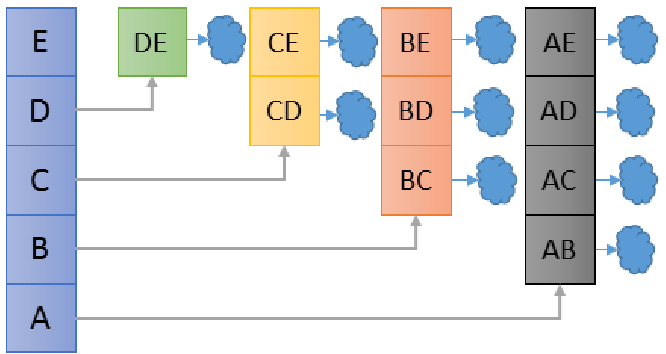 Figure 2: The DAL Data Structure, optimizing storage for temporal relations.
Experimental Results: Proving the Human Edge
The authors conducted two primary evaluations:
A. The Reliability Simulation
Using various "worker profiles" (Honest, Malicious, etc.), they proved that even with only 60% trustworthy workers, the DAL can infer the majority of synchronization points with minimal error.
- Key Finding: As shown in Table 1, the system only required 77 direct contributions to synchronize a network of 80 videos, successfully inferring over 2,500 relations.
B. Real-World UGV Test
On the "Climbing" dataset—a benchmark known for being difficult for AI—CrowdSync outperformed automatic techniques significantly:
- Automatic PAS: 23%
- CrowdSync PAS: 88%
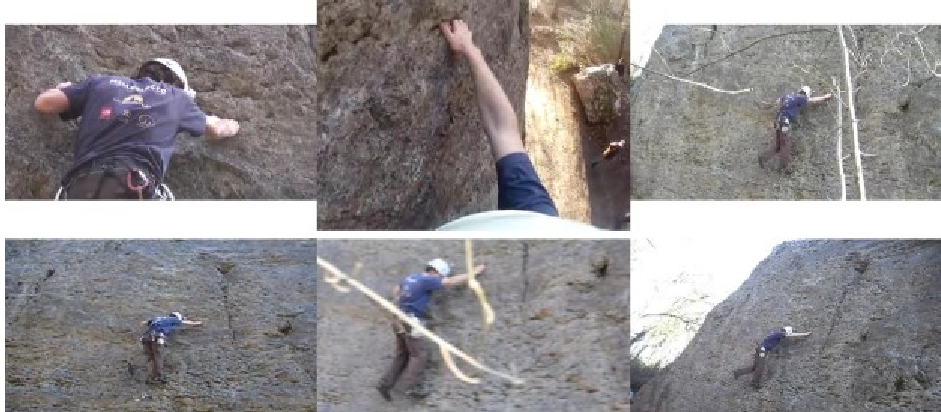 Figure 3: A synchronized "Mashup" presentation of an event captured by 6 different user cameras.
Critical Analysis & Future Outlook
CrowdSync demonstrates that human-in-the-loop is not a step backward, but a necessary bridge for complex multimedia tasks.
Strengths:
- The transitive inference logic makes crowdsourcing cost-effective.
- The system is agnostic to video quality or sensor data (GPS/Timestamps), which are often stripped or incorrect in UGVs.
Limitations:
- Negative Task Fatigue: The authors noted that 99% of contributions were "no synchronization found." This is an efficiency bottleneck.
- Latency: Crowdsourcing is inherently slower than a local algorithm, making it unsuitable for live-streaming synchronization.
Conclusion: CrowdSync paves the way for "Event Replay" applications where diverse social media clips can be woven into a seamless, multi-angle narrative. Future work involving AI to pre-screen "likely" matches could further reduce the human workload.