
Cruel Intentions: Decoding the Cognitive "Slippery Slope" of Entrepreneurial Social Media Ethics
Cruel Intentions? – The Role of Moral Awareness, Moral Disengagement, and Regulatory Focus in the Unethical Use of Social Media by Entrepreneurs
This paper presents a conceptual framework investigating why entrepreneurs engage in unethical social media behavior. It integrates Moral Disengagement (MD) and Moral Awareness (MA) with Regulatory Focus Theory to explain the cognitive mechanics behind ethical misconduct.
TL;DR
Social media is the "Wild West" for entrepreneurs—a place where the pressure for financial survival meets the veil of digital anonymity. This paper develops a conceptual framework revealing how the drive for profit leads entrepreneurs to "switch off" their ethics through a process called Moral Disengagement, while their individual Regulatory Focus (growth-oriented vs. safety-oriented) dictates how clearly they see moral red flags.
Contextual Positioning
Within the landscape of business ethics, this work serves as a theoretical bridge. It connects established social-cognitive theories (Bandura’s Moral Disengagement) and motivational theories (Higgins’ Regulatory Focus) specifically to the high-stakes, resource-constrained world of entrepreneurship and the unique affordances of social media.
The Problem: The High Cost of "Free" Marketing
For an entrepreneur, social media is a double-edged sword. It offers a global reach for nearly zero cost, yet it facilitates "misbehaving" through:
- Pseudonymity: Founding members using aliases to praise their own firms (e.g., the John Mackey/Whole Foods case).
- Disinhibition: The remote nature of digital interaction reduces the immediate social "pain" of unethical acts.
- Financial Desperation: In early-stage ventures, the "need for wealth" often outweighs long-term brand equity.
The authors argue that we don't just "lack" ethics; we actively disengage them to avoid feeling like "bad people" while doing "bad things."
Methodology: The Cognitive Architecture of Misconduct
The core of the paper is a model of 10 propositions centered on how financial motives bypass our internal moral compass.
1. The Engine: Financial Gains & Moral Disengagement
The authors posit that the more an entrepreneur is driven by financial success, the more likely they are to utilize psychosocial mechanisms—such as moral justification or displacement of responsibility—to ignore the harm caused by deceptive social media practices (e.g., "everyone else is buying fake followers, so I have to").
2. The Filter: Moral Awareness
Moral Awareness is the "recognition" that a decision has ethical consequences. The paper highlights "Ethical Blindness"—a state where entrepreneurs become so focused on goals that they literally do not perceive a situation as having an ethical dimension.
3. The Navigator: Regulatory Focus
How we view our goals matters:
- Promotion Focus: Motivated by "ideals" and "gains." These individuals may be more aware of moral issues that impact their future growth.
- Prevention Focus: Motivated by "duties" and "avoiding loss." These individuals are more vigilant toward risks that could lead to negative outcomes.
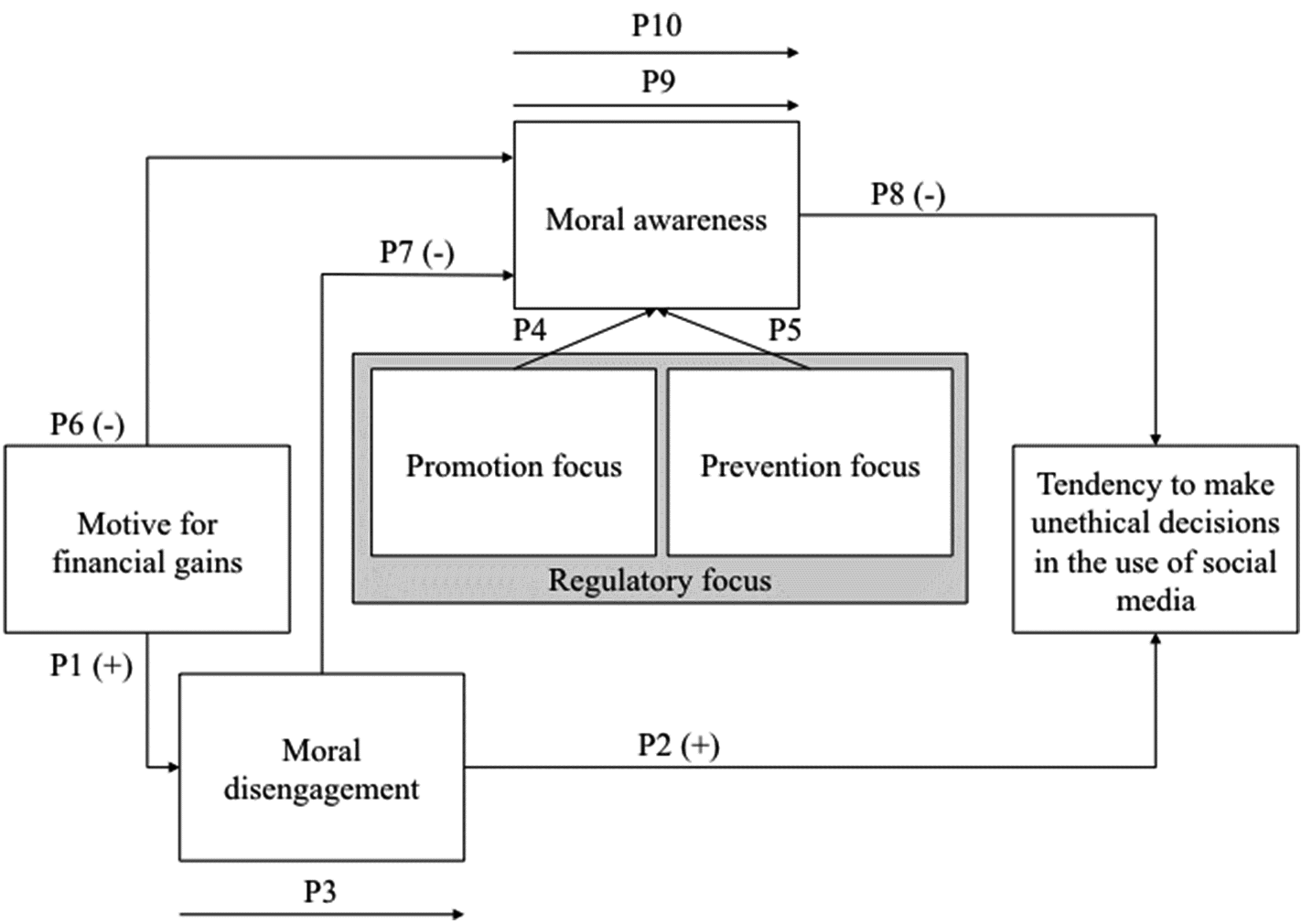 Figure 1: The proposed conceptual framework linking motives, cognitive processes, and unethical outcomes.
Deep Insights: The "Slippery Slope"
The most striking insight is the mediation effect. Moral Awareness isn't just a fixed trait; it is dynamic. The motive for financial gain negatively affects Moral Awareness (Prop 6). This means as the "hunger" for profit increases, the entrepreneur's "ethical eyesight" actively degrades.
When we use Moral Disengagement, we aren't just lying to others; we are restructuring our reality so that the unethical act no longer feels unethical. This creates a feedback loop:
- Misperception of Accuracy: Ambiguity in social media rules allows entrepreneurs to justify dishonest behavior, which further lowers their threshold for future misconduct.
Critical Analysis & Conclusion
Takeaway
Unethical behavior on social media isn't just about "bad people." It is about a cognitive failure where high financial pressure and digital anonymity allow entrepreneurs to silence their self-sanctions.
Limitations
- Conceptual Nature: This is a framework of propositions, not an empirical test. The specific "weights" of these relationships (e.g., how much more powerful is Promotion Focus than Prevention Focus?) remain to be measured.
- Context Specificity: While focused on entrepreneurs, the "anonymity" of social media is decreasing with the rise of "Personal Branding," which may alter the moral disengagement process.
Future Outlook
This framework provides a roadmap for researchers to run longitudinal studies on "Serial Entrepreneurs." Does the tendency to disengage decrease as a firm matures and financial pressure eases, or does it become an ingrained "organizational culture"?