
Cryptanalysis of CenLocShare: Why Centralization Failed Mobile Social Privacy
Cryptanalysis of a Centralized Location-Sharing Scheme for Mobile Online Social Networks
This paper presents a rigorous cryptanalysis of the CenLocShare scheme (2018), a centralized location-sharing protocol for mobile online social networks (mOSNs). Using ProVerif and AVISPA simulation tools, the authors demonstrate that the integrated server architecture fails to protect against Man-in-the-Middle (MitM), Replay, and Denial-of-Service (DoS) attacks.
Executive Summary
TL;DR: This study systematically dismantles the security claims of a prominent 2018 centralized location-sharing protocol (CenLocShare). Despite its efficiency, the protocol is found to be critically vulnerable to Man-in-the-Middle (MitM) and Replay attacks, effectively allowing an attacker to manipulate user privacy settings and deny service to legitimate users.
Academic Positioning: This work serves as a "security post-mortem." It sits in the specialized domain of Cryptanalysis within Mobile Online Social Networks (mOSNs), serving as a cautionary tale against optimizing for communication cost at the expense of cryptographic integrity.
Problem & Motivation: The Quest for Efficient Privacy
In the evolution of mOSNs, location sharing moved from manual "check-ins" to automated GPS-based updates. However, this transition introduced a "Privacy vs. Performance" trade-off.
Previous works like MobiShare and MobiShare+ used separate servers for social data and location data to prevent a single entity from knowing "who you are" and "where you are" simultaneously. Xiao et al. proposed CenLocShare to reduce the latency and storage costs of these multi-server models. However, the authors of this paper noticed a glaring oversight: CenLocShare assumed a level of channel security that simply doesn't exist in the wild.
Methodology: Formal Verification of Failure
The authors dissected the three primary phases of the protocol:
- Registration: Where users set distance thresholds ().
- Location Updates: Where users upload GPS coordinates.
- Querying: Where friends' locations are retrieved.
The Architecture Gap
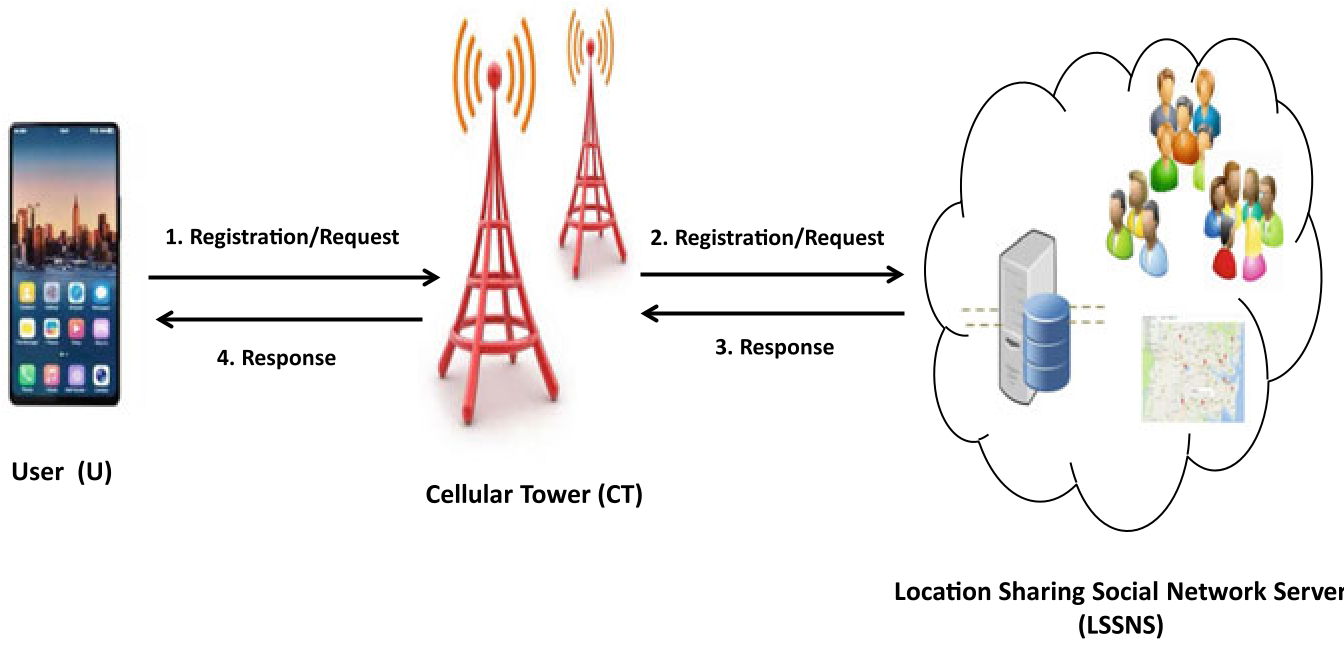
The system relies on a Centralized Location-Sharing Social Network Server (LSSNS) and a Cellular Tower (CT). The fatal flaw identified is the reliance on the CT as a "trusted entity" without implementing end-to-end encryption or integrity checks between the User () and the LSSNS.
Security Pitfalls Explained
- MitM Attack: Since the registration message is sent in plaintext over an insecure channel, an attacker () can intercept the message and modify the distance threshold. For example, can change a user's privacy radius from 500m to 50,000m, effectively exposing their location to a much wider audience without their knowledge.
- Replay Attack: The protocol lacks timestamps and nonces. An attacker can capture a "registration" packet and replay it months later, overwriting a user's current settings with obsolete ones.
- DoS via Index Manipulation: In the update phase, the server stores k-dummy locations to hide the real one. The index of the real location () is not authenticated. If an attacker modifies this index, the user will be unable to find their friends, as the server will perform distance calculations based on dummy data.
Experiments & Results: Simulation Evidence
To prove these vulnerabilities weren't just theoretical, the authors used ProVerif and AVISPA.
ProVerif Results
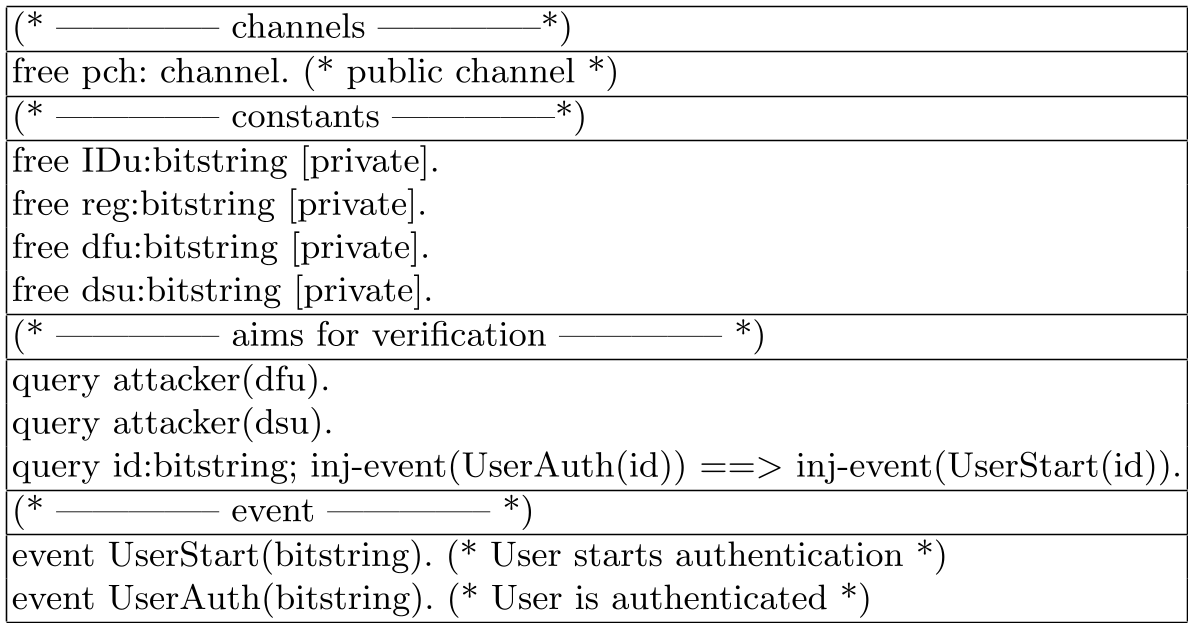
The ProVerif simulation (shown below) confirms that the attacker can indeed reach the "goal" of obtaining and modifying the sensitive threshold variables ().
AVISPA Results
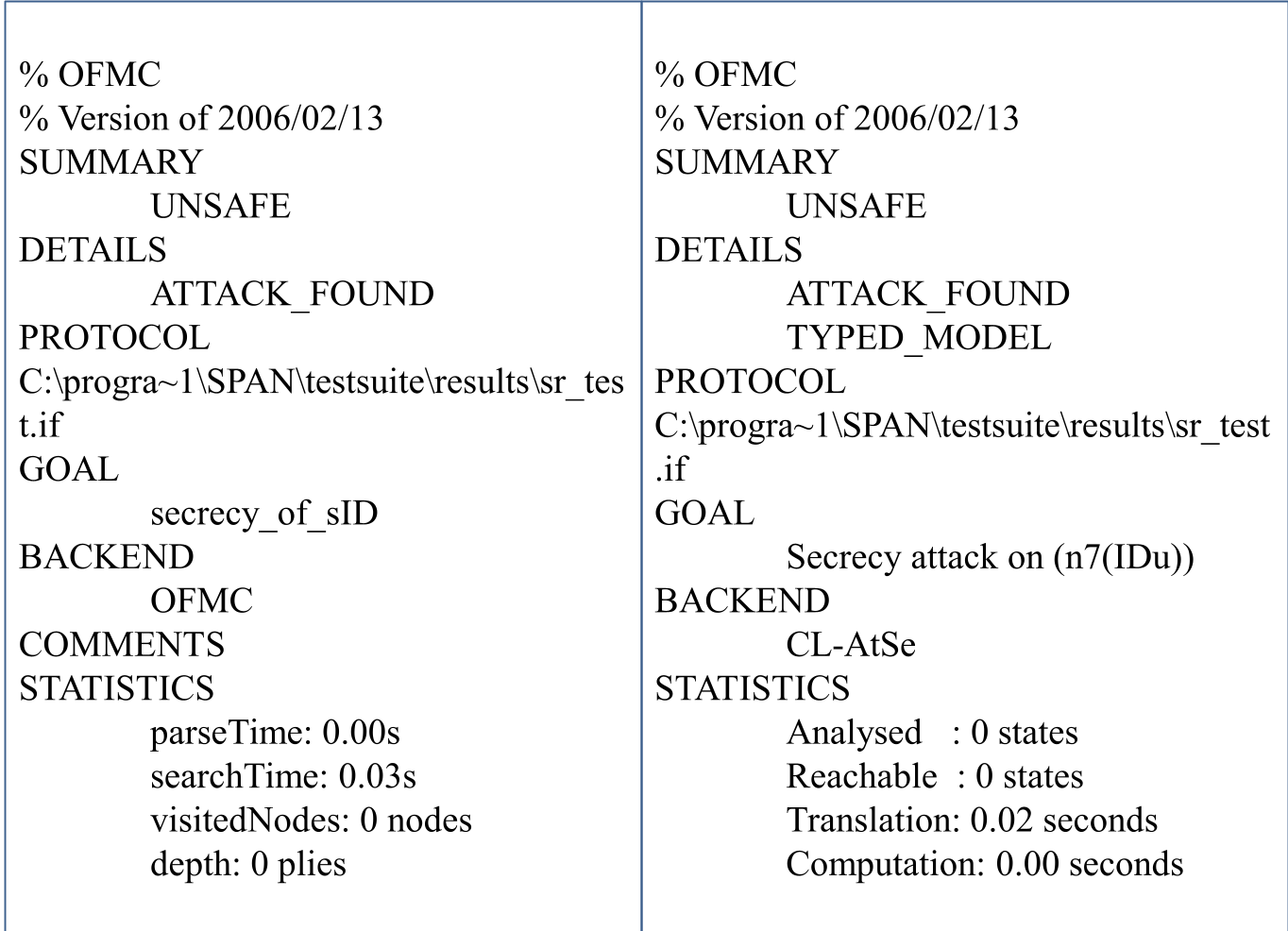
The AVISPA tool, using the On-the-Fly Model-Checker (OFMC), formally flagged the protocol as UNSAFE. It found a secrecy attack on the user's identity and location index within milliseconds of simulation.
Critical Analysis & Conclusion
Takeaway
The primary contribution of this paper is the validation that efficiency is secondary to security. The CenLocShare scheme failed because it treated the communication channel as a "black box" that wouldn't be tampered with.
Proposed Fixes
The authors suggest three standard but essential improvements for future mOSN protocols:
- Mutual Authentication: Ensuring the server and user both prove their identities.
- Integrity via Hashing: Using HMACs or digital signatures to ensure parameters like cannot be altered in transit.
- Liveness via Nonces: Using random numbers and timestamps to ensure every message is fresh.
Limitations & Future Work
While the paper identifies the flaws, it does not provide a fully benchmarked replacement protocol in this specific text. The authors' future work intends to design a "security-enhanced scheme" that maintains the centralized efficiency of CenLocShare while implementing these cryptographic safeguards.