
Seeing the Point of Politics: Demystifying Democracy through CSAV
Seeing the point of politics: exploring the use of CSAV techniques as aids to understanding the content of political debates in the Scottish Parliament
This paper explores the application of Computer Supported Argument Visualisation (CSAV) to enhance public understanding of parliamentary proceedings. By transforming linear textual reports from the Scottish Parliament into non-linear, hierarchical maps using tools like "Compendium," the study demonstrates how visual structures can clarify complex "wicked" political problems and improve transparency.
TL;DR
The gap between the "language of politics" and public understanding is a major contributor to voter disillusionment. This paper investigates whether Computer Supported Argument Visualisation (CSAV) can bridge this gap. By turning the Scottish Parliament's dense "Official Reports" into interactive, logical maps, the research shows that visualizing the structure of a debate makes it easier for citizens to grasp complex issues, evaluate political effort, and re-engage with the democratic process.
The Problem: The Verbatim Barrier
Political debates are essentially "wicked problems"—issues characterized by conflicting values, a lack of clear-cut "right" answers, and complex interdependencies. However, the way these debates are recorded (the "Official Report") is fundamentally flawed for the casual reader:
- Linearity vs. Complexity: Debates are recorded chronologically, yet the logical flow often jumps back and forth between speakers and topics.
- Vast Volume: Reports can run for dozens of pages, requiring significant intellectual "heavy lifting" to extract the core arguments.
- Rhetorical Noise: Personality clashes and party banter often obscure the actual policy merits.
The author argues that for the public, reading a verbatim report is often a "daunting prospect" that acts as a deterrent to understanding what their representatives are actually doing.
Methodology: Mapping the "Wicked"
To solve this, the study adapts the Issue-Based Information Systems (IBIS) framework originally proposed by Kunz and Rittel. The core insight is that political problem-solving is a collaborative argument space.
The Conversion Process
- Deconstruction: The researcher breaks down speeches into a list of specific issues.
- Structuring: Instead of following the clock, the map follows the logic. It starts with a "Root Question" (e.g., "What are the grounds for the motion?").
- Categorization: Statements are sorted into specific "Nodes":
- Questions (?): Queries raised during the debate.
- Ideas/Propositions: Potential solutions or stances.
- Pros/Cons (+/-): Arguments that support or contest a specific idea.
- Hyperlinking: Every node is linked back to the original text to maintain integrity and allow for deeper research.
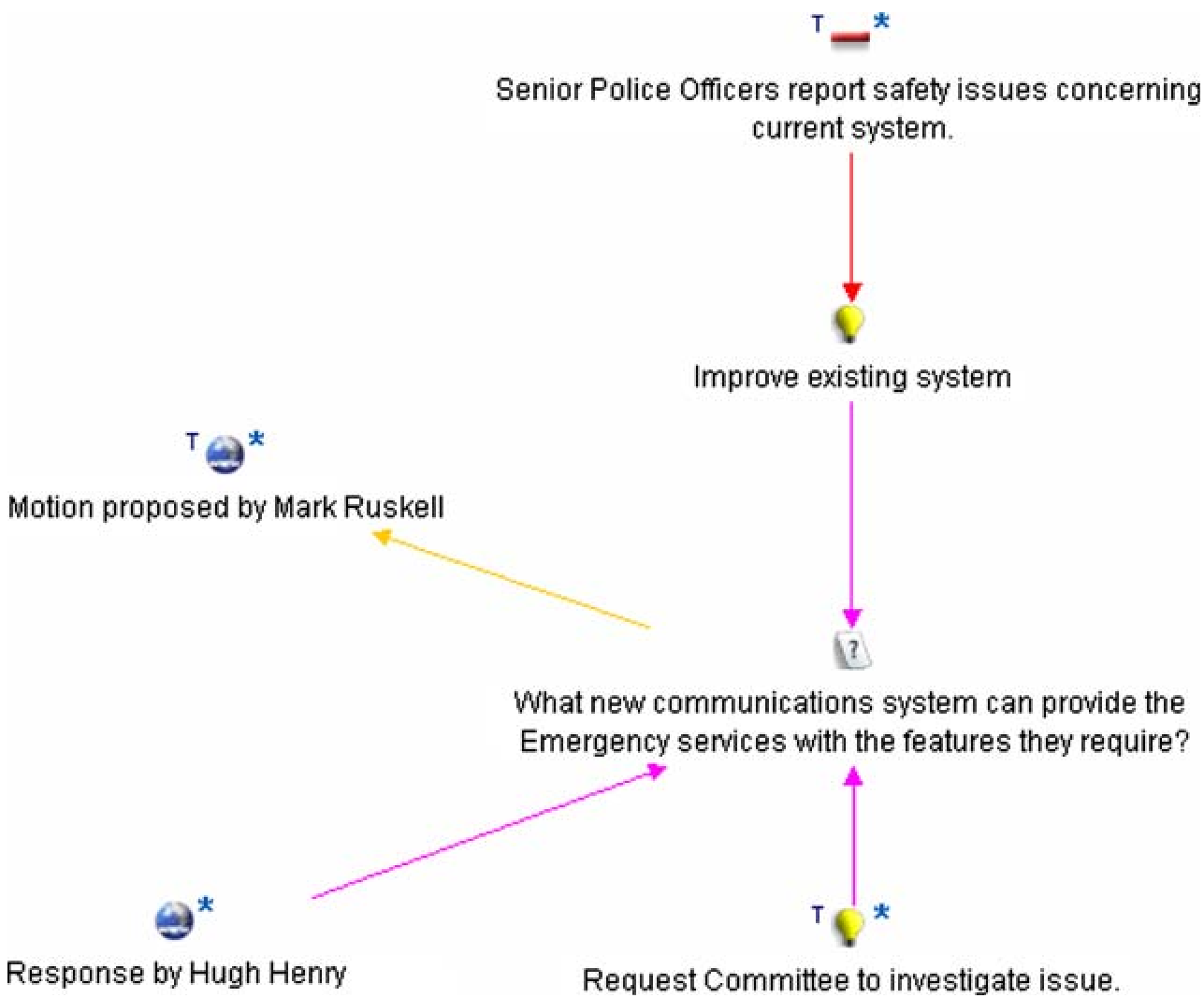 Figure 1: A snippet of the TETRA debate map using Compendium, showing hyperlinks and logical nodes.
Experiments & Results: Is a Picture Worth a Thousand Hansard Pages?
The study conducted structured and informal interviews comparing the visual maps to standard reports.
Key Findings:
- Efficiency: Users could "scan" the map to find specific themes (e.g., environmental impacts) in seconds, whereas the report required reading the whole document.
- Depersonalization: By stripping out "party bickering," the maps presented a more focused and professional image of the debate. While some argued this lost the "flavor" of politics, most participants felt it made the substance more accessible.
- Appreciating Complexity: Paradoxically, showing the "messy" web of arguments made participants more sympathetic to politicians. It highlighted the sheer difficulty of making a binary "Yes/No" vote on a multi-faceted issue.
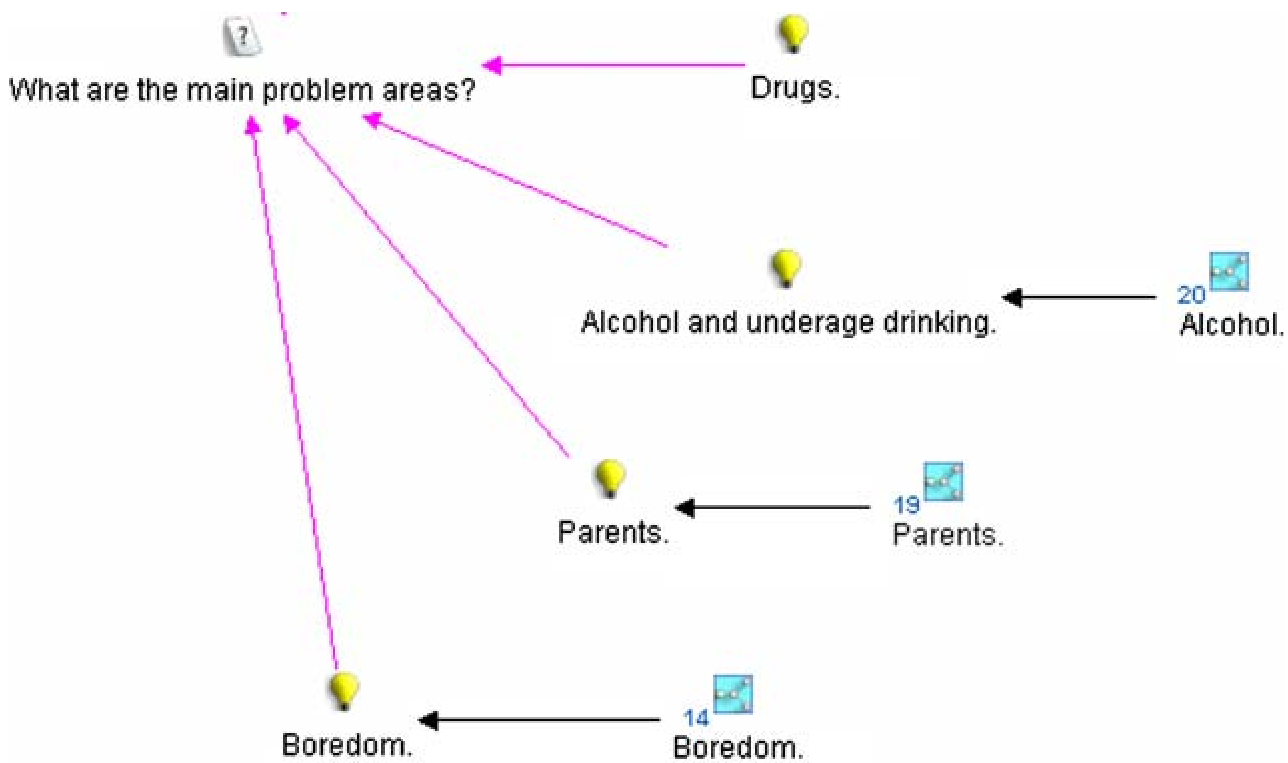 Figure 2: Using "maps within maps" to manage the staggering complexity of a 4-hour debate on Antisocial Behaviour.
Critical Analysis & Future Outlook
The paper highlights a significant opportunity for Digital Government: Transparency through Logic.
Limitations
- Neutrality Risk: The person creating the map (the "mapper") acts as an editor. Their interpretation of what is "relevant" could introduce subconscious bias.
- Navigation Issues: On small screens, large maps can become disorienting (the "where am I?" problem).
Conclusion and Takeaway
The true value of CSAV lies in its ability to show the "life history" of a bill—from consultation to committee to floor debate. By linking these stages, we can hold politicians accountable for consistency. As tools for automated argument extraction (like AI) mature, CSAV could become a standard interface for citizens to interact with their governments, turning "Official Reports" from dusty archives into vibrant, navigable assets.