
Seeing the Point of Politics: Can Argument Mapping Cure Civic Disengagement?
Seeing the point of politics: exploring the use of CSAV techniques as aids to understanding the content of political debates in the Scottish Parliament
This paper explores the application of Computer Supported Argument Visualisation (CSAV) to political discourse. It specifically tests whether mapping parliamentary debates from the Scottish Parliament using Compendium and IBIS frameworks improves public understanding compared to traditional verbatim textual reports.
TL;DR
Parliamentary debates are often lost in a sea of "impenetrable verbiage." This paper investigates whether Computer Supported Argument Visualisation (CSAV) can transform linear, overwhelming official reports into intuitive, non-linear maps. By testing these maps on Scottish Parliament debates, the research finds that while visualisations drastically improve the comprehension of complex "wicked problems," they also strip away the "theatre" of politics—a trade-off that has significant implications for how we perceive our representatives.
The Friction of Political Literacy
Government transparency is currently at a paradox. While transcripts of every word spoken in Parliament are available online ("The Official Report"), the accessibility of the logic behind those words is at an all-time low.
The author identifies three core pain points:
- The Linearity Trap: Human brains struggle with long lists. Linear notes dissociate ideas from their context, "cauterising" natural thinking processes.
- "Wicked Problems": Political issues lack "right" or "wrong" answers; they are nests of relative values where every solution creates new problems.
- The Language Barrier: Specifically for younger citizens, the professional "jargon" and rhetorical bickering of politicians act as a deterrent to engagement.
Methodology: Mapping the "Wicked"
The study employs IBIS (Issue-Based Information System) to deconstruct debates. In this framework, a debate is treated as a root question (e.g., "What are the grounds for the Antisocial Behaviour Bill?") branching into Ideas, Pros, and Cons.
The Conversion Process
The author mapped two sessions:
- The TETRA Debate: A 45-minute technical discussion on radio masts.
- The Antisocial Behaviour Debate: A 4.25-hour marathon involving 32 speakers.
Using Compendium software, the author replaced chronological flow with logical structure.
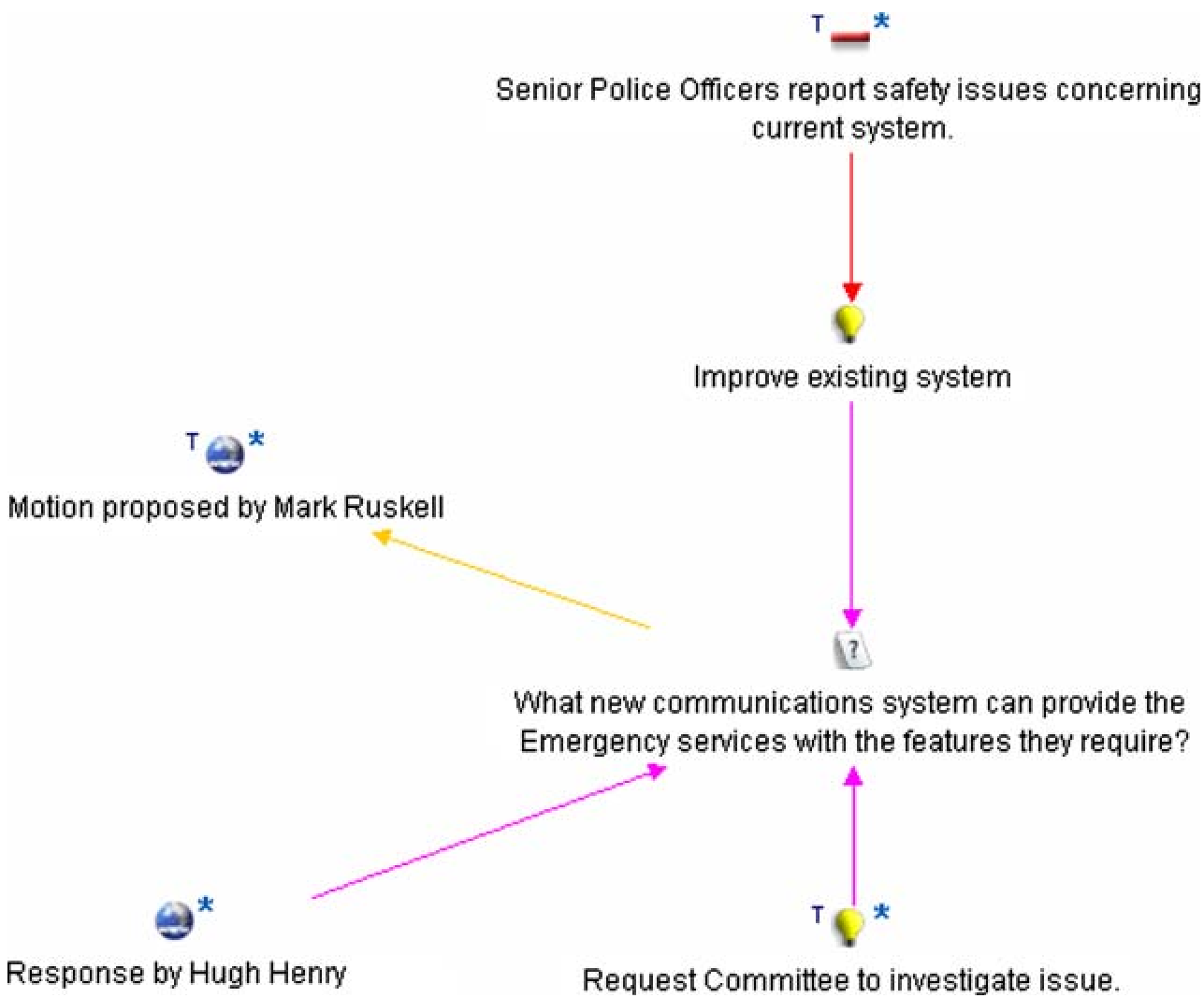 Figure 1: A snippet of the TETRA map. Globe icons represent hyperlinks to the original text, ensuring the map remains a "bridge" rather than an island.
Experimental Insights: Clarity vs. Personality
The results from structured and informal interviews yielded a "double-edged sword" conclusion:
The Pros: Enhanced Cognitive Clarity
- Impartiality: The maps provided an "impersonal depiction" that reduced the influence of a speaker's charisma, forcing users to judge the merit of the argument.
- Appreciating Complexity: Users felt more sympathetic toward politicians after seeing the "web" of constraints they navigate—potentially reducing public cynicism.
- Navigation: Sub-maps (embedding maps within maps) allowed users to "drill down" into specifics (e.g., health impacts) without losing the big picture.
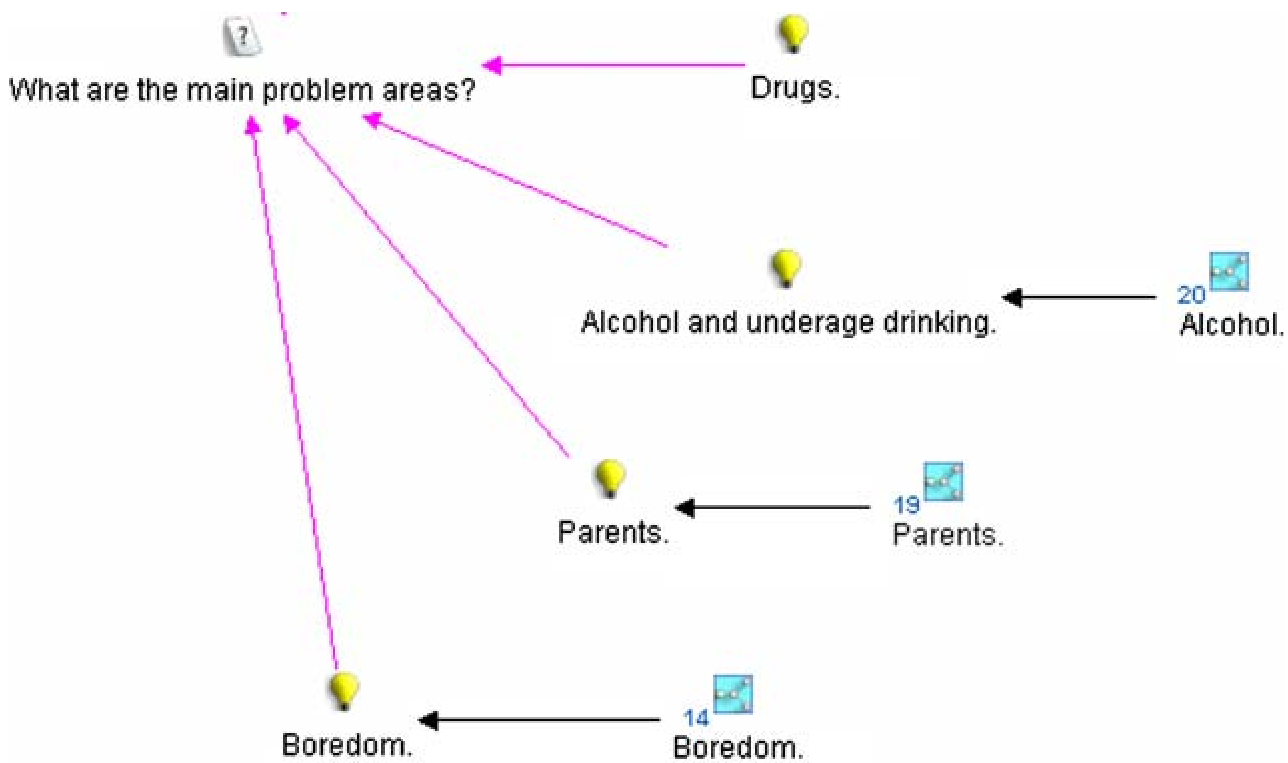 Figure 2: The use of Map Nodes to divide a 4-hour debate into digestible thematic chunks.
The Cons: The Loss of Political Theatre
The most provocative finding was the "depersonalisation" of the debate. By removing "party banter" and rhetorical flourishes to achieve clarity:
- The map portrays politicians as purely logical actors, which the verbatim report contradicts.
- Useful data on inter-party relations and conviction (revealed through style) is lost.
- The "rhetorical build-up" of a speech—how a politician persuades an audience—is flattened into a single node.
Critical Analysis & Conclusion
This paper positions CSAV not as a replacement for the record, but as a transparency layer. The author’s most forward-thinking suggestion is to link these maps across the policy lifecycle—showing how an idea evolves from a public consultation to a committee meeting and finally to a floor vote.
Takeaway: If we want a less cynical electorate, we must show them the "logic" behind the legislation. However, we must be careful: in "cleaning up" the bickering of politics, we might be creating a sanitized version of democracy that ignores the very human (and often irrational) forces that drive it.
Limitations: The study relies on anecdotal feedback from a small sample. Future work must explore whether these maps can actually convert the apathetic, or if they only serve those already looking for answers.