
Deciphering Digital Deceit: Why Liars on Social Media Actually Use Better Grammar
Cues to Deception in Social Media Communications
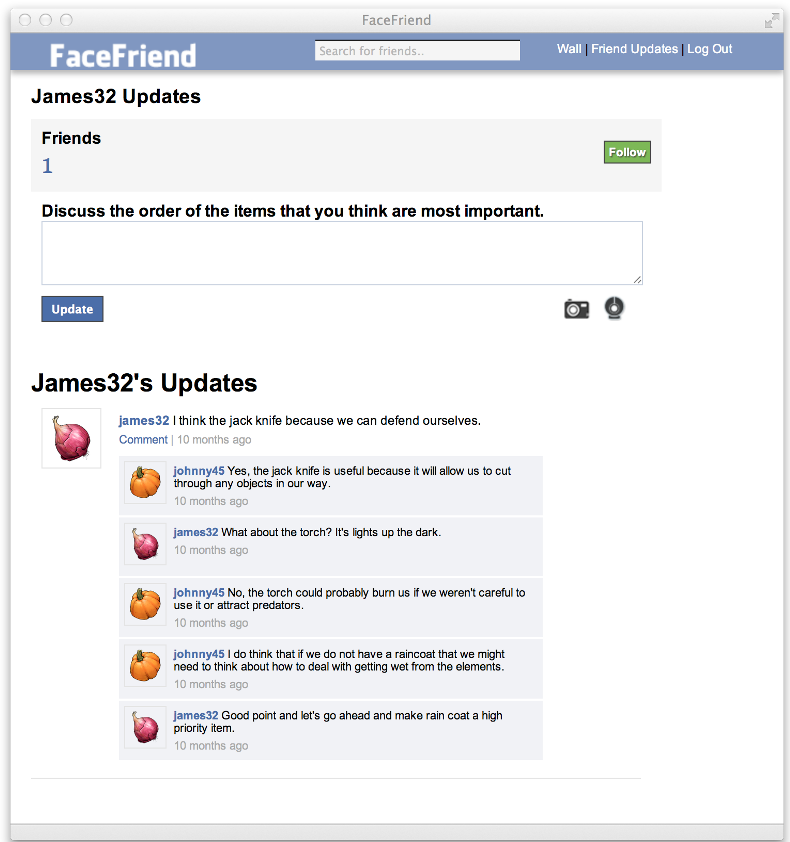
This paper investigates linguistic indicators of deception within social media environments, introducing a mock platform "FaceFriend" for human subject experiments. The authors identify novel cues like emoticon usage and "txt-informality," ultimately developing machine learning classifiers that achieve an average 90% accuracy in distinguishing truthful from deceptive social media posts.
TL;DR
Researchers at the Georgia Tech Research Institute have uncovered a fascinating paradox: while we expect liars to be brief and sloppy, deceptive communication in social media is often longer and more formal than the truth. By analyzing these "linguistic leaks" on a mock social platform, they built a machine learning system capable of detecting lies with 90% accuracy.
The Shifting Landscape of Deception
Historically, deception research (think Ekman or Zuckerman) relied on face-to-face cues like gaze aversion or posture shifts. As communication moved to email and IM, researchers focused on "Sentence Length" and "Complexity."
However, social media is a different beast. Character limits, the lack of formal headers/signatures, and the pervasive use of slang (Internet Slang) have changed the "baseline" of normal communication. The authors argue that because social media is evolving, our old mental models for spotting a liar—such as looking for short, simple sentences—might actually lead us toward the wrong conclusions.
The Perception vs. Reality Gap
The authors conducted two brilliant experiments to see if our "gut feelings" about liars align with how liars actually write.
Experiment 1: What We Think a Liar Looks Like
Using a platform called "FaceFriend," subjects viewed conversations and flagged suspected liars.
- The Finding: People associated low complexity, neutral sentiment, and a lack of emoticons with deception.
- The Intuition: We subconsciously trust people who use emojis and expressive language, viewing them as more "relatable" or "human."
Experiment 2: How Liars Actually Write
When subjects were asked to lie to others to win a survival game, their writing style shifted in unexpected ways:
- Sentence Length: Deceptive messages were significantly longer (avg. 9.46 words) than truthful ones (avg. 7.85 words).
- Txt-Informality: Liars became more formal. They used less slang and were more careful with their spelling compared to when they were telling the truth.
The Motivation: This is a classic case of overcompensation. A liar is cognitively burdened; they are trying so hard to be "credible" and "persuasive" that they abandon the casual, shorthand nature of social media, inadvertently creating a signature of deceit.
Methodology: How the AI Detects the Lie
The breakthrough in this paper isn't just the linguistic cues, but the context in which they are analyzed. The researchers used three tiers of features:
- Absolute Cues: Raw metrics like word count.
- Locally Relative Cues: How a message's length relates to the sender's personal average. (Is this person being unusually talkative for them?)
- Globally Relative Cues: How the message compares to the average of the entire community.
SOTA Performance
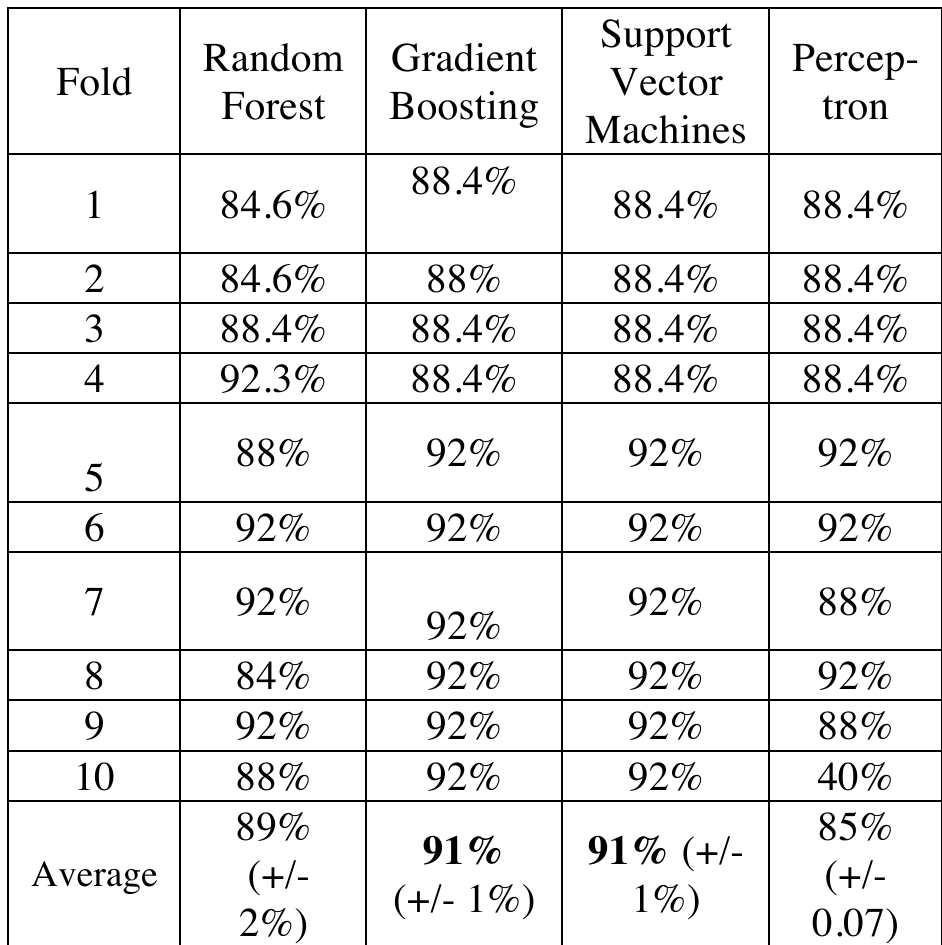
Using these features, the team tested several classifiers. Both Support Vector Machines (SVM) and Gradient Boosting emerged as the winners, maintaining a consistent 91-92% accuracy across most experimental folds.
Deep Insight: The Literacy of the Medium
The most profound takeaway is the authors' invocation of Yates’ hypothesis: technology doesn't determine communication; cultural practices do.
In an era where "Internet Speak" is the default truth-telling mode, correctness becomes suspicious. The cognitive load of fabricating a story leads individuals to fall back on formal writing structures—perhaps because formal language feels more "authoritative" or simply because the liars are focusing too hard on the content to remember to be "casual."
Critical Analysis & Future Outlook
While the 90% accuracy is impressive, it is important to note:
- Controlled Environment: The data came from a survival game scenario. Real-world deception (like political disinformation) might involve different emotional stakes.
- The Ratio Problem: In the real world, the ratio of truth to lies is not 1:1. The model might face higher "false positive" rates in a wild Twitter stream.
Future Work: The researchers are now looking into personality types as predictors of deception strategy. Does an extrovert lie differently than an introvert on social media? Furthermore, the role of embedded links and videos as "external proof" in deceptive messages remains an open frontier.
Conclusion: Next time you see a post on social media that is unusually long, meticulously spelled, and surprisingly devoid of slang—be careful. You might just be looking at a linguistic leak.