
Engineering an Engineering Mindset: How MIT Lincoln Laboratory Reinvents Online Technical Mastery
Cultivating professional technical skills and understanding through hands-on online learning experiences
This paper introduces a specialized framework for designing "Just-In-Time" Mastery MOOCs tailored for STEM professionals. Developed by MIT Lincoln Laboratory, the methodology integrates targeted theory with rigorous hands-on digital and physical labs, exemplified by courses in High-Performance Computing (HPC), Big Data, and physical Radar construction.
TL;DR
MIT Lincoln Laboratory researchers have developed a methodology for STEM MOOCs that moves beyond "watching videos" to "building systems." By integrating physical radar construction and high-performance computing (HPC) workflows with rigorous asynchronous troubleshooting guides, they bridge the gap between theoretical knowledge and professional-grade technical skills.
The "Troubleshooting Gap" in Professional Education
Most online courses for professionals fail because they ignore the reality of engineering: things rarely work the first time. Adult learners—who are typically self-directed and problem-driven—often find that MOOCs provide the what (content) but miss the how (the iterative process of debugging and refinement). When a student encounters a bug in their code or a "messy" signal from a physical radar they built, the lack of an instructor presence usually leads to frustration or non-robust "hacks."
Methodology: The Mastery-based, Just-In-Time Scaffold
To solve this, the authors restructured their residential courses at the MIT Lincoln Laboratory Supercomputing Center (LLSC) into a series of "challenges and strategies."
1. High-Performance Computing (HPC) Workflows
Instead of just teaching syntax, the HPC course focuses on refactoring. It uses Jupyter Notebooks to allow learners to move from serial code on a laptop to parallel workloads on a supercomputer.
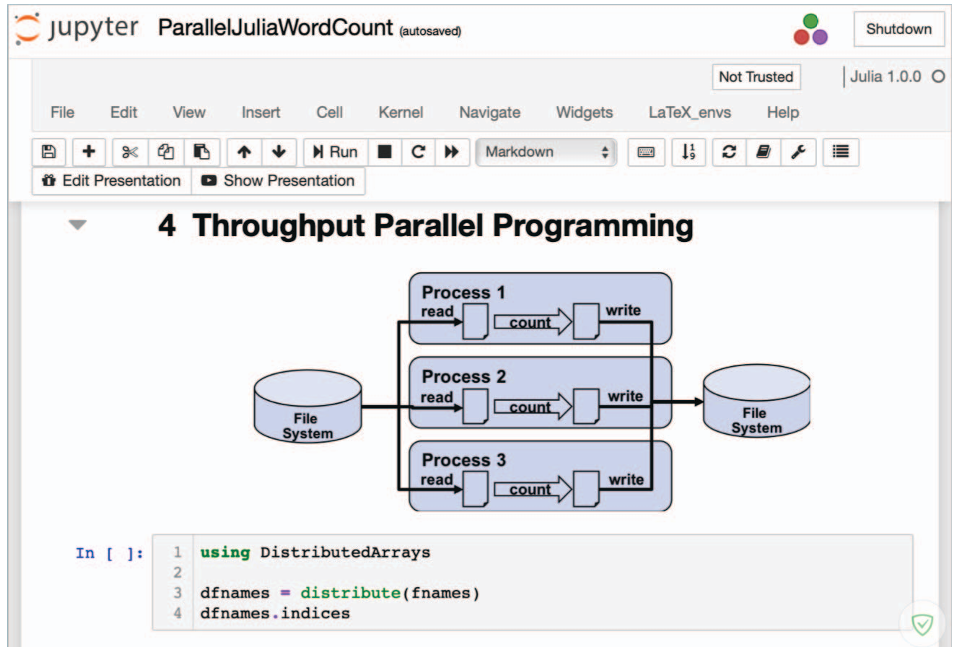 Fig 1: Using Jupyter Notebooks to simulate a Linux environment for HPC practice.
2. Physical Construction: The "Build a Radar" Case Study
The most ambitious project involves building a small radar capable of Doppler and SAR (Synthetic Aperture Radar) imaging. The researchers found that documentation alone wasn't enough. They had to design:
- Sanity Checks: Periodic tests that confirm a hardware step is correct before moving on.
- Scene Selection Galleries: Teaching students to understand why a radar might fail to track a small bird versus a car, building "intuition" for physical constraints.
Lessons from the Lab: Scaling the "Engineering Mindset"
The paper highlights that successful technical MOOCs must include:
- Explicit Debug Points: References to solutions when tests fail.
- Trade-space Analysis: Explaining why one design choice (eg. a specific database tech) is better than another in a given context.
- Controlled Tests: Providing "known-good" results for students to compare against their own outputs.
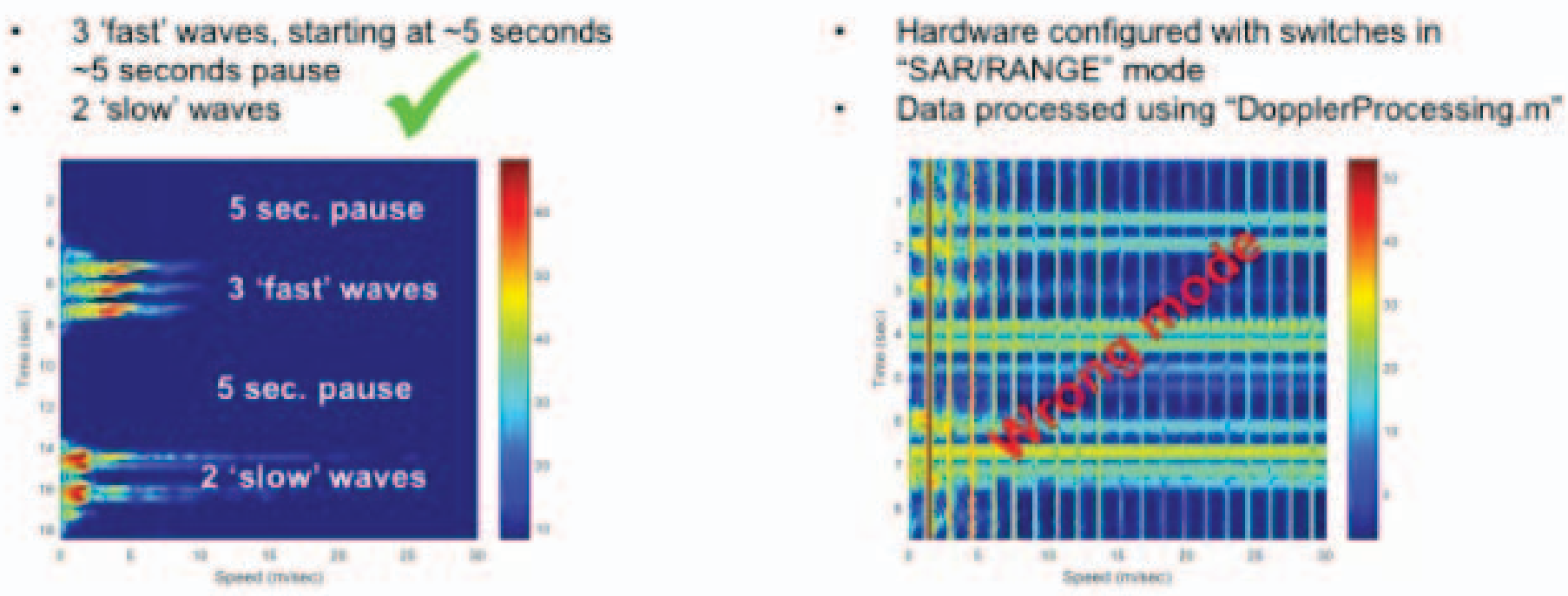 Fig 2: A functional testing process used to help students identify mismatched settings vs. successful data collection.
Critical Insight: The Future of STEM Learning
The transition from "Blended" (partially in-person) to "Asynchronous" (entirely self-paced) is the ultimate test of a course's design. This paper proves that even complex, hardware-dependent subjects like radar engineering can be taught online—if the "instructor’s intuition" for troubleshooting is codified into the platform itself.
Final Takeaway
For organizations looking to upskill their workforce in AI, HPC, or hardware engineering, the lesson is clear: Mastery is not found in the lecture, but in the guided struggle of the laboratory.
Key References
- Knowles, M.S. The Modern Practice of Adult Education.
- Mullen, J. et al. Learning by Doing, High Performance Computing Education in the MOOC Era.