
Cultural Resilience: Why Good Safety Habits Spread (or Stall) in Social Networks
8222_A Cultural Algorithm to Guide Driver Learning in Applying Child Vehicle Safety Restraint.
This paper presents an agent-based simulation utilizing a Cultural Algorithm (CA) to model and improve driver behavior regarding child vehicle safety restraints. By integrating a belief space of "expert" exemplars and social networks, the model simulates how drivers learn to correctly select and position safety seats to minimize child injury.
TL;DR
This research explores the intersection of evolutionary computing and public health by using Cultural Algorithms (CA) to simulate how drivers learn to use child safety restraints. By modeling drivers as adaptive agents within a social network, the study discovers a paradoxical "cultural buffer": while culture helps retain knowledge, it also makes populations more resistant to new, expert-led safety interventions.
The Motivation: Moving Beyond Static Statistics
Every year, thousands of children are injured due to the incorrect use of vehicle restraints. While the medical community knows the "correct" settings for age, height, and weight, human behavior is messy.
Current research often treats injury prevention as a static data problem. However, the authors argue that safety is a complex adaptive system. Factors like "rushing for an appointment" (external stressors), "what my neighbor does" (social influence), and "how I've always done it" (cultural belief) create a non-linear environment that traditional statistics cannot capture.
Methodology: The Cultural Algorithm Framework
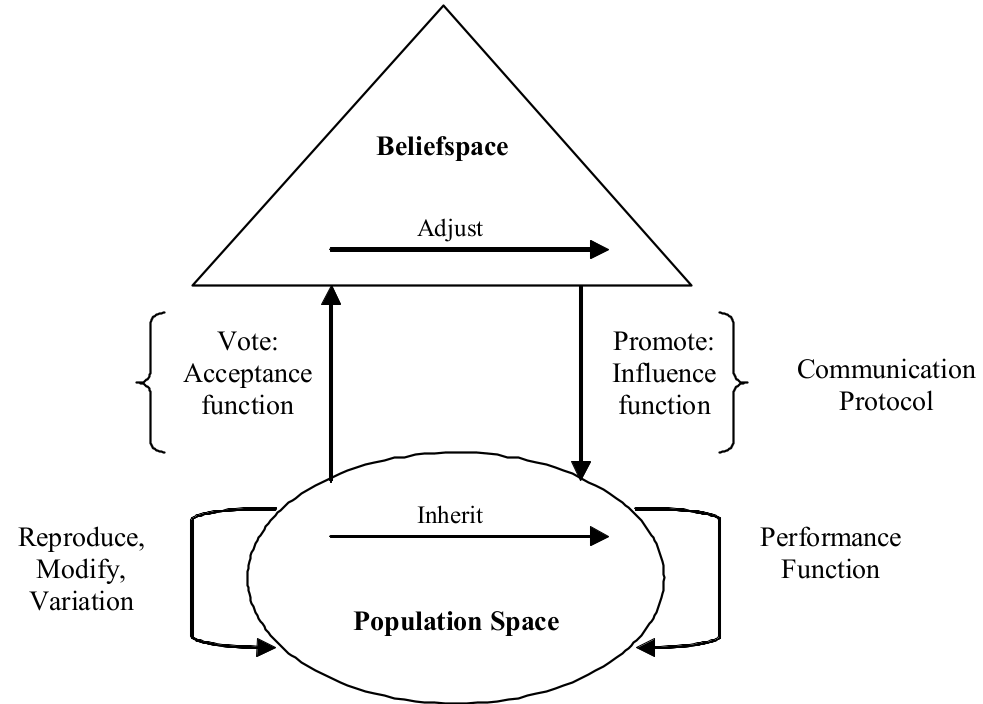
The researchers employed a Cultural Algorithm, a dual-layer evolutionary approach that mimics human social evolution.
1. The Population Space
Agents (drivers) possess a bitwise knowledge structure representing their understanding of:
- Seat Types: Rear-facing, forward-facing, booster, etc.
- Locations: Front seat, back middle, side, etc.
- Child Metrics: Age, Weight, and Height.
2. The Belief Space (Situational Knowledge)
The system maintains a "Belief Space" that acts as a global repository for the best practices currently found in the population. Every seven days, the top 2% of drivers (those with the lowest injury outcomes) contribute their "knowledge strings" to this space.
3. Social Interaction & Knowledge Propagation
Drivers don't live in a vacuum; they are connected via Kinship and Neighbor networks. Knowledge is propagated through these links at a defined rate (10%), simulating how safety tips might spread over a backyard fence or a family dinner.
The Experiment: Expert vs. Culture
The authors tested six cases, varying the sources of influence:
- Standard Source: Direct feedback from a health expert after an accident.
- Belief Space: Learning from the "cultural norms" of the top performers.
- Social Network: Peer-to-peer sharing.
Key Results
The findings revealed a fascinating tension between individual learning and cultural influence:
- Direct Expert Intervention is King: Learning from the "Standard Source" immediately after an accident yielded the highest correctness and lowest injury rates.
- The Cultural Buffer: When "Culture" (the Belief Space) was enabled, the population became resilient to change. This means that even when experts tried to inject new, correct knowledge, the entrenched cultural beliefs slowed down the adoption rate.
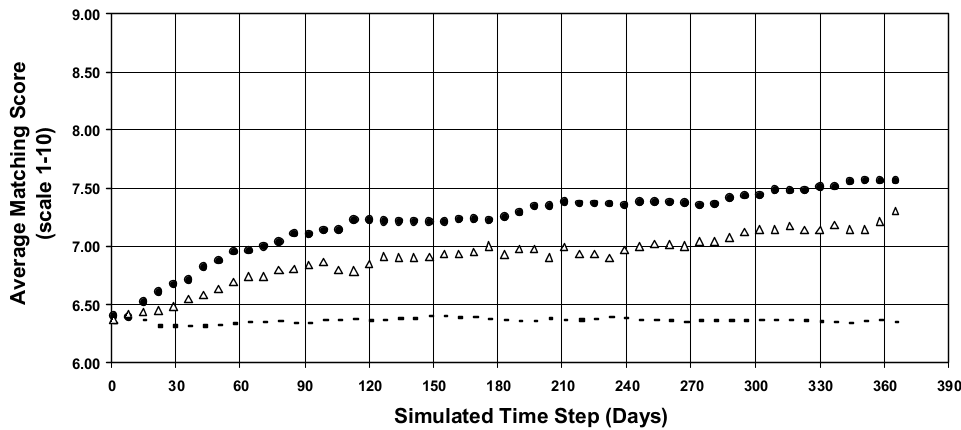 Figure 4. Correctness level with and without social propagation.
Critical Analysis: Is Culture a Hindrance?
From a purely optimization standpoint, the "cultural buffer" seems like a negative—it slows down the transition to SOTA (State Of The Art) safety practices. However, from a sociological perspective, this resilience is what maintains social stability.
The Takeaway for Policy Makers: You cannot simply "info-dump" safety guidelines and expect immediate results. If the existing "cultural belief" of the population is strong, the intervention must be powerful enough to penetrate that buffer.
Future Work
The current model primarily uses Situational Knowledge. The authors plan to integrate Historical Knowledge (tracking past trends) and Normative Knowledge (explicit rules) to see if a more complex cultural model can actually be leveraged to accelerate rather than hinder safety adoption.
Final thought: Safety is not just about what you know; it's about what your community believes.