
Cultural Algorithms for Cluster Hires: Human Capital Optimization in Social Networks
Cultural Algorithms for Cluster Hires in Social Networks
This paper presents a knowledge-based Cultural Algorithm (CA) to solve the "Cluster Hire" problem in social networks. The method optimizes for a group of teams to maximize total project profit and individual productivity while minimizing communication costs (social compatibility) under strict budget and workload constraints.
TL;DR
Building the perfect workforce isn't just about hiring the smartest people; it's about hiring the right clusters of people who can work together without breaking the bank. This paper introduces a Knowledge-Based Cultural Algorithm (CA) to solve the Cluster Hire problem—finding sets of experts to maximize profit and productivity while minimizing "communication friction" within a defined budget.
Academic Positioning: This work builds upon the "Cluster Hire" foundation laid by Golshan et al. (2014), evolving it from a simplified greedy selection into a multi-objective optimization problem solved through evolutionary intelligence.
The "Collaboration Friction" Problem
Traditional hiring often looks at individuals in isolation. However, in modern industries (and platforms like Upwork or Freelancer), the cost of a project isn't just the salary—it's the Communication Cost. If Expert A and Expert B have never worked together, the "social distance" between them is high, leading to inefficiencies.
Existing solutions like Greedy Algorithms or Linear Programming (LP) struggle with three things:
- Scalability: As the number of experts and projects grows, the search space explodes.
- Multi-dimensionality: Balancing profit, individual workload (capacity), and social compatibility simultaneously is mathematically "messy."
- Rigidity: Most models assume you hire for one project at a time, ignoring the synergy of a "Cluster Hire" for multiple concurrent tasks.
Methodology: The Power of Culture
The authors propose a Cultural Algorithm (CA). Unlike standard Genetic Algorithms (GA) that rely solely on random mutations and crossovers, CA uses a "Belief Space" to act as a global memory.
1. The Architecture
The model splits into two layers:
- Population Space: Where individual "chromosomes" (potential groups of teams) compete and evolve.
- Belief Space: Where the algorithm stores "Normative" and "Topological" knowledge—essentially learning which patterns of teams lead to higher profits and lower communication costs.
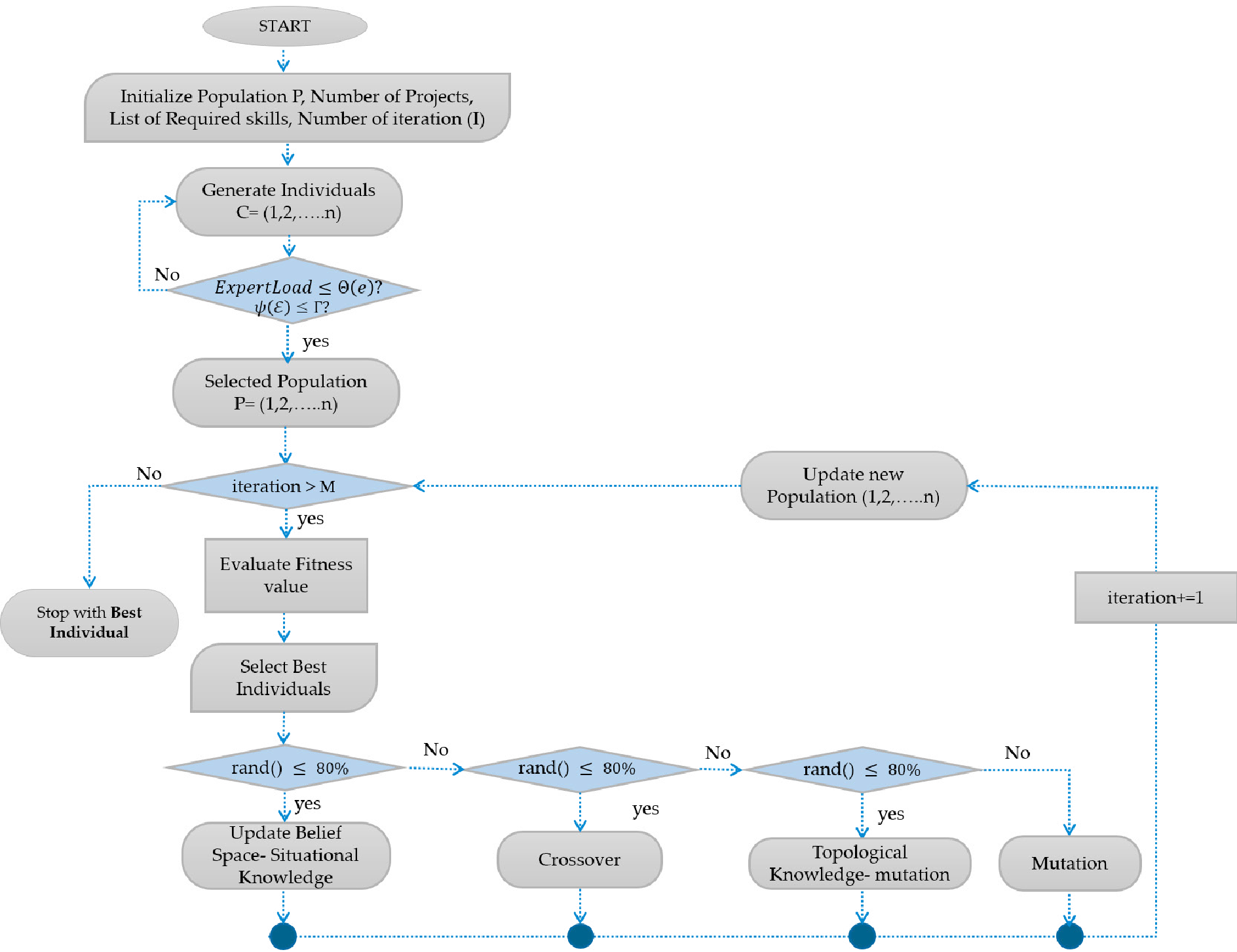 Figure 1: The Evolutionary Flow showing the interaction between Population and Belief Space via Acceptance and Influence functions.
2. The Objective Function (The "Tri-Objective" Core)
The paper simplifies a complex 3-way optimization into a single fitness score (): This forces the algorithm to find a "Goldilocks zone" where experts are skilled (Productivity), have worked together before (Shortest Path Distance), and the projects they complete generate high ROI (Profit).
Experimental Insights
The researchers tested their CA against Project Greedy, Expert Greedy, and standard Genetic Algorithms on synthetic social networks.
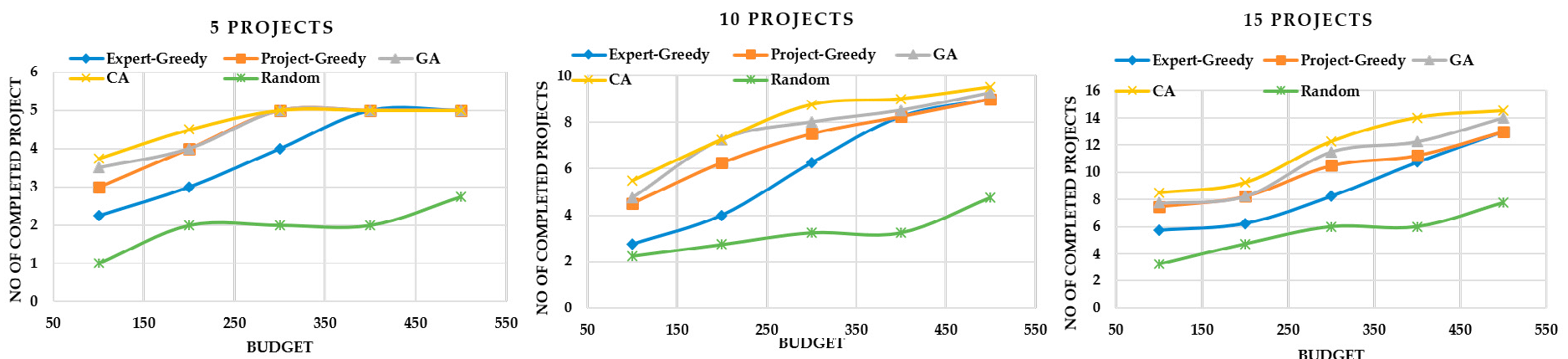 Figure 2: Total Profit vs. Budget comparison. CA consistently maintains a higher profit margin as the budget scales.
Key Findings:
- Higher Efficiency: As the number of projects increases, the CA's ability to use "Topological Knowledge" allows it to find superior team combinations that Greedy algorithms miss.
- Robustness: Unlike Random or Expert-Greedy searches, the CA ensures that no single expert is overloaded (Capacity constraint), making the solution viable for real-world HR management.
Critical Analysis & Takeaways
The brilliance of this approach lies in the Dynamic Chromosome Length. The algorithm doesn't just decide who to hire, but also how many projects can be realistically handled under the current budget.
Limitations:
- The study relies on synthetic data. Real-world social networks (like LinkedIn) have much noisier relationship data.
- The trade-off parameters () are set manually; an automated way to tune these based on specific industry priorities would be a significant next step.
Future Outlook: This framework is a precursor to "Algorithmic Management." Imagine a future where freelance platforms automatically suggest a "Dream Team" specifically optimized for your project's technical stack and budget, knowing exactly which experts have the best historical chemistry.