
Cultural Blueprints in Social Media: Why Americans Seek Fun While Koreans Seek Support
Cultural difference in motivations for using social network sites: A comparative study of American and Korean college students
2010-09-23
Summary
Problem
Method
Results
Takeaways
Abstract
This study explores cultural variations in the motivations and usage patterns of Social Network Sites (SNS) among American and Korean college students. Employing the Uses-and-Gratifications (U&G) framework, it identifies five core motives: Seeking Friends, Social Support, Information, Entertainment, and Convenience.
## TL;DR
Does culture dictate our digital social life? This study confirms that while the *tools* of social networking are global, our *intentions* remain deeply rooted in cultural soil. American students use SNS as a vast playground for entertainment and casual connections, while Korean students utilize the same technology to reinforce deep-seated social bonds and emotional support systems.
## The Cultural Ghost in the Machine
Despite the common interface of "profiles, friends, and comments," social networking does not happen in a vacuum. The authors argue that the fundamental divide between **Individualistic (US)** and **Collectivistic (Korea)** cultures shapes every click.
* **Individualistic/Low-Context (US):** Values independence and direct communication; relationships are often instrumental and fluid.
* **Collectivistic/High-Context (Korea):** Values group harmony and indirect communication; relationships are long-term and involve high levels of commitment.
## Methodology: Measuring the "Why"
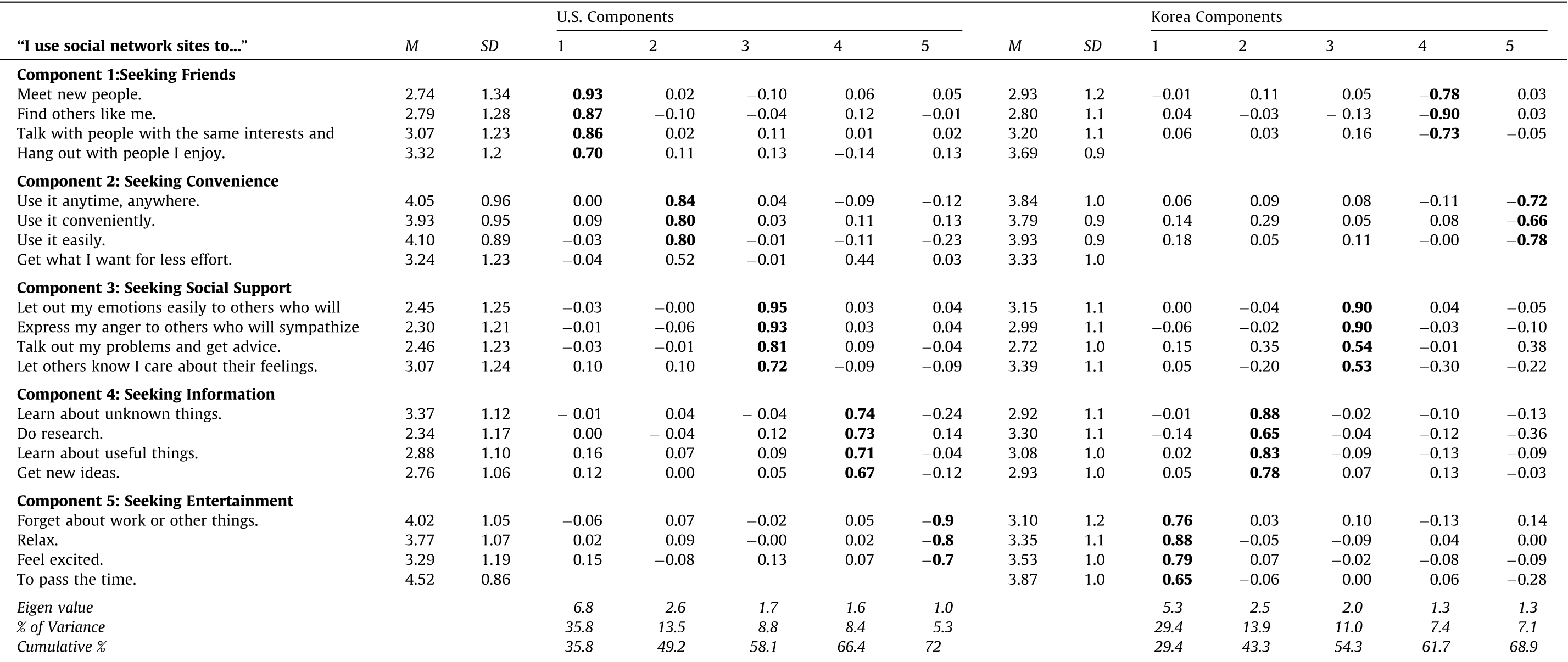
The researchers surveyed 589 students from both nations. They identified five universal motivations but found that the *weight* distributed across these motives varied dramatically across borders.
## Deep Dive: Entertainment vs. Support
The study reveals a fascinating contrast in how users perceive the "value" of their digital network:
### 1. The Network Paradox
The most striking finding is the **Network Size**. American students boast an average of **412 friends**, while Korean students average only **81**.
* **US Perspective:** Larger networks reflect an inclusive approach to relationship building—more "weak ties" used for entertainment and information.
* **Korean Perspective:** Smaller networks reflect an exclusive approach. In Korea, 70% of the network consists of family and close friends, compared to only 23.7% for Americans.
### 2. Motivational Weights
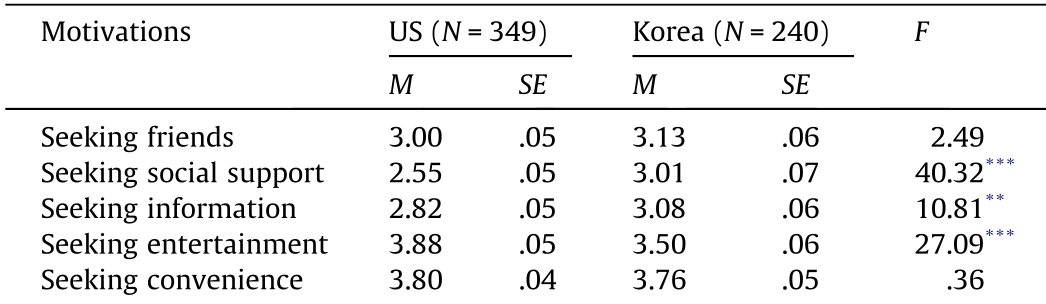
As shown in the comparative data, Korean students rated "Social Support" significantly higher than Americans. For a Korean user, an SNS is a digital "neighborhood" for emotional venting and advice. American users, conversely, rated "Entertainment" as their primary driver.
## Predictive Behavior: What Drives Usage?
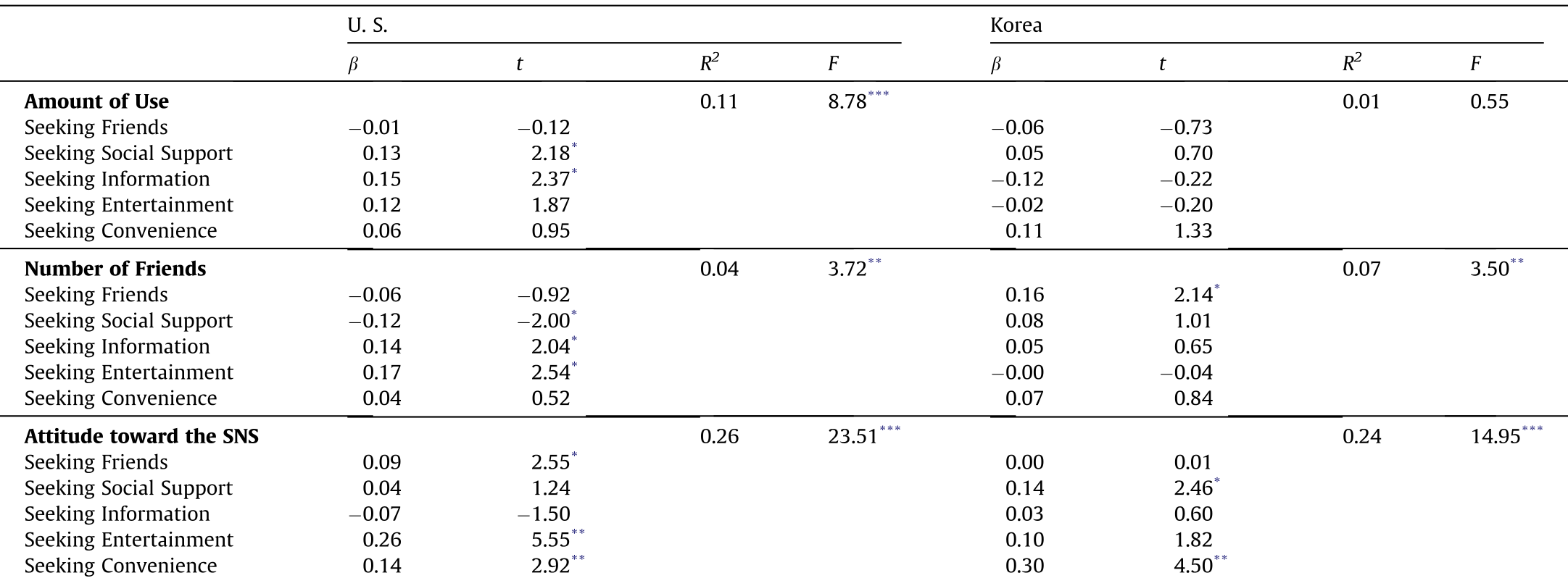
The regression analysis offers a window into localized product success:
* **In the US:** Seeking social support and information actually *predicts* higher daily usage. If an American user stops finding entertainment, they might leave.
* **In Korea:** The desire for new friends was the only significant predictor for expanding a network, whereas "Social Support" was the key driver for positive attitudes toward the platform.
## Critical Insight & Industry Impact
The takeaway for developers and marketers is clear: **Functionality must follow Culture.**
* **For the Individualistic Market:** Focus on "Discovery," "Gamification," and "Viral Content." The goal is to maximize entertainment and expand the user's horizon.
* **For the Collectivistic Market:** Focus on "Privacy," "Group Dynamics," and "Emotional Features" (like the gift-giving or the custom "mini-rooms" seen in Cyworld). The goal is to deepen existing ties.
**Limitations:** The study acknowledges the high percentage of female respondents in the US sample and the reliance on self-reported data. Future research should look at how these dynamics play out on "ephemeral" platforms like Snapchat or video-centric platforms like TikTok.
## Conclusion
Digital globalization hasn't turned us into a monolith. We are still social animals guided by the invisible rules of our upbringing. Whether we are chasing "likes" for fun or seeking a virtual shoulder to cry on, our cultural DNA remains our primary operating system.