
Deciphering "True Commitment": How Culture and Experience Shape the Facebook Experience
Cultural differences, experience with social networks and the nature of “true commitment” in Facebook
This study investigates user behavior on Facebook through the lens of the "Behavior Chain Model," focusing on the phase of "true commitment." By analyzing 423 users across 5 countries, it identifies how experience and culture influence domestic motivations, instrumental uses, and time investment, achieving a comprehensive cross-cultural mapping of social network adoption.
TL;DR
Why do some users obsess over photo tags while others spend hours in niche groups or games? This paper explores the "Behavior Chain Model" to reveal that our loyalty to social networks isn't just about the features provided—it's a reflection of our cultural DNA and our "age" within the ecosystem. The study finds that while the drive to maintain offline friendships (Social Searching) is universal, the specific tools we use to stay "committed" vary wildly across borders and time.
The Designer's Intent vs. User Reality
In the world of Web 2.0, designers aim for one thing: True Commitment. According to Fogg and Eckles (2007), this is a state where users aren't just visiting; they are creating value, involving others, and staying active in a repetitive loop.
However, the authors of this study noticed a gap. Most research at the time focused on US students, treating them as a monolith. They asked a critical question: Is "True Commitment" the same for a new user in London as it is for a veteran user in Rome?
Methodology: Mapping the Chain
The researchers surveyed 423 users from the US, UK, Italy, Greece, and France. They categorized behaviors into three pillars:
- Creating Value/Content: Posting photos, updating status.
- Involving Others: Tagging, invites, events.
- Staying Active: Frequency of visits and hours spent.
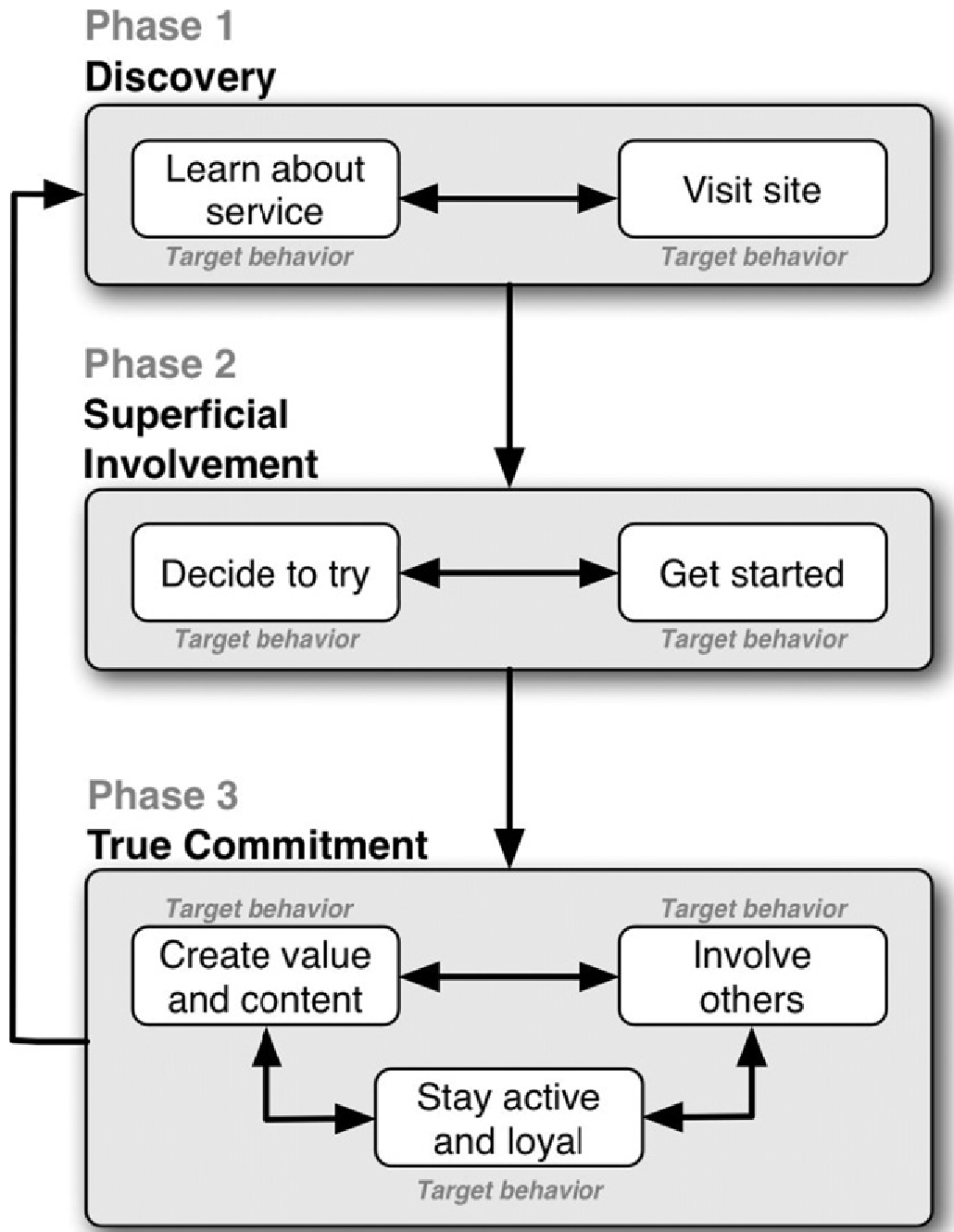 The Behavior Chain Model: A framework for understanding the path from discovery to deep commitment.
Key Insight 1: The Maturity of Use (Experience)
The study discovered that as users spend more time on Facebook (moving from "Early" to "Advanced"), their behavior shifts.
- Newer Users: Lean heavily on Games and Applications. These acts as "icebreakers" or common ground to establish sociability.
- Veteran Users: Shift their focus to Photographs. Photos serve as a more sophisticated tool for identity construction and social grooming.
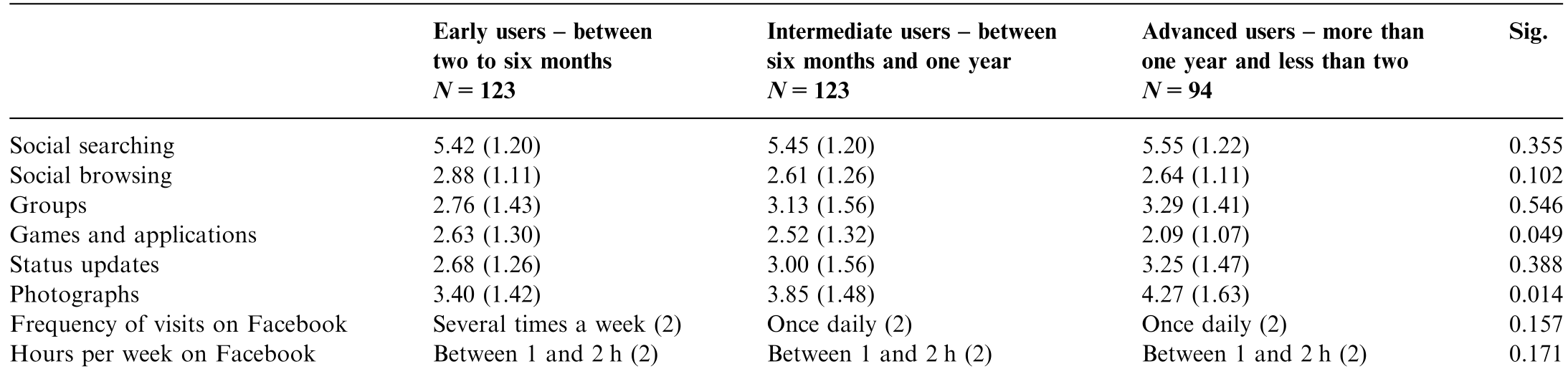 Table 5: Note the significant linear trend—as users age on the site, the importance of games drops while photos rise.
Key Insight 2: The Cultural Divide
Culture was found to be a far more potent driver of behavior than experience.
- The Browsers: Users in Italy and France were significantly more interested in "Social Browsing"—looking at strangers or friends-of-friends—compared to their US counterparts.
- The Power Users: Participants from the UK spent the most hours per week on the site and placed a high value on Groups.
- The Traditionalists: Greek and French users rated "Status Updates" as much less important than US users, suggesting that the "broadcast" style of communication doesn't resonate equally everywhere.
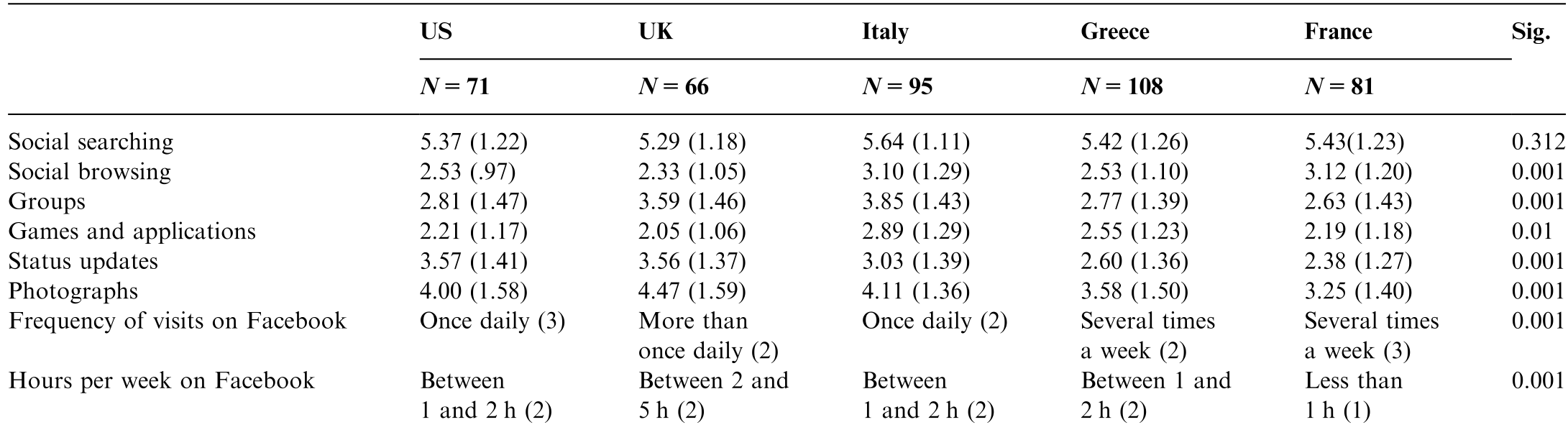 Table 6: The cultural variance in how different nations prioritize features like Groups, Games, and Photos.
Critical Analysis: Why This Matters
This research challenges the "one-size-fits-all" approach to platform design. It highlights that:
- Identity is Dynamic: What feels like self-expression to a teenager (ego-centric) differs from an adult (socially-connected). Platforms must provide "neutral ground" that allows these identities to mature.
- Social Learning varies by In-Groups: We use Facebook the way our friends use it. If an Italian user sees their "in-group" engaging with Apps, they follow suit, creating distinct regional "micro-cultures" even on a global platform.
Conclusion
The "True Commitment" phase is a moving target. While Facebook successfully branded itself as a "social utility" for offline connections worldwide, the way those connections are maintained is subject to the gravitational pull of local culture and the user's own trajectory of experience. For future product designers, the takeaway is clear: Localize or alienate.
Limitations
The study relies on self-reported data, which can be subject to memory bias. Furthermore, as privacy settings and algorithmic feeds (like the News Feed) evolve, the distinction between "Social Searching" and "Social Browsing" continues to blur.