
Beyond the Selfie: How Culture Reinvents Our Digital Identity
Cultural differences on visual self-presentation through social networking site profile images
This research investigates cultural variations in visual self-presentation by analyzing profile images of American users on Facebook and Chinese users on Renren. The study reveals that Chinese users are significantly more likely to use customized or edited images (42.1% vs 15.8%), while American users unexpectedly favor group photos (35% vs 0%), challenging traditional "individualism vs. collectivism" paradigms.
TL;DR
Is your profile picture a solo shot, a group photo, or a carefully edited piece of digital art? This study reveals that culture drastically shifts how we present ourselves online. While we might expect "collectivist" Chinese users to favor group photos, the reality is the opposite: Americans use group shots to define themselves, while Chinese users utilize digital customization to navigate a complex "bicultural self."
The "East vs. West" Paradox
In classical psychology, the West is labeled as Individualistic (independent self-construal) and the East as Collectivistic (interdependent self-construal). Naturally, one would assume a Chinese user's profile would feature their social circle, and an American's would be a lone portrait.
However, researchers Chen Zhao and Gonglue Jiang found a fascinating reversal in the digital realm. The "interdependent" Chinese user is actually less likely to show others in their profile picture, preferring instead to "polish" their individual image or use symbolic objects.
Methodology: Facebook vs. Renren
The researchers compared 114 students from elite universities in the US and China, looking at their primary identifiers on Facebook (US) and Renren (China). They looked for two main "signals":
- Social Context: Is the user alone or in a group?
- Customization: Is the photo a raw shot, or has it been edited with effects, or replaced by a celebrity, animal, or object?
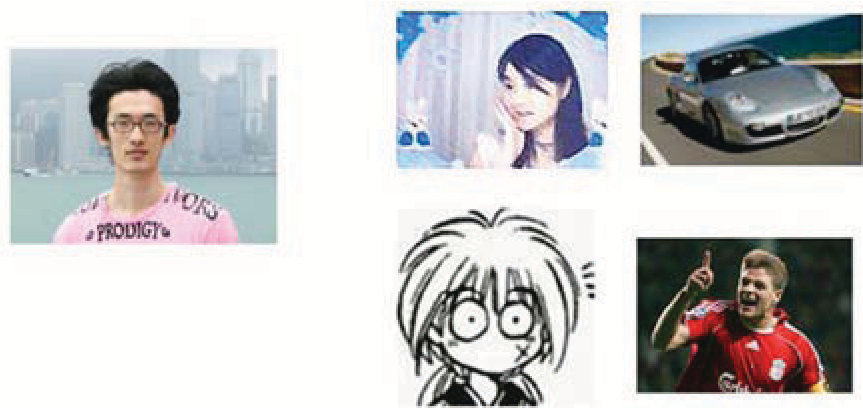 Figure 1: Examples of customization, ranging from digital effects to landscape and fine arts.
Why do Chinese Users "Customize" More?
The study found that 42.1% of Chinese users customized their images compared to only 15.8% of Americans. The authors attribute this to the "Bicultural Self":
- The Social-Oriented Self: Traditional Chinese values emphasize looking "proper" and maintaining status (often signaled by objects like cars or luxury items).
- The Individual-Oriented Self: Modernization has sparked a desire for unique expression, but it is often mediated through "digital polishing" (Photoshop/filters) to maintain a perfect public face.
Furthermore, the lower disclosure rates in Chinese culture might lead users to use "proxies" (babies, animals, celebrities) to represent their personality without exposing their actual identity.
The "Group Photo" Surprise
The most striking result was the group photo discrepancy. 35% of Americans showcased photos with friends or family, while 0% of the Chinese participants did so for their main profile image.
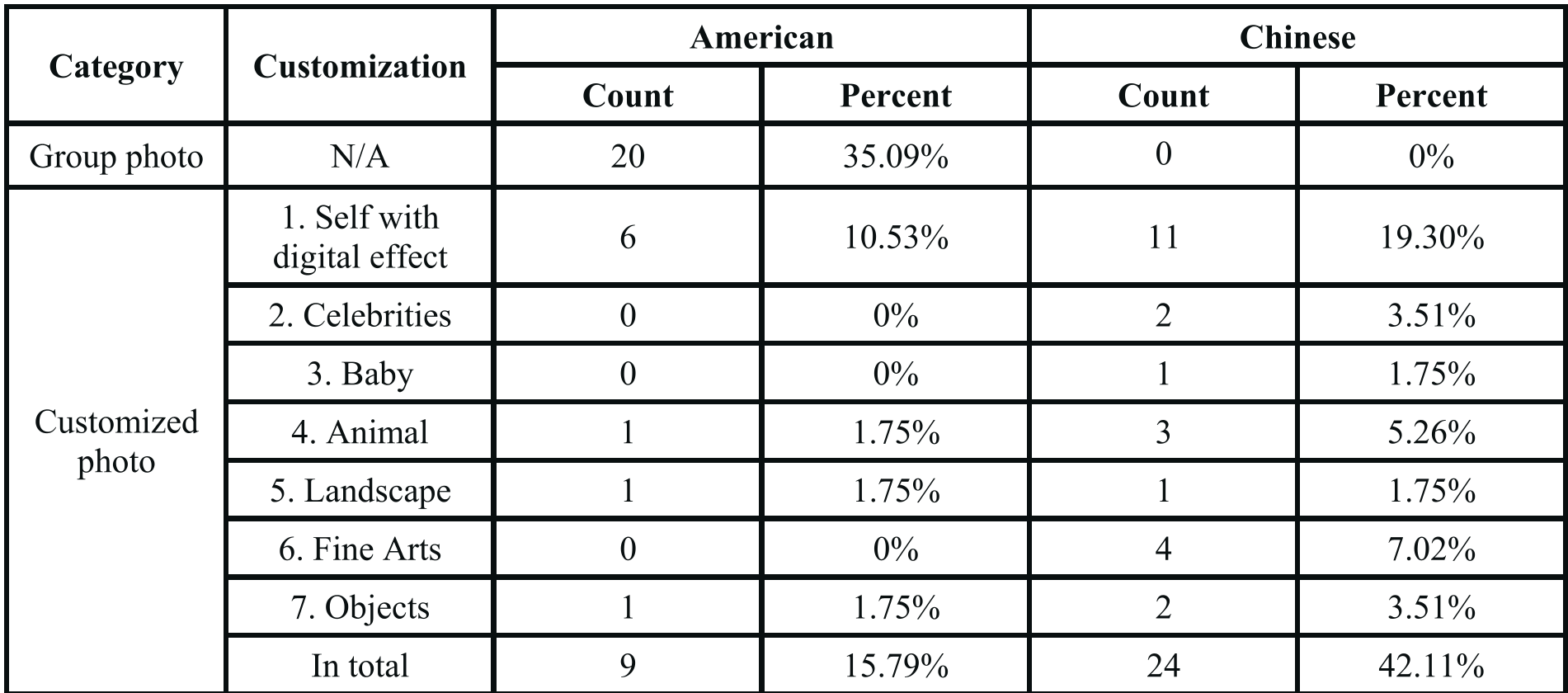 Table 1: The stark contrast in Group Photo and Customization percentages.
Why the flip? The authors suggest that for the modern American student, "who I hang out with" is a core part of their unique identity. Social activity is a "dispositional attribute"—it defines the individual's brand. For Chinese users, the profile image remains a formal "ID card" space, even if the content is creative.
Critical Insight: Design Implications
This isn't just academic curiosity—it's a roadmap for global product design.
- Western Platforms (like Facebook) focus on "implicit" identity through realistic social interaction.
- Eastern Platforms (like Tencent/QQ) succeeded by providing "explicit" customization tools—virtual clothes, avatars, and elaborate homepage templates.
If a platform wants to succeed in Asia, it shouldn't just offer a "photo upload" button; it needs to provide a "self-creation" toolkit.
Conclusion
This study serves as a reminder that "Individualism" and "Collectivism" are not static labels. In the digital age, these cultural traits manifest in unexpected ways. As we move further into the era of the Metaverse and AI-generated avatars, understanding these deep-seated cultural preferences in "Visual Self-Presentation" will be the difference between a global hit and a local failure.
Limitations to consider: This study focused on university students in 2011. Since then, the rise of "Selfie Culture" and apps like Instagram and WeChat have undoubtedly shifted these dynamics again, providing a fertile ground for follow-up research.