
Cultural DNA in Digital Classrooms: Decoding the COVID-19 Transition in Japan and China
Cultural Factors in Urgent Transition to Online Learning During the COVID-19 Pandemic – Case Studies from Japan and China
This comparative case study analyzes the "emergency remote teaching" transition during the COVID-19 pandemic at a Japanese university and a Chinese senior high school. It highlights how cultural nuances dictated the effectiveness of institutional communication, instructional styles, and the level of family involvement in digital spaces.
TL;DR
The shift to online learning in 2020 wasn't just a technical hurdle; it was a cultural stress test. This study compares a Japanese university and a Chinese high school, revealing that while China embraced high-intensity social media surveillance and parent involvement, Japan maintained strict boundaries through formal email and student anonymity. Surprisingly, both paths led to successful academic outcomes.
The "Why" Behind the Screen
When the pandemic forced schools to close, the global assumption was that "going digital" was a matter of hardware and bandwidth. However, researchers Shudong Wang and Aipeng Chen noticed a disconnect: why did Japanese students resist turning on cameras while Chinese parents were "clocking in" for their children via WeChat at 6:00 AM? The motivation for this study was to move past the "what" of online tools and explore the "why" of cultural mediation in technology adoption.
Methodology: A Tale of Two Contexts
The research employs a case study approach across two distinct settings:
- Japanese University A: A mid-sized national university where the culture of Taisaku Honbu (Countermeasures Headquarters) dominated decision-making.
- Chinese Senior High School B: A typical high school where "concentrating on major tasks" led to a highly centralized, administrative-heavy response.
The authors tracked digital footprints: minutes of meetings, social media group logs, and submission timestamps to bridge the gap between institutional policy and actual human behavior.
Key Finding 1: Email vs. WeChat — The Flow of Power
The study reveals a fascinating contrast in communication. In Japan, Email was the king. It is formal, permits a "delayed response," and offers a safe distance. In China, WeChat groups were the nerve center.
- In China: Groups nested within groups (Principal -> Grade Head -> Class Head -> Parents) created a high-speed, high-pressure information loop.
- In Japan: Social media was viewed as a "private tool," making its use for school-business culturally taboo or uncomfortable.
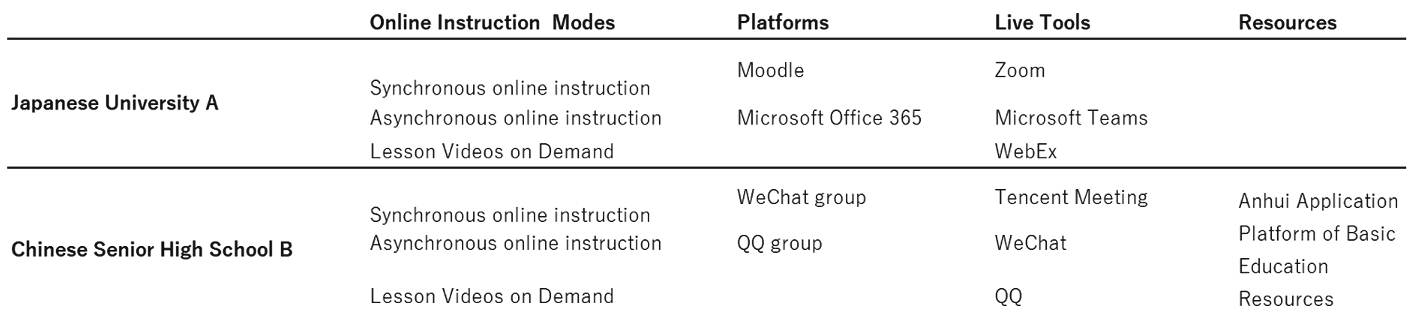 The table above highlights the reliance on locally-made tools in China versus US-made software in Japan, reflecting different technological ecosystems.
Key Finding 2: The Privacy Boundary
The most striking difference lay in "Intrusion vs. Autonomy."
- The Japanese Compromise: Students expressed significant "pressure" from synchronous classes and a dislike for "self-disclosure" (turning on cameras). The university eventually compromised, allowing cameras-off and asynchronous modes to respect student privacy.
- The Chinese Intervention: Teachers were "dominant." Class headteachers issued daily "morning calls" in group chats, and parents were required to upload photos of students studying at home as "proof" of engagement. This "privacy intrusion" was accepted as a necessary virtue for academic success.
Key Finding 3: The Deadline Rush
Despite cultural differences, one human trait remained universal: The Procrastination Pulse. Data from the Japanese university's Moodle system showed that the vast majority of assignments were submitted in the final 10 hours before the deadline.
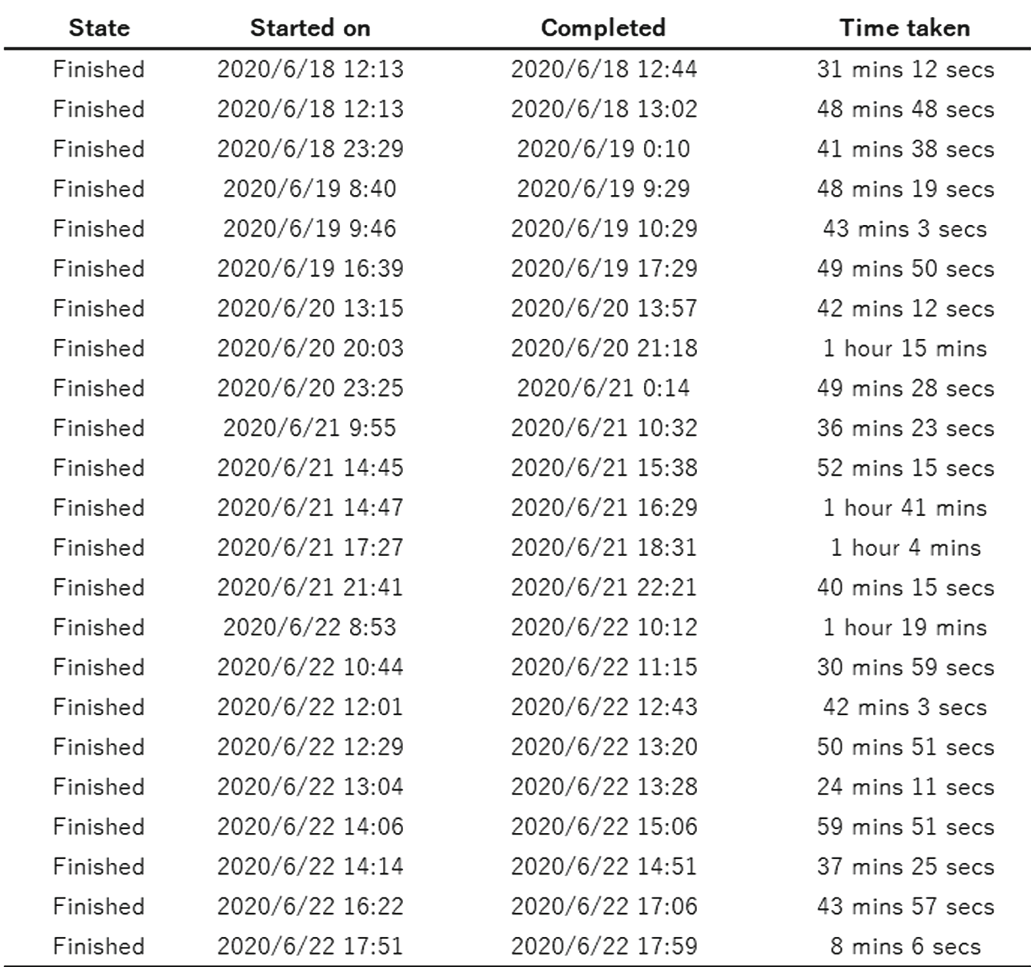 The timestamp data confirms a "submission rush," a behavioral pattern that crosses cultural lines in the digital era.
Critical Insight: Success is Not One-Size-Fits-All
Critics often argue that "high-interference" teaching (like the Chinese model) is overbearing, or "low-interference" (like the Japanese model) is disengaged. However, the study provides a vital counter-narrative:
- Results: Japanese students achieved record-breaking TOEIC scores, and Chinese students excelled in the Gaokao.
The takeaway? Online learning is most effective when it harmonizes with local cultural DNA. In China, family-school collaboration is a common-sense obligation; in Japan, respecting the individual’s "internal space" is paramount.
Limitations & Future Outlook
While the study provides deep insight, it compares different school levels (University vs. High School), which introduces age as a confounding variable. However, as we move into a post-pandemic "hybrid" world, this research warns developers and policymakers: A learning management system (LMS) designed for a "privacy-first" culture will fail in a "collaboration-first" culture, and vice versa. Culture is the invisible operating system running beneath the software.