
Cultural Models: The Invisible Architecture of Global Software Engineering
Cultural Models and their Interplay in Global Software-Engineering Practice
The paper introduces a "Cultural Models" framework to analyze Global Software Engineering (GSE) practices, moving beyond static dimensional metrics. Through an ethnographic study at an Indian vendor organization, it identifies three primary models—Agreement, Flexibility, and Trust—that deeply intertwine with technical workflows like software testing.
TL;DR
Why do offshore teams often agree to deadlines they know are impossible? This paper argues that Global Software Engineering (GSE) is governed by three internalized "Cultural Models": Agreement, Flexibility, and Trust. By analyzing a real-world project escalation at an Indian vendor, the authors demonstrate that technical failures are often symptoms of misaligned cultural "taken-for-granted" assumptions rather than just poor coding or testing.
Motivation: Moving Beyond Static Dimensions
For decades, the industry has relied on Hofstede’s cultural dimensions (like Power Distance) to explain friction in global teams. However, these metrics are often too abstract for the "trench work" of software development. They don't explain why a test engineer omits a screenshot during a crunch or why a manager ignores a flawed test plan.
The authors suggest that culture isn't a static trait but a process. It produces models that act as the "invisible architecture" behind every technical decision.
Methodology: The Ethnographic Lens
The researchers embedded themselves within a large Indian vendor organization (Vendor V3) working for Mexican and U.S. clients. They focused on an "escalation situation"—a project crisis where the vendor missed a 60% workload target in "Week 1" of a testing cycle, leading to a total collapse of client trust.
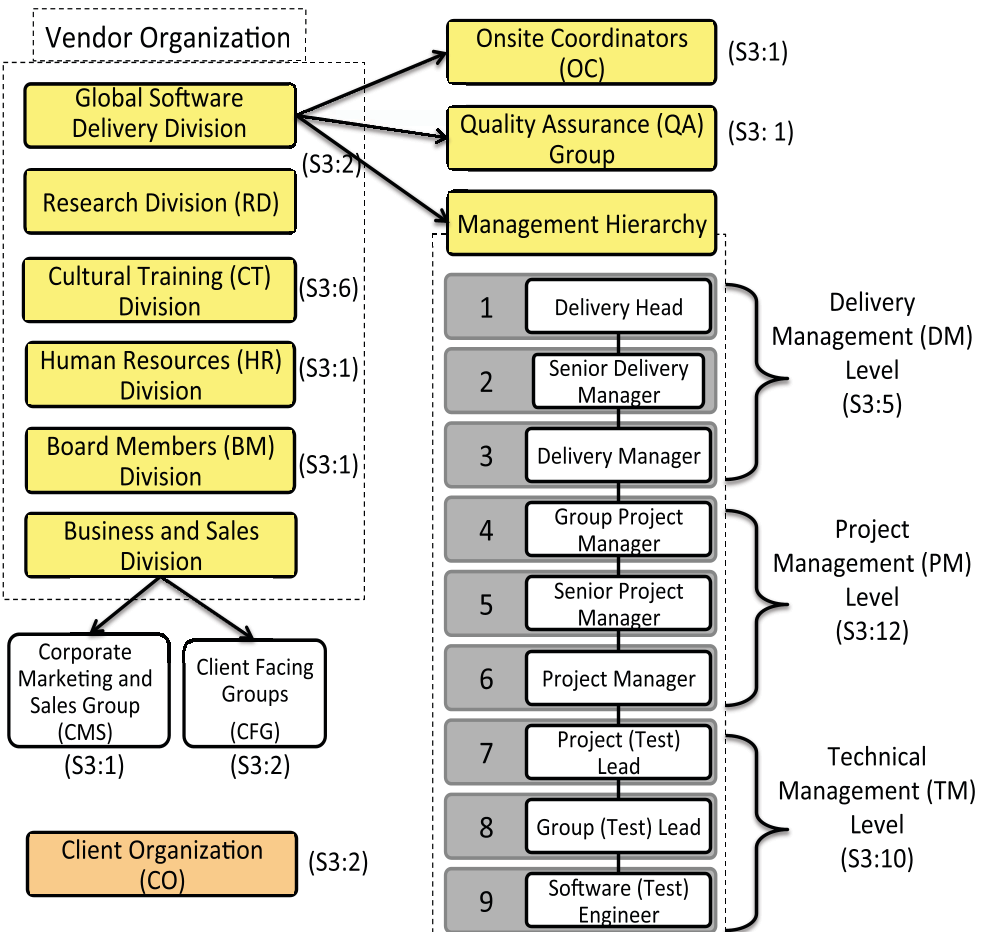 Figure 1: The hierarchical structure of the Indian vendor organization where the ethnographic study took place.
The Three Pillars of Cultural Interplay
1. The Agreement Model ("Always Say Yes")
The vendor team knew the client's test plan was flawed—they wanted to load less work in Week 1 to stabilize the environment. Yet, they agreed to the client's "flat projection."
- The Insight: This isn't just about politeness; it's a cultural model where "Agreement" is prioritized over "Pushback," even when business survival is at stake. It results in unproductive productivity: producing what the client asks for while knowing it adds no real value.
2. The Trust Model (The Symbolism of Screenshots)
During the crisis, engineers skipped taking screenshots to save time. To the vendor, a screenshot was a technical byproduct. To the client, it was an instituted model of trust.
- The Insight: When the screenshots vanished, the technical validity of the testing died with them. The study highlights that technical artifacts act as "mediators of credibility."
3. The Flexibility Model (Survival vs. Blind Spot)
Indian teams utilized extreme flexibility—working weekends and nights—to "rescue" projects.
- The Insight: While the vendor took pride in this "Indian way of working," it created a Cultural Blind Spot. Because teams believed they could always "fix it with overtime," they felt safe agreeing to impossible "Agreement Model" demands. This cycle eventually leads to burnout and hidden systemic risks.
Experimental Analysis: The Escalation Cycle
The paper maps how these models interact to create a "vicious cycle" of escalation.
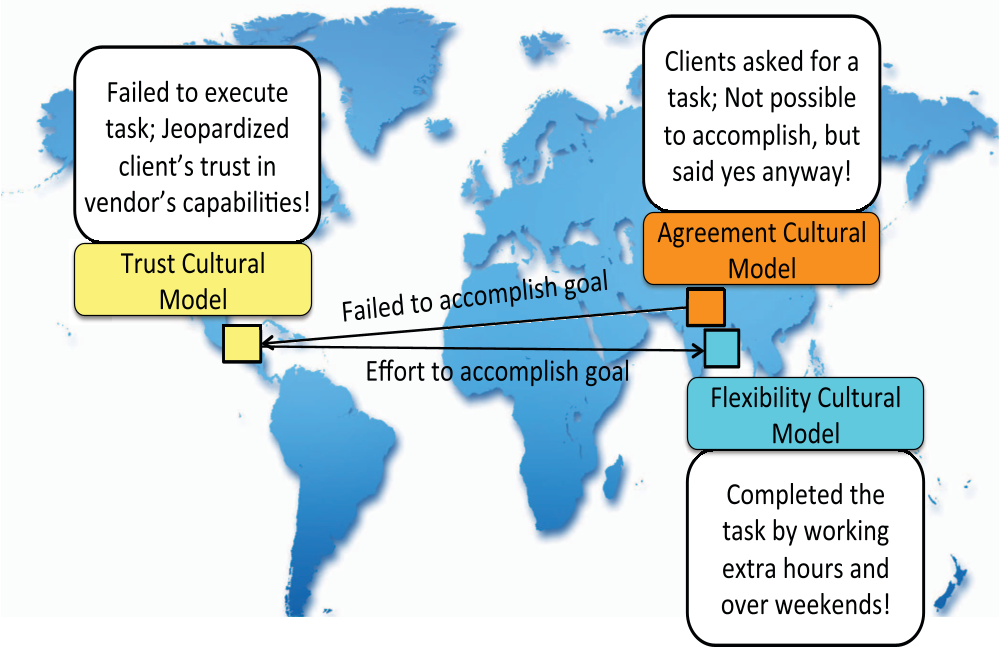 Figure 2: The interplay between Agreement, Trust, and Flexibility during a project crisis.
The "Mexican Onsite Coordinators" (local hires) were governed by different laws and expectations regarding work hours, leading to a breakdown in "handshaking" (knowledge transfer). The Indian offshore team misinterpreted this as a lack of commitment, while the clients misinterpreted the vendor's speed-up (without screenshots) as "cheating."
Critical Insight: Beyond the "Code"
The most profound takeaway is that technical systems are complexly intertwined with cultural systems.
- The "Survival" Paradox: Flexibility allows GSE to thrive in India despite time-zone and language barriers, but it also prevents managers from making "calculated and informed decisions" because they implicitly rely on human-heroism (overtime) to fix planning errors.
- The Power of Awareness: By the end of the study, participants began to recognize these traits, famously noting that "saying No" felt against their "Indian genes." This self-awareness is the first step in moving from reactive "survival" to proactive management.
Conclusion
This paper serves as a warning to global tech leaders: Processes are not culturally neutral. A test plan, a screenshot, or a status report carries different weight across borders. To avoid escalations, organizations must look past the "SLA" and understand the "Cultural Models" their teams are using to interpret those agreements.
Future Work: The authors suggest expanding this to other domains beyond testing to see if these models (Agreement, Trust, Flexibility) remain the dominant drivers of global software practice.