
Green Culture by Design: Nudging Organizations Toward Sustainable IT
Cultural Transformation to Support the Adoption of Green IT
This paper explores strategies for transforming organizational culture to facilitate the adoption of Green IT. It synthesizes the Competing Values Framework (CVF) with modern technological interventions, primarily focusing on social media, "nudging" through choice architectures, and intelligent context-awareness to drive sustainability.
TL;DR
Achieving "Green IT" is not just about buying efficient servers; it is a profound exercise in change management. This paper argues that for sustainability to take root, organizations must transform their culture from rigid hierarchies to flexible, collaborative ecosystems. By utilizing Social Media, Cloud Computing, and Intelligent Nudging, companies can reshape employee behavior and align corporate values with the "Triple Bottom Line."
The Cultural Bottleneck
Why do green initiatives fail? The paper identifies that IT accounts for roughly 2% of global CO2 emissions—comparable to the aviation industry. While the technology to reduce this exists (e.g., teleconferencing, smart buildings), the human element remains a "siloed" hurdle.
The authors point to Cameron and Quinn’s Competing Values Framework (CVF) to explain this. Most green initiatives are "disruptive"; they require risk-taking and collaboration. However, many organizations are stuck in a Hierarchy (Control) culture that prioritizes stability over the flexible innovation needed for sustainability.
Methodology: The "Nudge" and the "Cloud"
The core of the paper’s proposal lies in three technological pillars designed to shift the cultural needle:
1. Cloud-Based Solutions as Cultural Catalysts
Cloud computing is presented not just as a way to save energy through virtualization, but as a way to "pass the risk." By moving to public or hybrid clouds, organizations transition from a "maintenance and control" mindset to a "service and efficiency" mindset.
2. Social Media for Organic Transformation
Social media (both internal and external) acts as a tool for Socialization-based initiatives. By creating Green IT forums and virtual communities, companies can reduce "System Conflict"—the friction between what a user believes and the values embedded in the tools they use.
3. Nudging and Choice Architectures
Perhaps the most innovative aspect discussed is Technological Nudging. Based on Thaler and Sunstein’s "Nudge Theory," the authors propose designing Choice Architectures within IT systems.
- The Intuition: Humans are often irrational. Instead of forcing rules, systems should "nudge" users toward green choices (like EPEAT ratings or energy dashboards).
- Context-Awareness: By using mobile devices to sense a user’s "context" (location, activity, and even emotion via Kansei Engineering), systems can provide the right nudge at the right time.
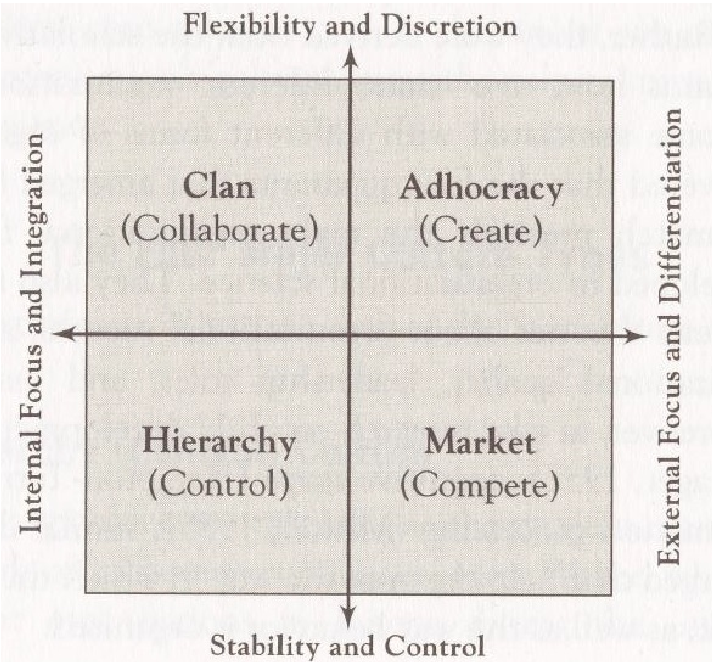 Fig 1: The Competing Values Framework (CVF) used to analyze organizational openness to Green IT.
Analyzing the Impact
The paper suggests that for a culture to successfully migrate toward sustainability, "Leadership-based" initiatives (like appointing Green IT ambassadors) must be paired with "Policy-based" initiatives (like PC power-down rules).
The authors highlight a critical insight: Globalization complicates the Green IT landscape. Different national cultures have varying "power distances" or "uncertainty avoidance" levels, meaning a Green IT strategy that works in a UK-based "Clan" culture might fail in a more hierarchical international branch without significant localization.
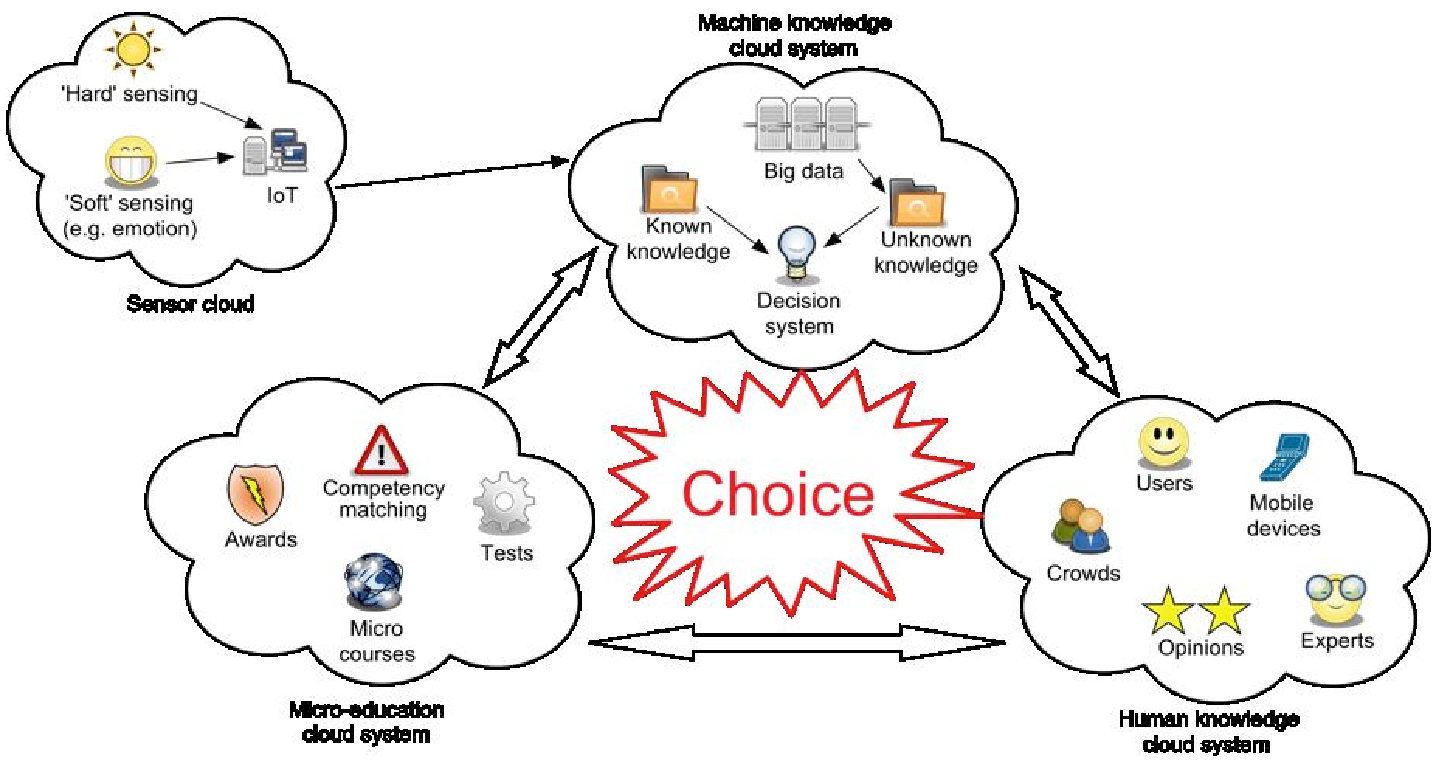 Fig 2: A model of how technological nudging augments human decision-making via machine knowledge.
Critical Insight & Conclusion
The true value of this work lies in its move away from "Hard Paternalism" (regulations and mandates) toward "Libertarian Paternalism" (designing environments that make the right choice the easy choice).
Limitations: The paper is primarily theoretical and conceptual. While it provides a robust roadmap, it lacks large-scale empirical data validating the exact "ROI" of a cultural nudge compared to a mandatory policy.
Future Outlook: As we move toward 2030, the integration of Kansei Engineering (emotion-sensing) into enterprise software could be the next frontier. Imagine a system that recognizes user frustration and adjusts its "green nudges" to be less intrusive, thereby maintaining long-term behavioral compliance without causing "burnout."