
Culture and Testing: Beyond the Code, Into the Mind
Culture and Testing: What is the Relationship?
This paper presents a four-month ethnographic study conducted at an Indian vendor organization to investigate how national and user cultures influence Global Software Engineering (GSE) testing practices. By comparing two teams—one serving a Japanese client and the other a U.S. client—it identifies distinct testing strategies and cultural mental models.
TL;DR
Is software testing a universal science or a cultural expression? This longitudinal ethnographic study at an Indian software vendor reveals that "quality" is in the eye of the culturally-conditioned beholder. By comparing teams working for Japanese vs. U.S. clients, the researchers demonstrate that national culture fundamentally reshapes how teams structure themselves, how they define a "bug," and how much they trust their own code.
Background Positioning: This work moves beyond traditional "culture-at-large" studies to provide a rare, deep-dive ethnographic account of the specific intersection between cultural psychology and software validation.
The Hidden Friction in Global Engineering
In the world of Global Software Engineering (GSE), we often talk about time zones and language barriers. However, the author, Hina Shah, argues that the real bottlenecks are the invisible cultural mental models.
The core observation is a paradox: Two teams, same vendor, same professional standards, yet entirely different testing philosophies. The motivation for this study was to move past the "What" (the failure of a test) to the "Why" (the cultural perception that deemed the test necessary or sufficient).
Methodology: The Ethnographic Deep-Dive
The researchers didn't just send out surveys; they embedded themselves for four months.
- Participants: 44 individuals spanning senior management to junior testers.
- Data Sources: Interviews, informal "lunch chats," and observation of high-stakes client meetings.
- Analysis: Using thematic analysis, they mapped out how Japanese and U.S. clients' expectations diverged.
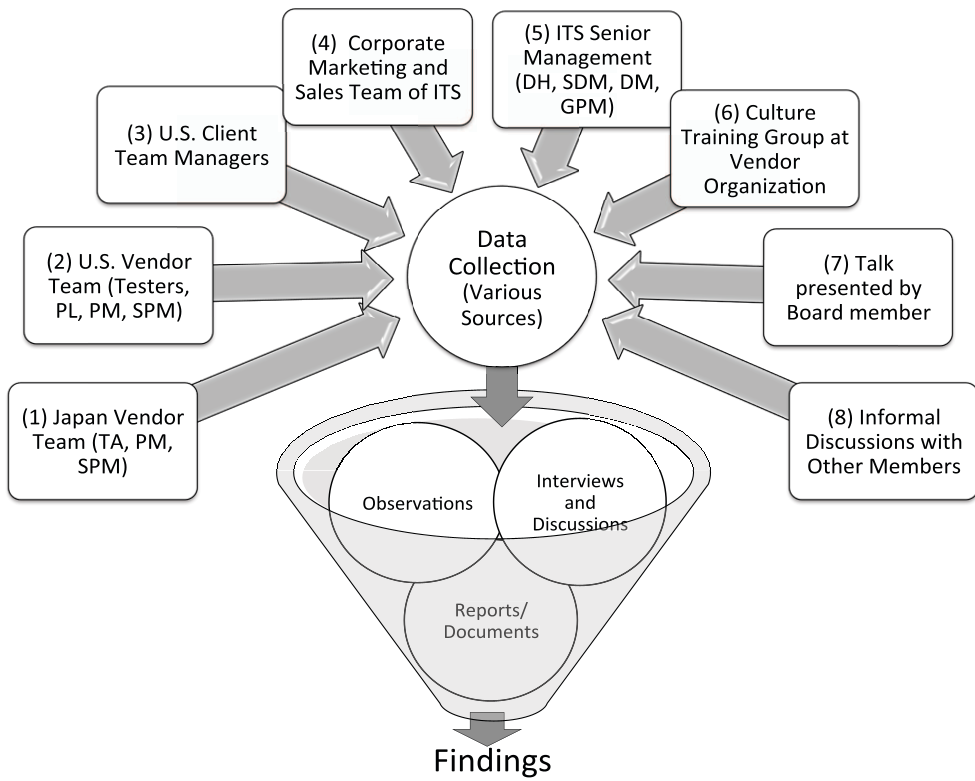 Figure 1: The multi-faceted data collection approach, including Independent Testing Services (ITS) and multiple layers of delivery management.
Methodology Breakdown: The "Kensa" vs. "Realistic" Divide
1. The Structure of Trust
The Japanese ecosystem featured the Kensa testing group—an independent QA body that acted as a rigorous gatekeeper. If the vendor missed a bug, it wasn't just a technical error; it was a "nightmare" resulting in a loss of honor/trust. Conversely, the U.S. clients treated testing as a collaborative, albeit sometimes haphazard, "User Acceptance" process with higher initial trust levels.
2. High Uncertainty Avoidance (Japan) vs. Tolerance of Ambiguity (U.S.)
- Japanese Focus: Negative scenarios, boundary conditions, and "hammering" the software with unanticipated inputs (e.g., pulling out power cords during execution).
- U.S. Focus: "Realistic" goals. Does the basic functionality work? If it does, we ship.
3. Process-Oriented vs. Result-Oriented
The Japanese stakeholders demanded "Attention to Detail," asking how a conclusion was reached. The U.S. stakeholders were satisfied if the end result met the business requirements, showing less interest in the internal mechanics of the testing process.
Analysis: Why the Divergence?
The paper maps these findings back to Hofstede’s Cultural Dimensions.
- Uncertainty Avoidance: Japan's high UAI (Score 92) correlates with a psychological need for exhaustive testing to "reduce the perception of risk."
- The Subjectivity of Quality: The researchers suggest that "passing a test doesn't change quality; it changes our perception of it." Because perceptions are culturally anchored, what counts as "high quality" in New York might be "unreliable" in Tokyo.
The study highlights how "Bug Discovery" is culturally contingent: for instance, an Indian tester would naturally test for non-standard address formats (landmarks) that a U.S. tester would never imagine.
Critical Analysis & Future Outlook
Takeaways
The paper successfully argues that requirements documents are insufficient. They don't capture the cultural assumptions of the user. Therefore, "Culture-Focused Testing" is not a luxury—it is a business necessity to avoid "useless effort" on scenarios domestic users don't care about, while missing critical ones they do.
Limitations
As an ethnographic study of a single vendor in India, the findings are "context-rich" but not necessarily "statistically generalizable." However, the goal of ethnography is depth, not breadth. The lack of direct access to the Japanese client team means their perspective is filtered through the vendor's lens.
The Future: Culture-Sensitivity 2.0
The author calls for a revolution in corporate training. Stop teaching people how to shake hands and start teaching them how different cultures think about problem-solving and risk. The future of GSE isn't just better APIs; it's better-aligned mental models.