
Cultural AI: Building Believable NPCs through the Lens of Social Norms
A Culture Model for Non-Player Characters' Behaviors in Role-Playing Games
This paper introduces a pragmatic "Culture Model" for Non-Player Characters (NPCs) in Role-Playing Games (RPGs) to enhance believability and replayability. By integrating Hofstede’s cultural dimensions with the Plutchik emotion wheel and the OCEAN personality model, the researchers created NPCs that dynamically react to player actions based on their societal background.
TL;DR
In Role-Playing Games (RPGs), the "soul" of the world lies in its inhabitants. While most modern games focus on individual emotions, a team of researchers from PUC-Rio has introduced a Culture Model that situates NPCs within a societal framework. By combining psychological models like OCEAN and Plutchik with Geert Hofstede’s cultural dimensions, they’ve created NPCs that don't just react—they react differently based on their heritage, social space, and values.
Problem & Motivation: The "Generic NPC" Syndrome
Despite the massive scale of open-world games like No Man's Sky or Minecraft, the inhabitants of these worlds often lack behavioral depth. They might have pathfinding scripts or basic "aggro" ranges, but they don't possess a "background."
Existing systems usually treat an NPC as an isolated emotional unit. However, human behavior is a product of both nature (personality) and nurture (culture). The challenge lies in quantifying "culture" into a format that a game engine can process without making the system overly complex for real-time performance.
Methodology: The Nexus of Personality, Emotion, and Culture
The researchers proposed a three-pillared architecture to govern NPC behavior:
- The Emotion Pillar (Plutchik’s Wheel): Utilizes an adapted 4-axis structure (Fear-Anger, Joy-Sadness, Surprise-Anticipation, Trust-Disgust) to handle transient mental states.
- The Personality Pillar (OCEAN): Sets the long-term character traits (Openness, Conscientiousness, Extraversion, Agreeableness, Neuroticism).
- The Culture Pillar: This is the core innovation, introducing six metrics:
- Time: NPC movement speed and interaction patience.
- Wealth: Sensitivity to money and trade.
- Dignity: Reaction to physical harm or space invasion.
- Politeness: Sensitivity to dialogue choices.
- Collectivism: Concern for others in the vicinity.
- Rationality: The "Emotional Filter"—higher rationality means the NPC's cultural logic suppresses sudden emotional outbursts.
Architecture Overview
The model uses a cascading calculation to determine NPC trust. A player's action (e.g., stealing) is filtered through the NPC's Cultural Factor (CF), which is weighted by their Rationality. This generates an Event Emotion (EE), which is further refined by the OCEAN Personality to produce a New Emotion (NE).
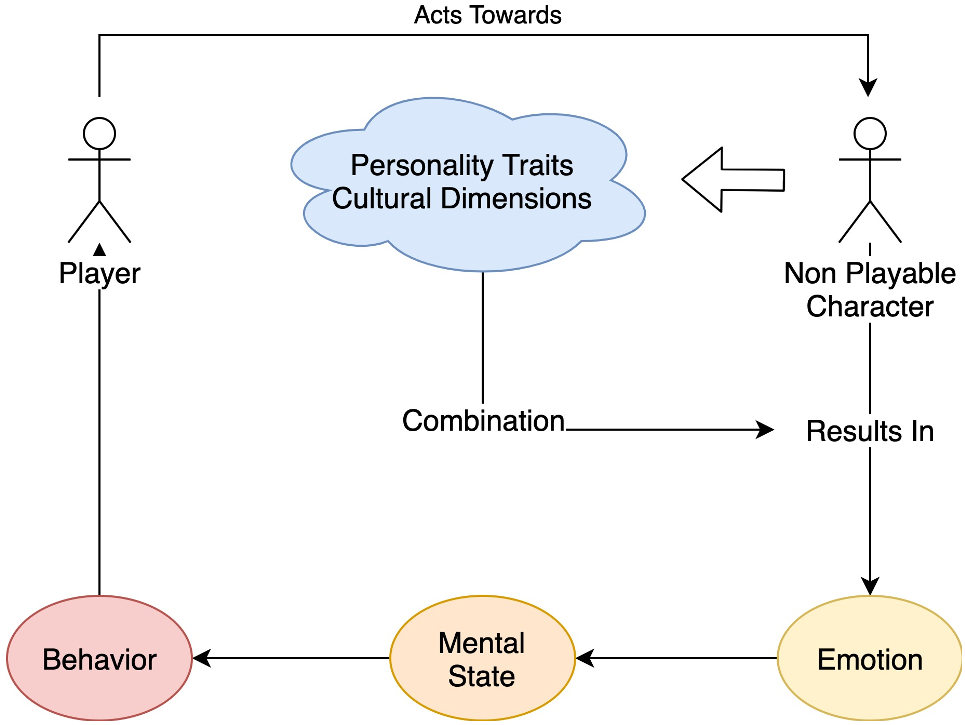 Fig. 1: The logical flow from player action to NPC behavioral output.
Proxemics: Space as a Cultural Trigger
One of the most interesting aspects of this work is the integration of Proxemics (the study of human space). Using Edward T. Hall's theories, the researchers defined circular triggers around NPCs:
- Public Space: No reaction.
- Social/Personal/Intimate Space: Triggers different "Dignity" evaluations. In some cultures (like the game's "Roligats"), entering a personal space is an aggressive act that immediately drops trust levels.
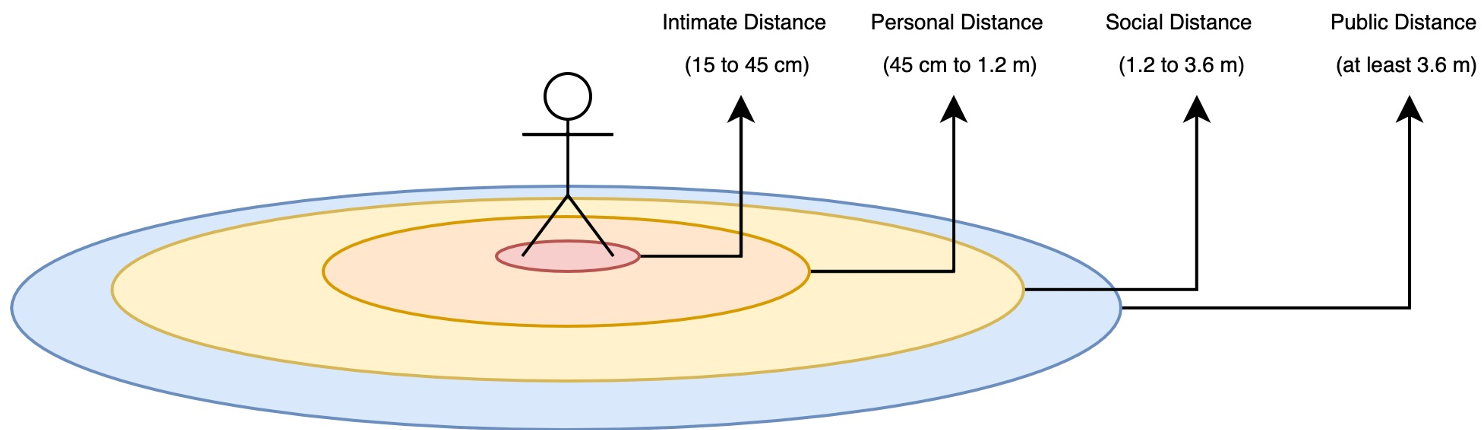 Fig. 2: The interpersonal distances used to trigger cultural responses.
Results: Future Falls
The model was tested in a 2D RPG called Future Falls. The experiment showcased how two different races—Humans and Roligats—interpreted the same player action. For instance:
- Humans: High politeness, low dignity. They tolerate close proximity but care deeply about wealth.
- Roligats: High neuroticism and low politeness. They are highly territorial (low dignity tolerance) and prone to "Anger" and "Fear" mental states if approached incorrectly.
The trust level (tLvl) is dynamically calculated using a "Discrimination Level" (Prejudice), ensuring that even if an action is objectively positive, an NPC from a prejudiced culture might still respond with skepticism.
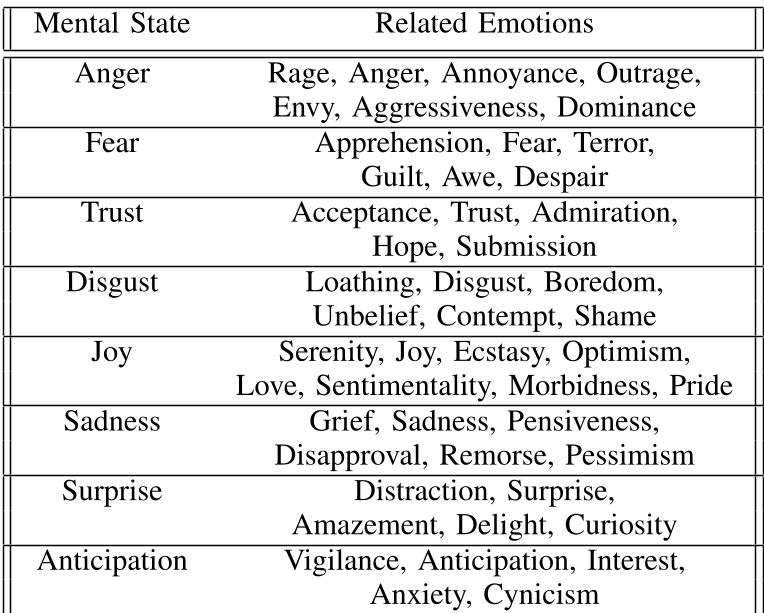 Fig. 3: The mapping of mental states (derived from culture) to specific game behaviors.
Critical Analysis & Conclusion
Takeaway
The true value of this paper is the mathematical formalization of culture. By treating culture as a "Rationality Filter" (Equation: ), it provides a scalable way for game designers to create varied populations without writing unique scripts for every character.
Limitations
While robust, the model currently relies on static cultural traits. In a true social simulation, cultures are fluid. The "Prejudice" factor is a 0-1 float, but it lacks a learning mechanism for NPCs to overcome their bias based on positive player history over long play sessions.
Future Outlook
The authors suggest that this model could eventually drive Procedural Content Generation (PCG). Imagine a city that builds its houses far apart because its culture has a high "Dignity" (space) requirement, or a market that grows based on a "Wealth" metric. This moves AI from just controlling characters to controlling the evolution of the world itself.