
[AHA 2026] The Invisible Clock: How Childhood Air Pollution Exposure Predetermines Lifetime Cardiovascular Failure
Cumulative lifetime burden of cardiovascular disease from early exposure to air pollution
This contemporary review synthesizes growing scientific evidence linking early-life exposure to air pollution with the cumulative lifetime burden of cardiovascular disease (CVD). It highlights how pollutants like PM2.5 and PAH trigger systemic inflammation and epigenetic changes in children, ultimately driving the development of major CV risks including obesity and hypertension.
Executive Summary
TL;DR: Air pollution is no longer just a respiratory concern; it is a primary driver of the global cardiovascular disease (CVD) epidemic. This review establishes that the "seeds" of heart disease are sown in utero and throughout childhood. By triggering chronic inflammation via the interleukin-1β (IL-1β) pathway and disrupting the epithelial barrier, air pollution creates a cumulative "lifetime burden" that accounts for over 3 million cardiovascular deaths annually—surpassing the toll of modern smoking.
Background: Positioned as a landmark contemporary review in the Journal of the American Heart Association (AHA), this work shifts the clinical paradigm from "Adult Risk Management" to "Pediatric Environmental Protection."
The "Life Sentence": Why Early Exposure is Different
The authors argue that children are not merely "small adults." Their cardiopulmonary systems are in a state of rapid flux, making them hyper-susceptible to toxic insult. Furthermore, children breathe more air per pound of body weight and spend more time outdoors.
The review identifies a critical Motivations/Insight: The damage is often irreversible. Exposure to fine particulate matter (PM2.5) during pregnancy and early childhood alters the physiological trajectory, leading to:
- Metabolic Reprogramming: Promoting obesity and insulin resistance.
- Epigenetic Remodeling: Altering gene expression related to antioxidant defense (e.g., TCF21).
- Vascular Stiffening: Accelerating atherosclerosis decades before clinical symptoms appear.
Methodology: The Molecular Pathway to Heart Failure
The core of this review lies in its mechanistic depth. It moves beyond simple correlation to explain why inhaled dust leads to a heart attack.
1. The Inflammasome & IL-1β Pathway
When PM2.5 enters the lungs, it activates the NLRP3 inflammasome. This protein complex acts as a "cellular alarm," processing pro-IL-1β into its active form. This cytokine enters the bloodstream, causing systemic inflammation that stresses the vascular wall.
2. The Epithelial Barrier Theory
A standout insight in this paper is the role of the Epithelial Barrier. Pollutants like ozone and diesel exhaust break down the "tight junctions" in nasal and bronchial linings. This "leakiness" allows toxins to bypass natural defenses and enter the systemic circulation directly.
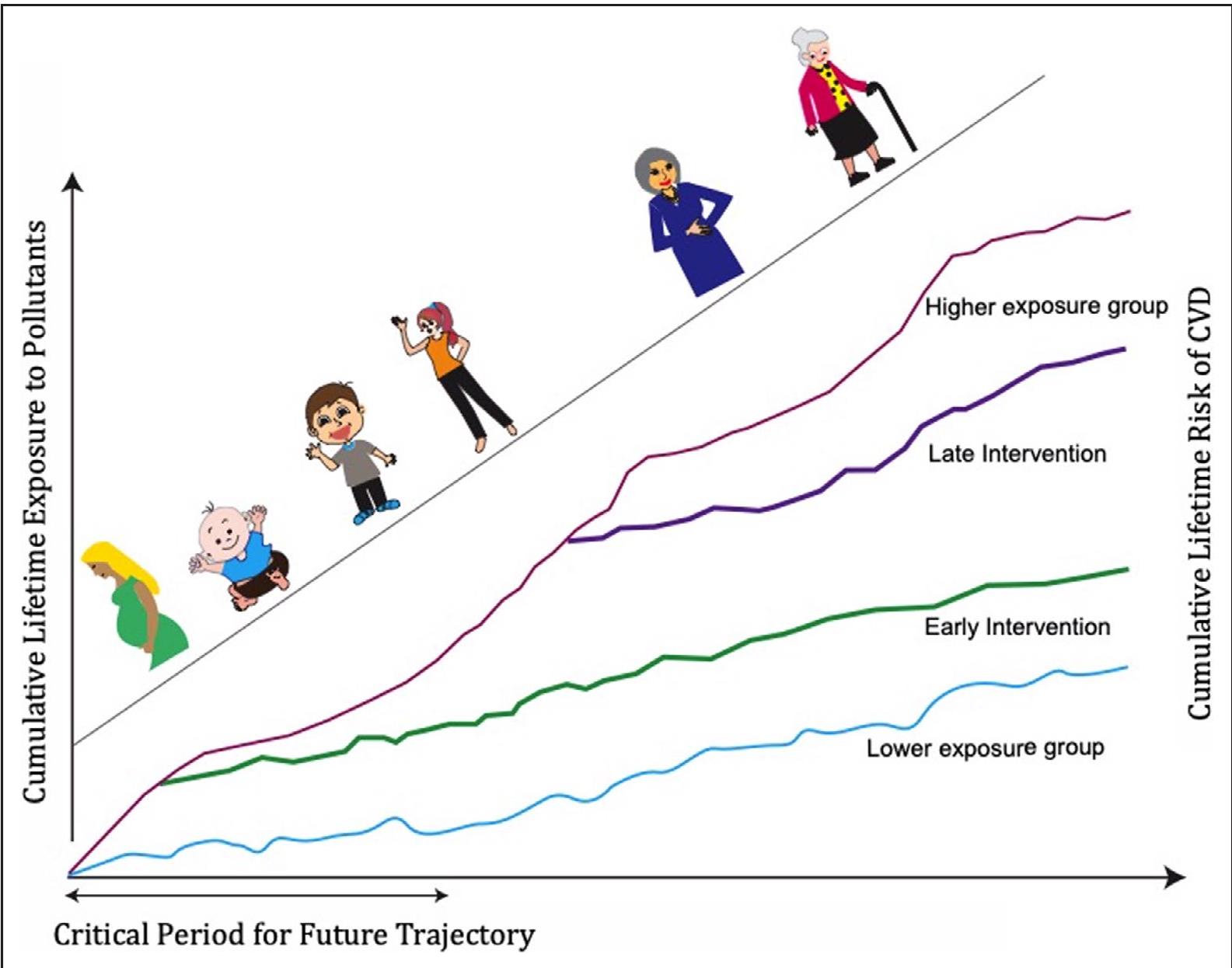 Figure 1: The cumulative lifetime risk model showing how early intervention (green line) can reset the disease trajectory compared to late intervention (red line).
SOTA Metrics: Quantifying the Damage
The review compiles a "War Map" of clinical evidence across the lifespan:
| Cardiovascular Risk | Exposure Source | Quantifiable Impact |
|---|---|---|
| Hypertension | Prenatal PM2.5 | Elevated BP in children ages 3-9. |
| Obesity | PAH (Combustion) | Increased BMI growth rates (up to 13.6% higher). |
| Infant Mortality | Polluted Air | 38% higher neonatal death risk. |
| Atherosclerosis | Traffic Pollution | Significant progression of coronary calcification over 10 years. |
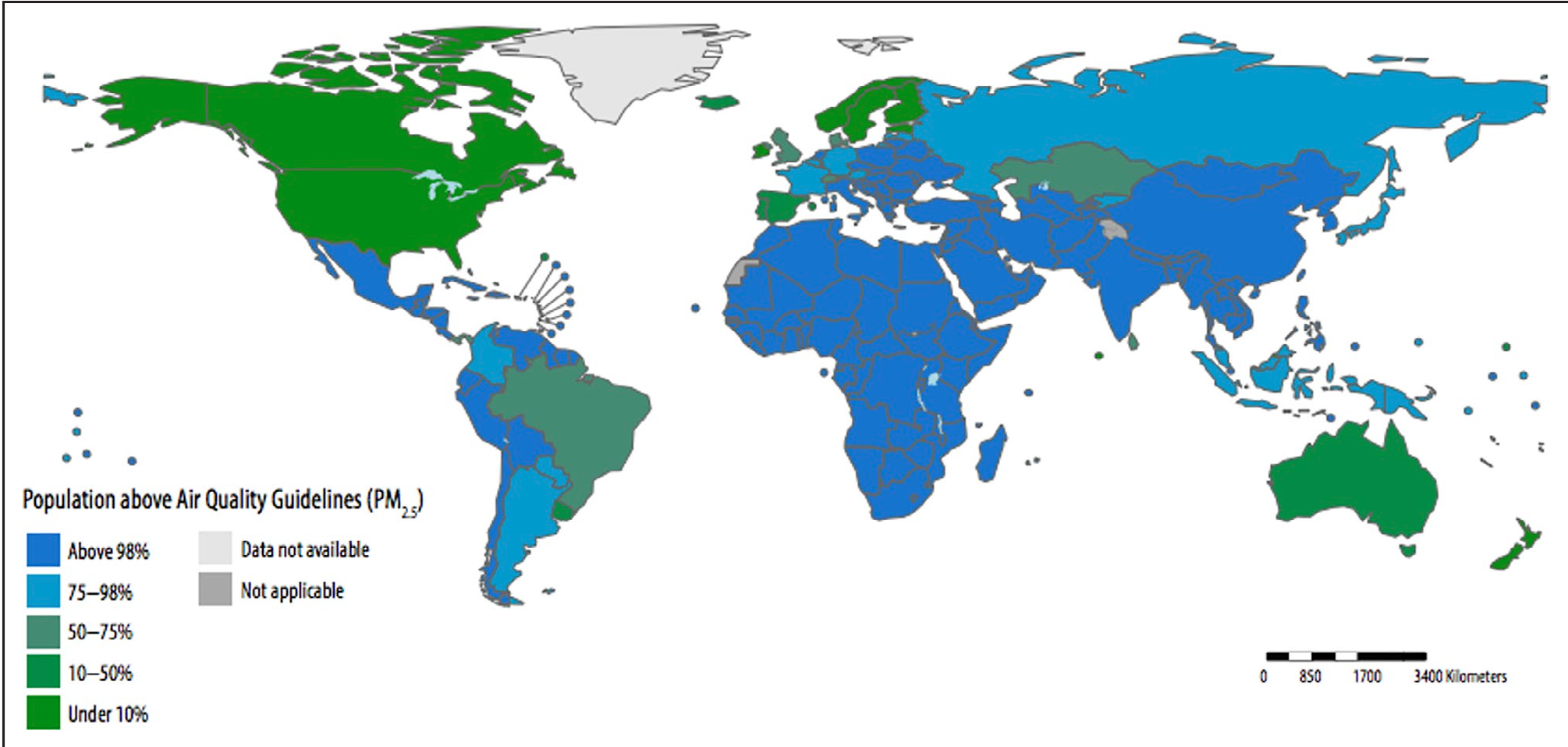 Figure 2: WHO data showing the proportion of children (<5 years) living in areas exceeding safety guidelines. In many regions, the exposure is near-universal.
Intervention: From Individual to Population
The standard "risk calculator" (like the ASCVD 10-year risk) is insufficient because it doesn't account for air quality. The authors propose a combined approach:
- Individual level: Use of N95 masks during peak pollution and HEPA filtration in homes for high-risk children.
- Clinical level: Pediatricians must act as local policy advocates, pushing for the removal of diesel buses near schools.
- Population level: Carbon taxes and stricter NAAQS (National Ambient Air Quality Standards) that reflect pediatric rather than adult biology.
Critical Insights & Future Outlook
Takeaway: This paper is a call to arms. It proves that the "first 1,000 days" of life are as critical for heart health as they are for brain development.
Limitations: While the IL-1β pathway is promising, we still lack a "standardized modeling platform" to compare different types of pollution (e.g., wildfire smoke vs. industrial smog). We also need more randomized clinical trials on omega-3 fatty acid supplementation, which early data suggests might mitigate some inflammatory markers.
Future Work: The next frontier is Precision Environmental Health—using biomarkers (like DNA methylation signatures) to identify which children are genetically most vulnerable to pollution-induced CVD, allowing for targeted therapeutic intervention.