
Pundit 2.0: Orchestrating the Crowd to Unveil Hidden Knowledge in Digital Libraries
Curating a Document Collection via Crowdsourcing with Pundit 2.0
Pundit 2.0 is a semantic web annotation system designed to curate digital libraries by enabling users to create structured RDF triples from web content. It features semi-automatic entity linking via the TAGME algorithm and customizable templates to streamline the collaborative construction of knowledge graphs.
TL;DR
Digital libraries are gold mines of information, yet much of their value remains trapped in unstructured text. Pundit 2.0 is a sophisticated semantic annotation framework that empowers users to collaboratively build RDF knowledge graphs. By utilizing semi-automatic entity linking and structured templates, it transforms the solitary act of reading into a collective effort of data curation, directly feeding into real-time faceted search and visualization tools.
The Gap: Metadata vs. Deep Content
While most digital libraries possess excellent "surface" metadata (Author, Date, Title), they suffer from a lack of "deep" semantic structure. Automatic tools are getting better but still struggle with the nuance required for high-quality Digital Humanities research. The challenge lies in making the creation of RDF (Resource Description Framework) triples accessible to humans without requiring a PhD in Semantic Web technologies.
Methodology: The "Annotation-as-a-Service" Architecture
Pundit 2.0 moves beyond simple highlighting. It treats annotations as first-class citizens in a global knowledge graph.
1. Semi-Automatic Entity Linking
To lower the barrier to entry, Pundit integrates DataTXT (based on the TAGME algorithm). When a user scans a page, the system identifies potential entities from Wikipedia/DBpedia, allowing the user to simply confirm or reject them rather than manually searching for URIs.
2. The Triple Composer and Templates
For more complex relationships (e.g., Person X was born in Place Y on Date Z), Pundit provides a Triple Composer. The breakthrough in version 2.0 is the Annotation Template, which pre-configures the predicates (the "verbs") of the triples. This ensures that the data produced by the crowd is consistent and immediately useful for applications.
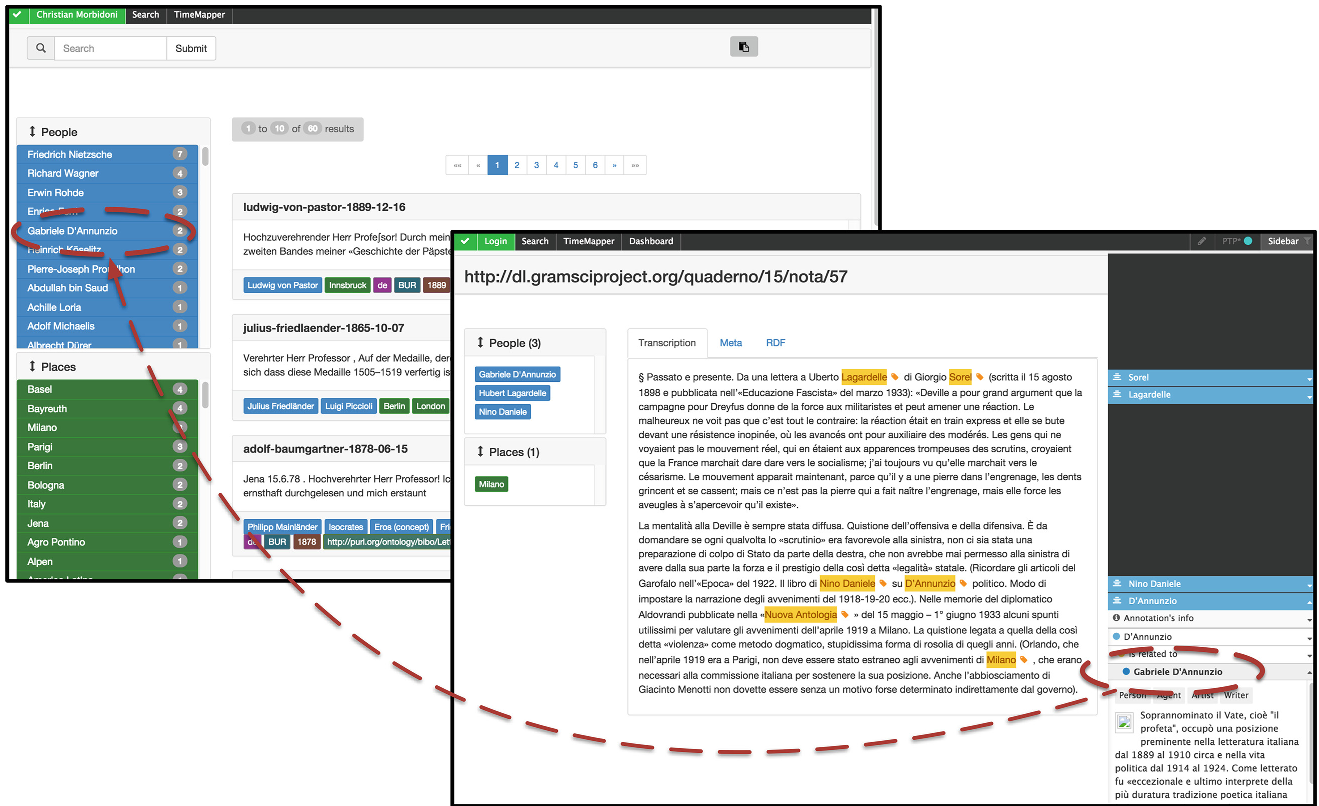 Figure 1: The Pundit sidebar allows users to scan for entities and see the results reflected in the library's facets.
From Annotations to Insights
The true power of Pundit 2.0 is seen in the "real-time feedback loop." As users annotate:
- Faceted Search Updates: New entities discovered in the text (e.g., "Jacob Burckhardt") instantly become filterable categories in the library sidebar.
- Specialized Visualizations: By following specific templates, users can populate a TimeMapper view, turning a collection of letters or documents into an interactive geographical and chronological journey.
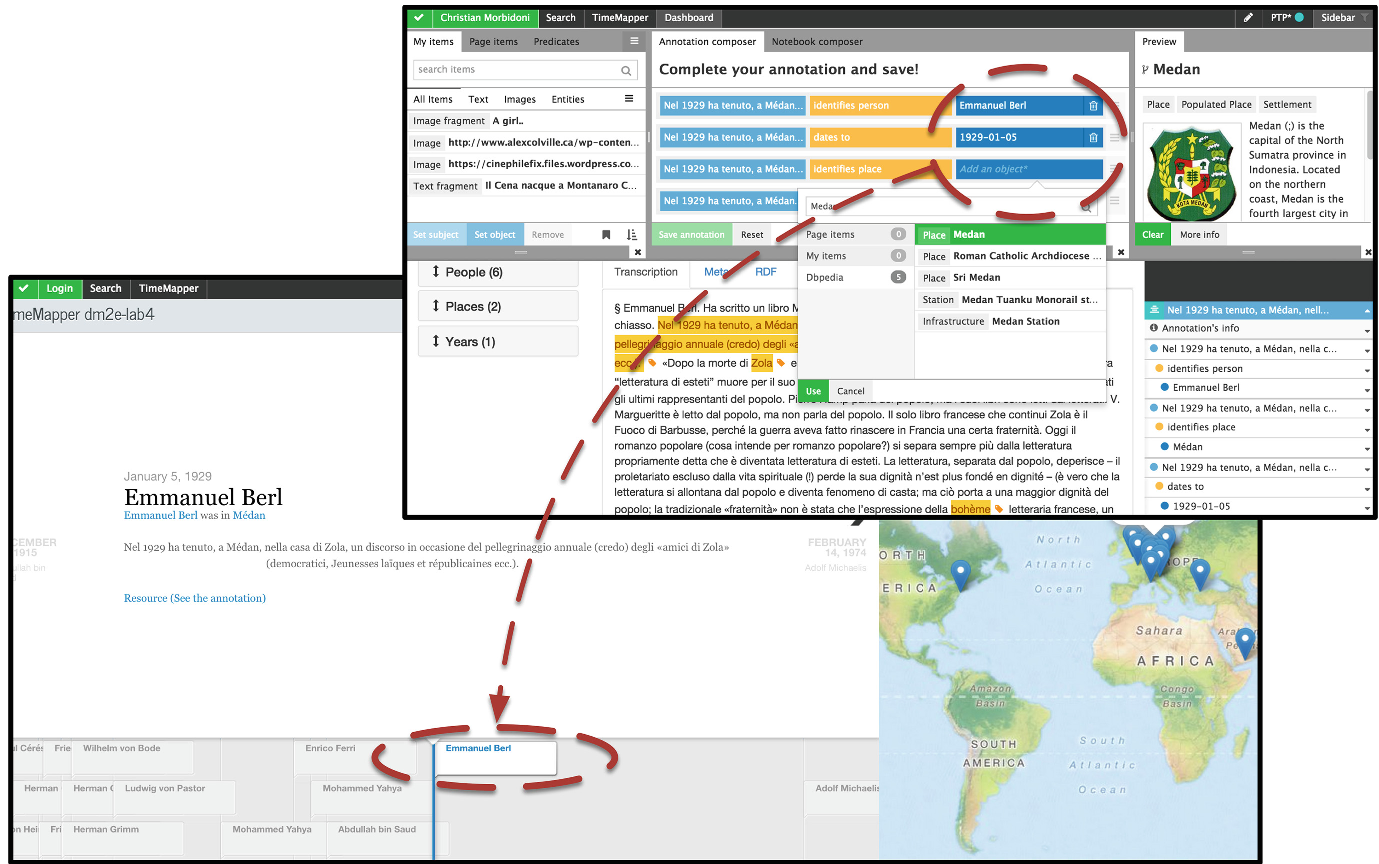 Figure 2: Using the PTP template to generate structured data for timeline and map visualizations.
Critical Insight: Why This Matters
Unlike earlier systems like Annotea or Semantic Turkey, Pundit 2.0 realizes that the "Crowd" needs guidance. By providing Annotation-as-a-Service via bookmarklets and REST APIs, it doesn't force libraries to rebuild their sites; it overlays a layer of intelligence on top of them.
However, a notable limitation discussed is the lack of a built-in "quality check" for the public demo. In a professional academic setting, an "Editorial Layer" would be necessary to filter out noise—a feature the authors suggest can be implemented using Pundit’s API by only pulling annotations from "trusted" collections.
Conclusion
Pundit 2.0 represents a bridge between the unstructured web and the Semantic Web. It proves that with the right UI/UX—shifting from "writing code" to "filling blanks"—we can harness human intelligence to structure the vast archives of our digital history.
Future Outlook: As we move into the era of LLMs, tools like Pundit will likely evolve into "Human-in-the-loop" platforms where AI proposes complex knowledge graphs and human scholars use Pundit's structured interface to verify and refine them.