
The Molecular Architect of Plant Growth: A Deep Dive into Gibberellin Biosynthesis
The Current Status of Research on Gibberellin Biosynthesis
This review provides a comprehensive synthesis of Gibberellin (GA) biosynthesis, metabolism, and regulation across plants, fungi, and bacteria. It highlights how GA productivity evolved independently in these three kingdoms and details the transition from structural identification to molecular genetic understanding of biosynthetic enzymes like 2-ODDs and Cytochrome P450s.
TL;DR
Gibberellins (GAs) are the chemical "engines" of plant elongation. This comprehensive review by Peter Hedden outlines the 60-year journey from discovering fungal metabolites to mapping the complex genetic circuits of GA metabolism. It reveals a fascinating case of convergent evolution, where plants, fungi, and bacteria independently developed the machinery to synthesize these diterpenoid hormones to mediate growth or manipulate hosts.
Background & Motivation: Beyond the "Bakanae" Fungus
The study of GAs began with the "foolish seedling" disease in rice caused by the fungus Fusarium fujikuroi. For decades, research focused on identifying the 136+ structural variants of GAs. However, the true technical challenge lay in understanding homeostasis: Why do plants produce GA in some cells but not others? Why are some GAs (like GA1 and GA4) bioactive while others are merely metabolic dead-ends?
The author posits that the evolutionary "innovation" of GA coincided with vascularization, turning a local metabolite into a long-distance mobile signal capable of coordinating the development of an entire organism.
Methodology: The Core Biosynthetic Engine
The review deconstructs the pathway into three distinct phases across the three kingdoms:
- Formation of ent-Kaurene: Occurring in the plastids, utilizing enzymes like CPS and KS.
- Oxidation to C20-GAs: Primarily driven by Cytochrome P450 monooxygenases (KO and KAO) at the endoplasmic reticulum.
- Refining to Bioactive GAs: Dominated by 2-oxoglutarate-dependent dioxygenases (2-ODDs) like GA20ox and GA3ox in the cytosol.
The Structural Insight: Convergence and Divergence
One of the most profound insights is the convergent evolution depicted below. While plants and bacteria utilize separate enzymes for certain steps, fungi often use multifunctional proteins.
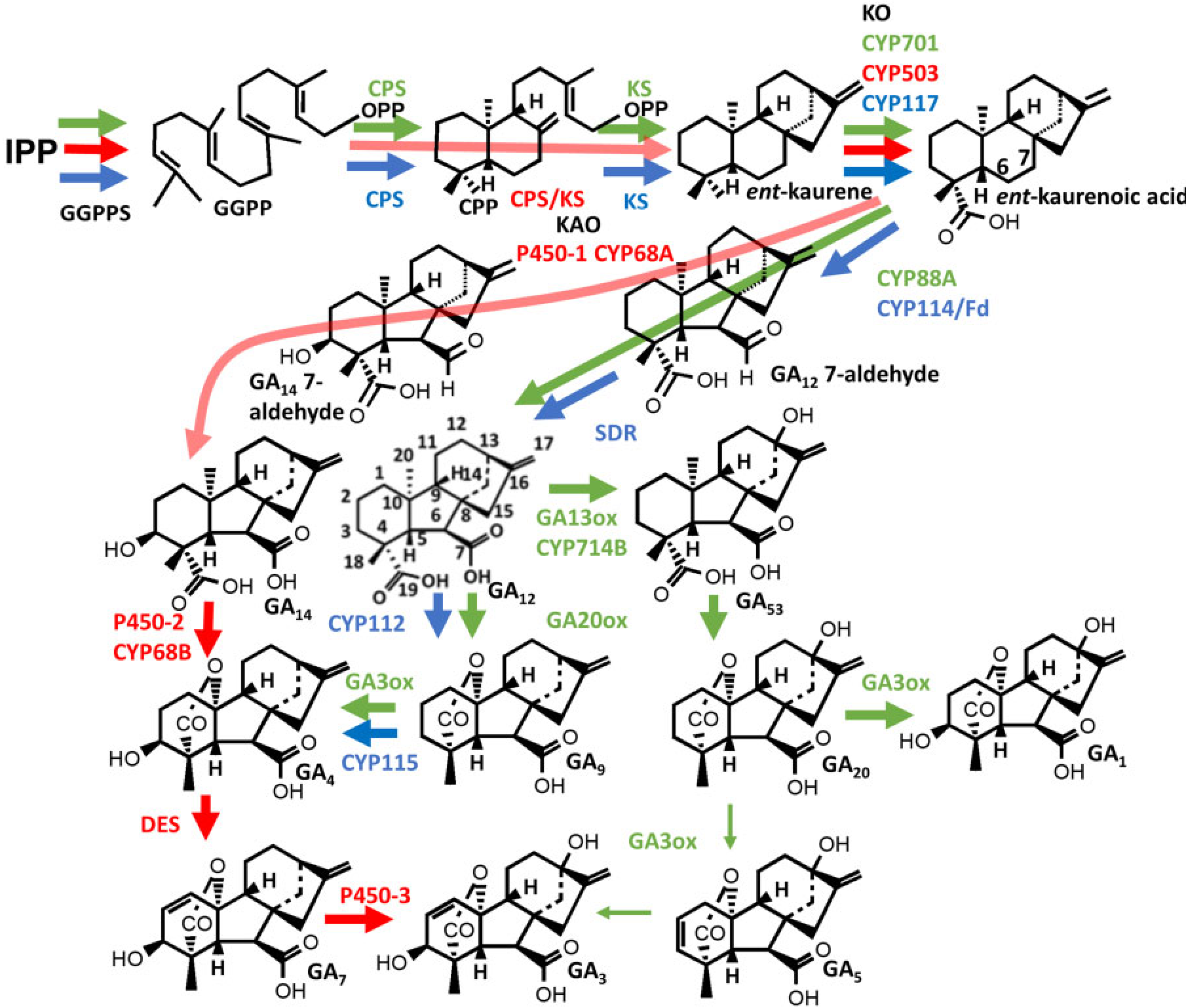 Fig 1: A comparison of pathways for higher plants, fungi, and bacteria.
Key Results: Allosteric Regulation and Homeostasis
Recent breakthroughs have moved beyond transcriptional regulation (how many mRNA copies are made) to protein-level allostery.
- The Tetramerization Mechanism: A standout result is the discovery that the catabolic enzyme OsGA2ox3 forms a tetramer only in the presence of its substrate, GA4. This serves as a "high-speed lane" for GA deactivation: as GA levels rise, the enzymes become more efficient at destroying them, preventing overgrowth.
- 13-Hydroxylation as Inactivation: In rice, 13-hydroxylation (converting the potent GA4 to the milder GA1) is now viewed as a "dampening" mechanism rather than just a parallel pathway.
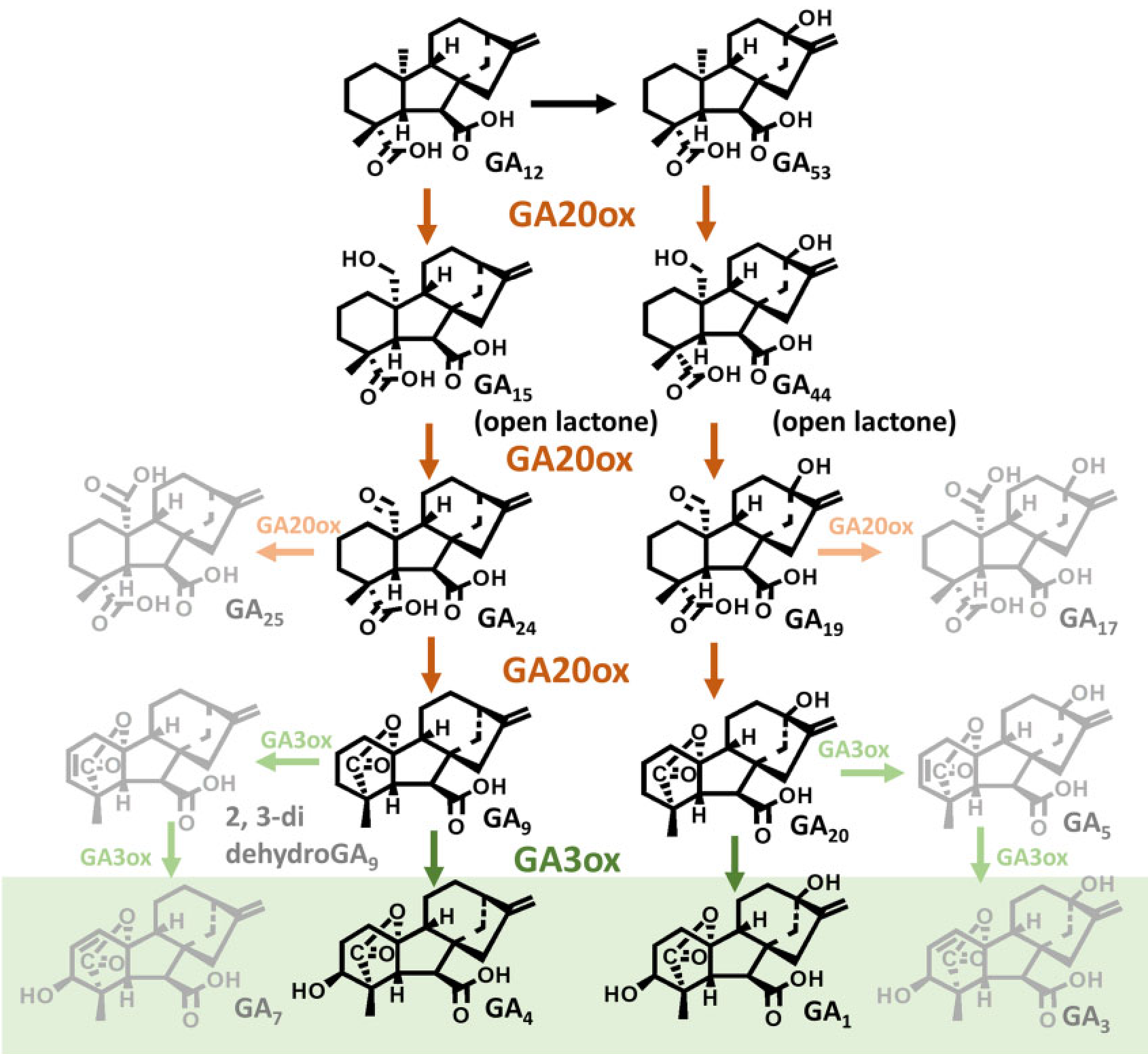 Fig 3: Final stages of GA refinement leading to bioactive GA1 and GA4.
Critical Analysis: The Mobility Frontier
While the biosynthetic pathways are virtually "solved," the review points to a major gap: Transport.
- Source vs. Sink: We know GAs are synthesized in root tips and young leaves, but how exactly do they reach the shoot apical meristem?
- Transporters: Currently identified GA transporters lack specificity. The author argues that passive diffusion (the ion-trap hypothesis) is insufficient to explain the precise gradients observed in vivo.
Conclusion: Toward Precision Agriculture
The "Green Revolution" was fueled by defects in GA signaling and biosynthesis (e.g., sd1 rice, Rht wheat). Hedden argues that the next leap will come from spatial-temporal control. Instead of making the whole plant shorter (which might reduce biomass), we can target specific internodes or stress-response pathways.
Takeaways
- Convergent Evolution: GA biosynthesis is a "tool" that life discovered three separate times to interface with plant physiology.
- Regulation is Multilayered: Homeostasis is maintained through a complex dance of feedback loops involving DELLA proteins, allosteric enzyme activation, and environmental sensing (light/temperature).
- The Future is Cellular: The next decade of GA research belongs to high-resolution MS imaging and specific transporter identification.