
CKM in the Social Era: Bridging the Gap Between Data and Real-Time Customer Wisdom
Customer Knowledge Management in the Age of Social Networks
This research explores the evolution of Customer Knowledge Management (CKM) in the social network era, focusing on the adoption of Social CRM and Enterprise Content Management (ECM) tools. Through surveys and interviews with Chilean companies, it evaluates how organizations leverage external tacit customer knowledge to gain a competitive advantage.
TL;DR
In the "Age of the Customer," competitive advantage is no longer built solely on manufacturing or distribution power—it is built on Customer Knowledge Management (CKM). This paper investigates how Chilean organizations are navigating the transition from internal document management to the "Fourth Stage of KM": the systematic capture of external tacit knowledge via social networks. Despite high awareness, a significant execution gap remains between knowing about social tools and effectively deploying them.
The Evolution: From Intranets to Social Intelligence
For decades, Knowledge Management was an inward-facing discipline. We focused on "lessons learned" and internal databases. However, the researchers highlight a pivotal shift:
- The Problem: Customers now generate over 500 billion impressions annually about products online. Traditional IT tools are deaf to this noise.
- The Insight: We have entered the Fourth Stage of KM, characterized by the primacy of external information. Organizations must now "listen" to social networks to protect brand reputation and identify new market leads.
Methodology: Mapping KM Maturity
The authors employed a mixed-methods approach to benchmark the Chilean industry. They categorized KM enablers into five pillars—Technology, Leadership, Culture, Measurement, and Process—with a specific focus on the Technology enabler as the most volatile and impactful.
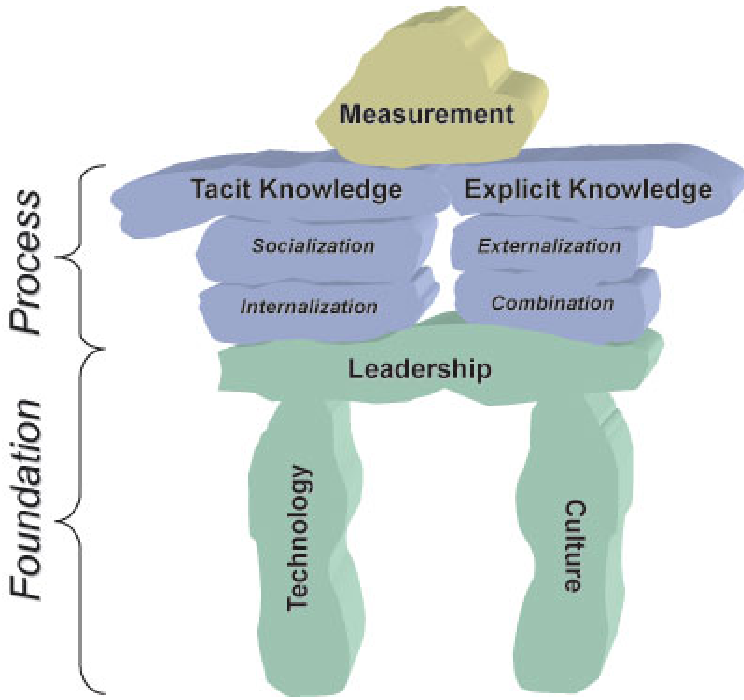 Figure 1: The architecture of KM enablers, positioning Technology as a critical driver for CKM.
The Reality Check: Knowledge vs. Adoption
One of the paper's most striking revelations is the massive disparity between familiarity and utilization. In the survey of 98 companies, tools like SharePoint and Drupal showed moderate penetration, but specialized Social CRM tools like Radian 6 or Sysomos were virtually untouched.
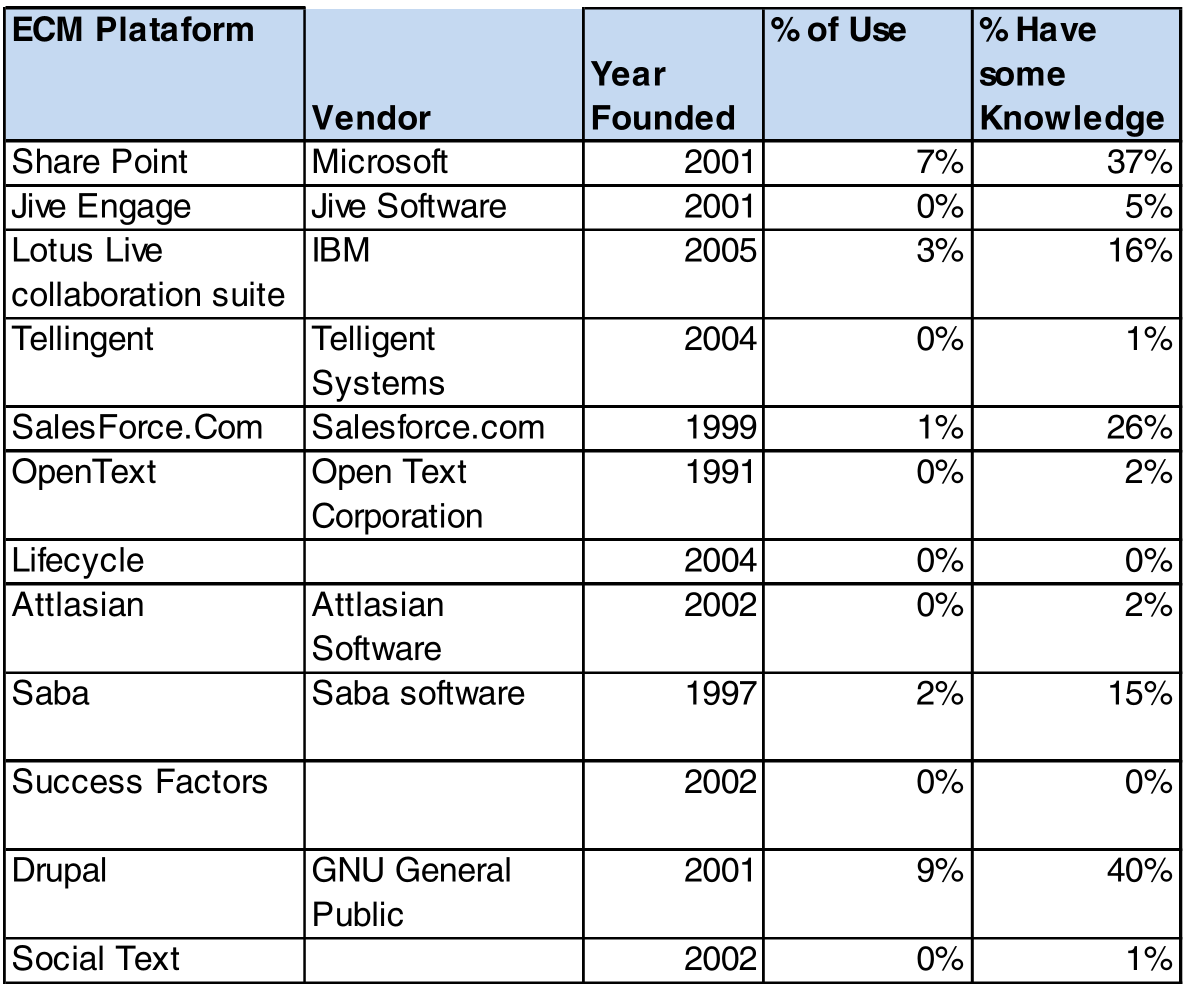 Table 2: The low adoption rates of specialized CKM platforms in the Chilean market (2012).
The study reveals that while executives recognize the potential of social metrics, they are hesitant to invest. The reasons are two-fold:
- Expertise Gap: A lack of professional talent capable of translating unstructured social data (tweets, comments) into actionable strategy.
- Service vs. Capital: A growing trend to prefer "Knowledge-as-a-Service" over heavy capital investments in software.
Strategic Implications and the Roadmap to Maturity
The research concludes that Chilean companies are largely stuck in the first and second stages of KM. To move toward "KM Maturity," the authors argue that organizations must:
- Move Beyond the Desktop: Shift from basic collaboration (email/intranet) to real-time Social Listening.
- Embrace Unstructured Data: Utilize text analytics to identify sentiments (positive/negative/neutral) rather than just tracking clicks or visitor counts.
- Cultural Alignment: Technology is a "necessary but insufficient" condition. Without a systematic practice and staff training, tools remain "shelfware."
Critical Analysis & Future Outlook
While this paper provides a robust snapshot of a specific regional market, its takeaways are universal. The "Age of the Customer" has only intensified since this study's publication. The transition from Document Management to Experience Management is the new frontier.
Limitations: The study focuses heavily on the Chilean context, which may lag behind global tech hubs. Future Outlook: We are now seeing the "Fifth Stage" of KM—incorporating Artificial Intelligence and Large Language Models to automate the very "listening" tasks these authors identified as a primary hurdle.
Final Takeaway
Winning in the modern market requires an organization to be an "Intelligent Entity" that treats every tweet and customer comment as a vital asset. If you aren't managing your customer's knowledge, your competitors certainly are.