
Beyond the Words: Integrating Social Network Structure into Cyberbullying Detection
Cyber Bullying Detection Using Social and Textual Analysis
2014-11-03
Summary
Problem
Method
Results
Takeaways
Abstract
This paper proposes a holistic cyberbullying detection method that integrates social network analysis with traditional textual mining. By utilizing 1.5 ego-relationship graphs on Twitter data, the approach achieves superior performance, establishing a composite model that outperforms content-only baselines.
## TL;DR
Researchers have moved beyond simple keyword matching to detect online harassment. This study demonstrates that **who** is talking to **whom** and their position in the social web—characterized by "1.5 ego-networks"—is often more telling than the actual words used. By combining social structural features with text analysis, the authors boosted detection accuracy (ROC) from 0.642 to 0.755.
## The Context Gap in Modern Detection
Most automated "anti-bully" systems are essentially sophisticated profanity filters. They look for "bad words" or aggressive punctuation. However, real-world bullying is often subtle, utilizing sarcasm or specific social dynamics that text-mining alone cannot parse. The fundamental insight of this paper is that **bullying is a social pathology**, and therefore, its "fingerprint" should be visible in the social graph.
## Methodology: The 1.5 Ego-Network
The core innovation lies in the use of **1.5 ego-networks**. While a 1-ego network only shows a user and their direct friends, a 1.5 ego-network includes the connections *between* those friends. This captures the "embeddedness" of a user within their community.
The authors quantified these relationships through several key metrics:
* **Structural Features**: Number of nodes and edges in the combined ecosystem of the sender and receiver.
* **Centrality**: In-degree (popularity) and Out-degree (activity) to identify power imbalances.
* **Edge Betweenness**: Measuring the "bridge" importance of the relationship.
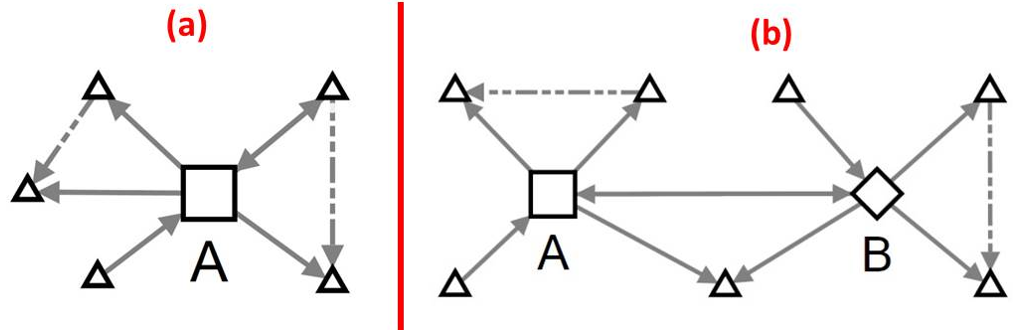
*Figure 1: Comparison between a 1.5 ego-network and a relationship graph between sender A and receiver B.*
## Experiments and the SMOTE Solution
One of the biggest hurdles in this field is **Class Imbalance**. In the Twitter dataset used (CAW 2.0), only about 2% of messages were actual bullying. To prevent the AI from simply guessing "No" every time, the researchers used **SMOTE (Synthetic Minority Oversampling TEchnique)** to balance the training data in the feature space.
### Key Findings:
The study compared three models: Textual, Social, and Composite.
* **Social context matters most**: Interestingly, the top three predictive features in the composite model were social (Number of Links, Edges, and Nodes), not textual.
* **The "Silent" Bully**: The system successfully identified messages like *"stop farting on people"* as bullying—not because of the words, but because the social metrics matched the profile of a bullying interaction (e.g., the victim being significantly more active/higher out-degree than the bully).
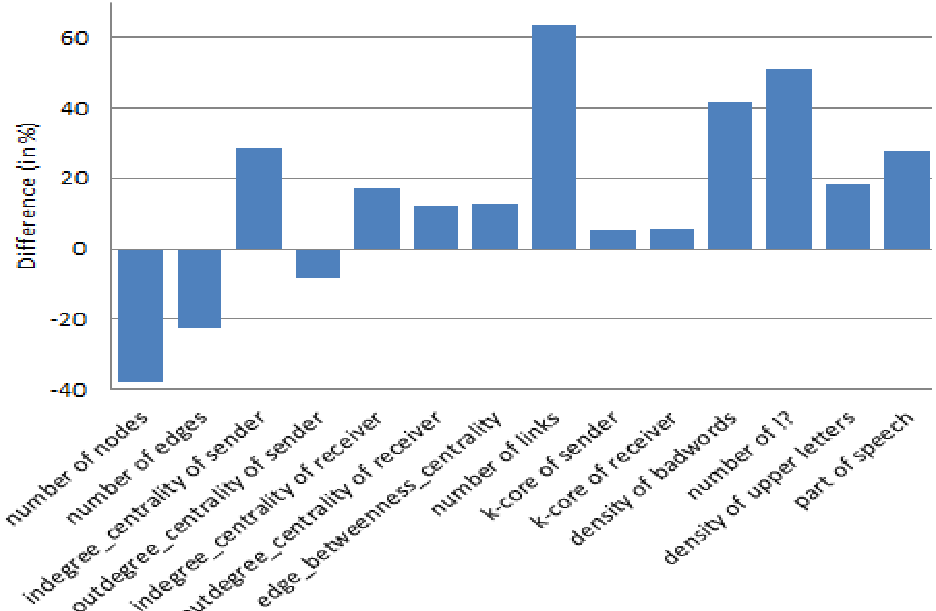
*Table 2: Performance metrics across different algorithms. Dagging consistently provided the best results for the composite model.*
## Critical Analysis & Future Outlook
The shift from "Content" to "Context" is a significant leap for the field. The result that "Number of Links" is a top predictor suggests that bulliers and victims often have a high frequency of interaction, contradicting the idea that bullying is always a random act by a stranger.
**Limitations:**
* **Data Latency**: The study uses Twitter data from 2008-2009. Patterns of online harassment have since evolved with features like "Stories," disappearing messages, and algorithmically curated feeds.
* **Demographics**: The lack of age/gender data means the model cannot account for demographic-specific bullying patterns.
**Conclusion:**
This work sets a precedent for "Social-Aware" AI. As we move toward more complex metaverses and social platforms, detection systems must look at the **network geometry** of relationships to truly protect users.
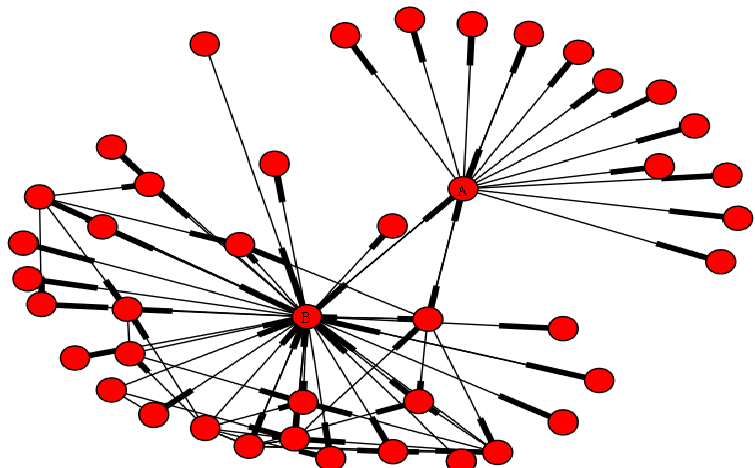
*Figure 3: A visualization of a real bullying case where the victim (Node B) is highly active within a tight-knit subgroup.*