
Deciphering the Digital Heart: The "Cyberdating Q_A" and the New Metrics of Adolescent Romance
“Cyberdating Q_A”: An instrument to assess the quality of adolescent dating relationships in social networks
2015-02-09
Summary
Problem
Method
Results
Takeaways
Abstract
This paper introduces the "Cyberdating Q_A," a novel psychometric instrument designed to assess the quality of adolescent dating relationships within social networks. Utilizing a mixed-methods approach, the study identifies six core dimensions of digital romantic interaction, establishing a SOTA framework for evaluating both positive and negative cyber-relational behaviors.
## TL;DR
For digital natives, a relationship doesn't just exist across a dinner table—it lives in the "always-on" ecosystem of WhatsApp, Instagram, and TikTok. This paper introduces the **Cyberdating Q_A**, the first comprehensive instrument to measure the quality of these digital bonds. By identifying six pillars of online interaction—ranging from healthy intimacy to toxic surveillance—the researchers provide a roadmap for understanding how technology scales both the best and worst aspects of young love.
## The Problem: Traditional Metrics are "Offline-Only"
Existing psychological scales often treat the Internet as a mere "add-on" to romance. However, for today's adolescents, the digital world is the primary stage for relationship development. Prior work failed to account for:
* **Subtle Aggression**: Using ellipses (...) or capital letters to manipulate a partner's emotions.
* **Hyper-Surveillance**: The ability to monitor a partner's new followers or "likes" in real-time.
* **Boundary Dissolution**: The specific pressure to share passwords or maintain constant "contactability."
## Methodology: From Teen Talk to Mathematical Models
The researchers didn't just guess what teens do online; they used a **Mixed-Methods** approach.
1. **Qualitative Focus Groups**: They let adolescents define their own "red lines" and "green flags" in digital spaces.
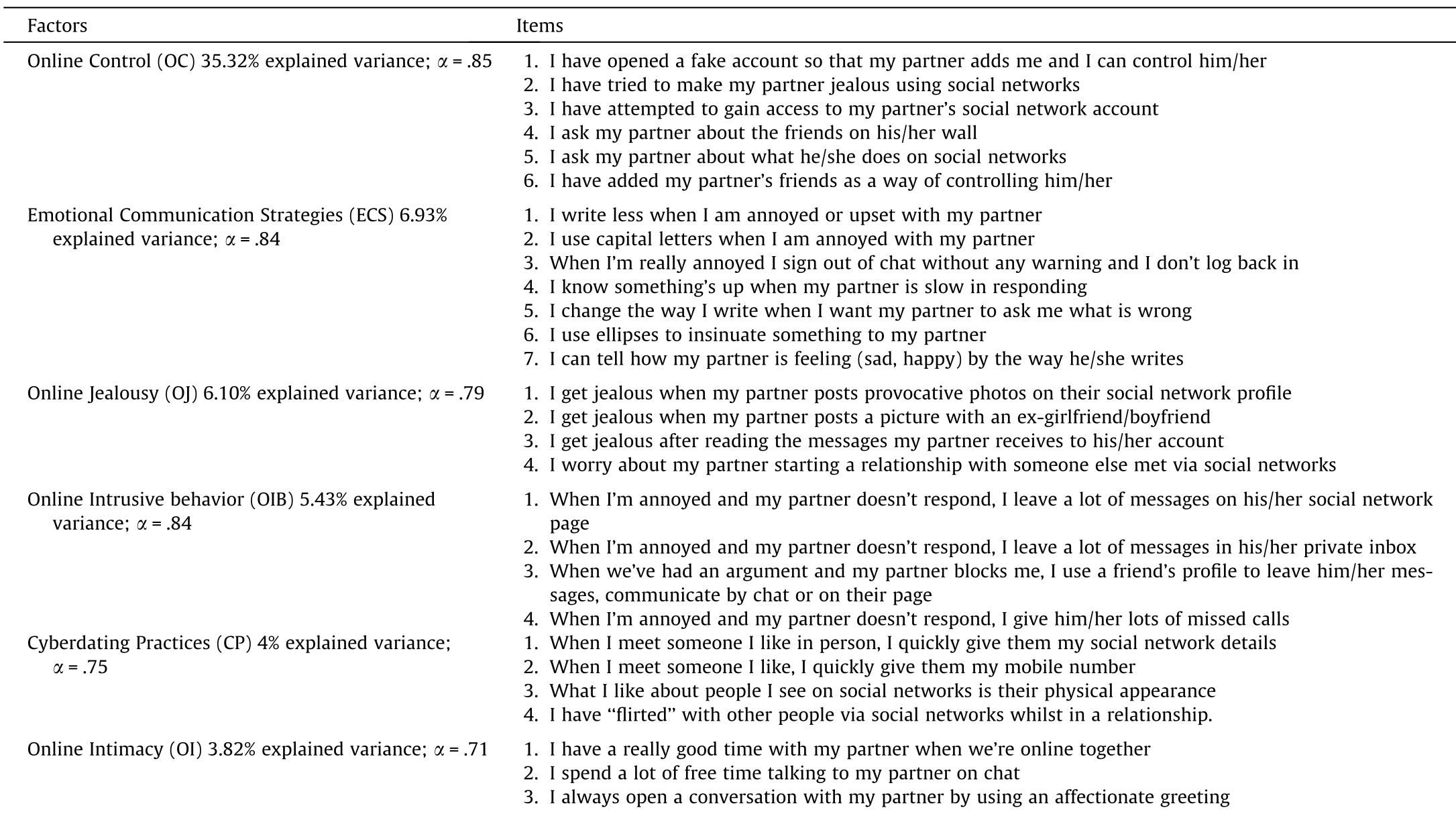
2. **Quantitative Validation**: They translated these anecdotes into a 33-item scale and validated it via **Confirmatory Factor Analysis (CFA)**, ensuring the math backed the social reality.
## The Six Dimensions of Cyberdating
The study identifies six distinct factors that define a digital relationship:
* **Positive Dynamics**:
* *Online Intimacy (OI)*: The "fun" and affectionate side of digital contact.
* *Emotional Communication Strategies (ECS)*: The nuanced way teens use text to convey mood.
* **Negative/Risk Dynamics**:
* *Online Control (OC)*: Syping, identity theft, or account monitoring.
* *Online Jealousy (OJ)*: Insecurity triggered by social media triggers (e.g., photos with exes).
* *Online Intrusive Behavior (OIB)*: Bombarding a partner with messages after an argument.
* *Cyberdating Practices (CP)*: Risky behaviors like meeting strangers or simultaneous flirting.
## Experiments & Insights: Who is Doing What?
The data revealed a striking "Digital Gender Divide":
* **Boys** were significantly more likely to engage in **Intrusive Behavior** (spamming messages) and risky **Cyberdating Practices**.
* **Girls** excelled at **Emotional Communication Strategies**, using the technical features of chat (like "read" status or typing indicators) to signal distress or seek conflict resolution.
Interestingly, **Online Control (OC)** and **Online Jealousy (OJ)** were equally prevalent in both genders—suggesting that the urge to "check up" on a partner's digital footprint is a universal modern anxiety.
## Critical Analysis: A Double-Edged Sword
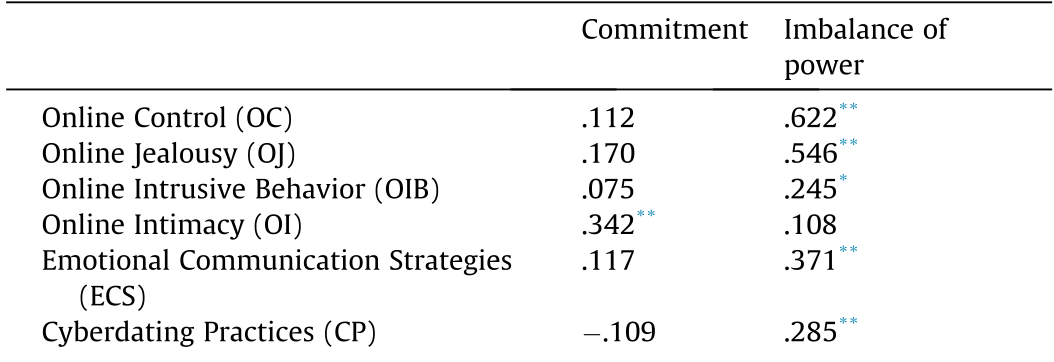
The most fascinating insight is that **Emotional Communication Strategies (ECS)** act as a bridge. While they help express intimacy, they are also highly correlated with **Imbalance of Power** and **Control**. In the digital realm, "knowing how to communicate" can easily slip into "knowing how to manipulate."
### Limitations
The study focuses primarily on behaviors *emitted* rather than those *received*. Future research must look at the impact on the victim to fully understand the trauma of digital intrusive behavior. Furthermore, the sample was localized to Spain; cross-cultural validation is required to see if these digital "rules of engagement" hold steady globally.
## Takeaway for the Future
The Cyberdating Q_A proves that we can no longer separate "Real Life" from "Digital Life." For educators and clinicians, the message is clear: to prevent teen dating violence, we must start teaching **Digital Boundaries** as early as we teach physical ones.