
CyberDect: Bridging OSINT and NLP to Combat Spanish Cyberbullying on Twitter
CyberDect. A Novel Approach for Cyberbullying Detection on Twitter
CyberDect is an automated detection system designed to identify cyberbullying on Twitter using a combination of Open Source Intelligence (OSINT) and Natural Language Processing (NLP). It specifically targets Spanish-language harassment by monitoring a victim's network and analyzing follower interactions for abusive patterns.
TL;DR
CyberDect is a proactive digital monitoring tool that combines Open Source Intelligence (OSINT) with Natural Language Processing (NLP) to detect harassment on Twitter. Focused on the Spanish linguistic context, it monitors potential victims and filters follower interactions to identify abusive behavior, achieving significant detection rates in real-world high school case studies.
Contextualizing the Crisis: Why Current Filters Fail
Cyberbullying is a unique and pervasive threat because it often occurs outside of institutional supervision and grants stalkers anonymity. While general toxicity filters exist, they often fail to capture the cultural nuances and social structures of harassment. For Spanish-speaking communities, there is a distinct lack of tools optimized for regional slang, idioms, and the specific dynamics of student-led "dogpiling."
The authors identify a critical gap: high-quality detection requires more than just scanning for bad words—it requires understanding the relationship between the sender and the receiver within a specific linguistic framework.
Methodology: The CyberDect Architecture
The CyberDect system is built upon a modular back-end designed for scalability and precision.
1. OSINT Extraction & Social Mapping
Instead of just searching for keywords, the system uses OSINT to map the "neighborhood" of a victim. By using tools like Twitter4J (and early experiments with Maltego), it compiles a list of followers and direct mentions, filtering out noise like retweets to isolate direct interpersonal interactions.
2. The NLP Processing Engine
The core of the detection lies in a benchmark-tested NLP module. The researchers compared Apache OpenNLP and Stanford CoreNLP, ultimately selecting the latter due to its superior accuracy and lower latency.
The classifier was trained using the Ibereval 2018 corpus, which provides over 3,300 Spanish tweets. To handle the complexity of harassment, they categorized the model into three subsets:
- Negligible: General insults.
- Dominant: Power-imbalance language.
- Sexual & Stereotyped: Targeted harassment based on identity.
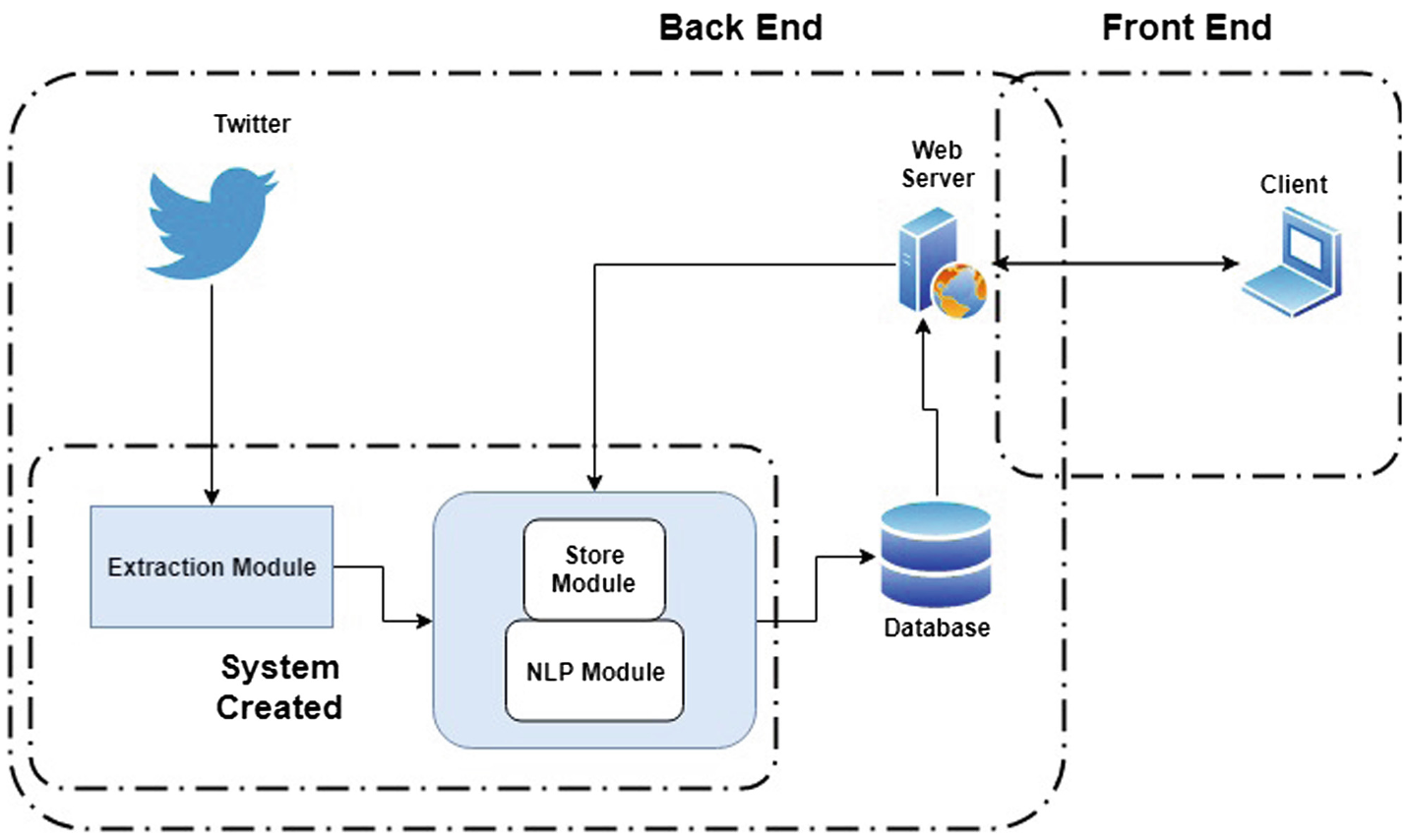 Figure 1: The dual-layer architecture showing the flow from extraction to front-end visualization.
Performance and Real-World Evaluation
The system was put to the test in a real-world scenario involving two high school accounts in Spain. Over 1,300 tweets were analyzed.
Key Metrics: The Battle Against False Negatives
In the context of bullying, a False Negative (FN)—failing to detect a real threat—is far more dangerous than a False Positive (FP)—a false alarm. CyberDect was tuned to minimize FNs.
- Experiment 1: 229 suspicious tweets detected, 8.9% True Positive rate.
- Experiment 2: 174 suspicious tweets detected, 28.38% True Positive rate.
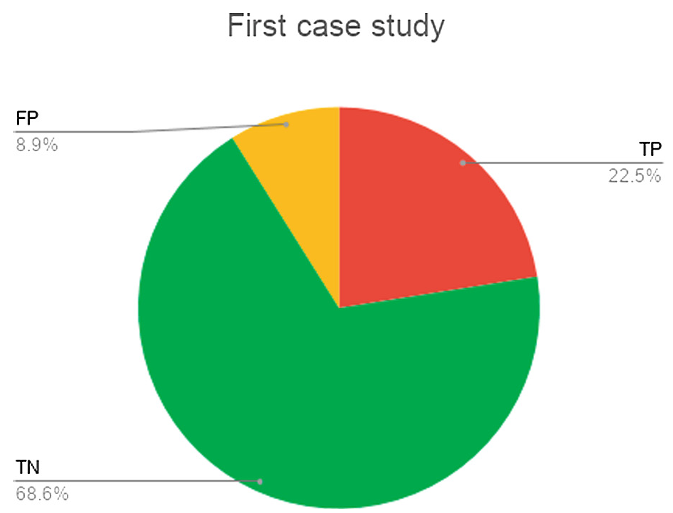 Figure 2: Comparison of True Positives (TP), True Negatives (TN), and False Positives (FP) across case studies.
The researchers observed that performance dips when tweets contain heavy use of emojis, hyperlinks, or code-switching (mixing English and Spanish). These elements represent the "linguistic frontier" for future iterations of the tool.
Critical Insight & Future Outlook
The primary takeaway from the CyberDect project is that context is king. The system’s ability to distinguish between a "heated debate" and "targeted bullying" remains the hardest hurdle. For example, a tweet containing a vulgarity regarding a news event might be flagged as a False Positive because it isn't directed as personal harassment.
Future Directions:
- Multimodal Analysis: Integrating emoji and image processing to detect visual harassment.
- Linguistic Features: Moving beyond Bag-of-Words to more sophisticated word embeddings like Word2Vec or BERT specifically for Spanish dialects.
- Real-time Alerting: Transitioning from a dashboard to a mobile-push system that alerts school supervisors the moment a high-probability "bullying event" is triggered.
CyberDect represents a vital step toward a safer digital environment for students, shifting the burden of monitoring from vulnerable victims to intelligent, automated systems.