
Decoding the Phandom: How Digital Identity is Forged in YouTube Comments
Social networking and identity construction in computer-mediated communication: cyberpragmatics analysis of fandom online community in YouTube commentaries
This paper explores identity construction within online fandoms on YouTube using a Cyberpragmatics and Sociolinguistic framework. By analyzing the "Phandom" (fans of YouTubers Dan and Phil), the study identifies how specific nicknames and avatars serve as primary markers of virtual identity and community belonging.
TL;DR
This research investigates the invisible architecture of digital belonging. By studying the "Phandom"—the intense fan community surrounding British YouTubers Dan and Phil—the authors reveal that virtual identity is not a random byproduct of interaction but a deliberate construction using specific "channels" like nicknames and avatars. Through a Cyberpragmatics lens, the study shows that in the digital realm, what you choose to be (acquired features) is far more important than who you physically are (inherited features).
The Shift from Physical to Virtual Identity
In the physical world, our identity is often anchored by "inherited features": our age, race, and nationality. However, in the realm of Computer-Mediated Communication (CMC), these traits are often invisible. The authors point out a critical gap in linguistic research: while we know people form communities online, we don't fully value how they use platform-specific tools to signal "groupism."
The core insight is that for a fandom, the YouTube comment section isn't just a place to talk—it's a "speech community" where members must adopt a specific social identity to participate effectively.
Methodology: The Cyberpragmatic Triangle
The researchers utilized a framework by Francisco Yus to distinguish between the hierarchies of physical and virtual identity. In the virtual world, the "Inherited" features move to the bottom of the triangle (least important), while "Acquired" and "Personal" features move to the top.
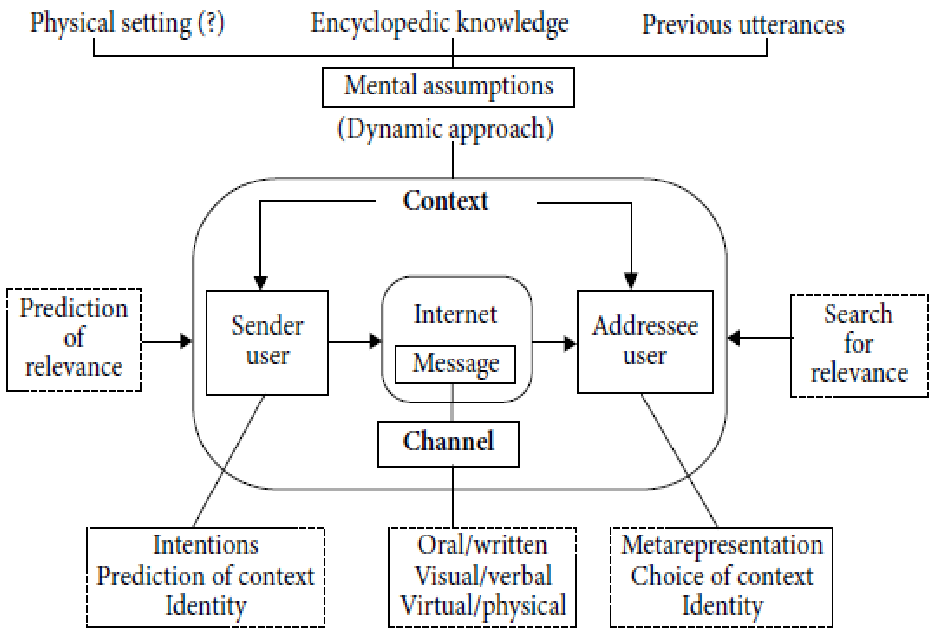
The study analyzed:
- Self-Presentation: How individuals flag their membership via nicknames and avatars.
- Interpersonal Relationships: How community is built through shared history and "inside jokes."
Key Findings: The Anatomy of a Fan
The study’s analysis of over 3,700 comments reveals a highly structured method of identity construction:
1. The Power of the Nickname
Over 64% of users didn't use their real names. Instead, they used four specific strategies:
- Direct Fandom Association: (e.g., Phan Trash #1)
- Fictional Character References: Borrowing names from the YouTubers' gaming videos (e.g., Dil Howtler).
- Sentence Formation: Using the nickname as a statement (e.g., DanielHowellStoleMyDignity).
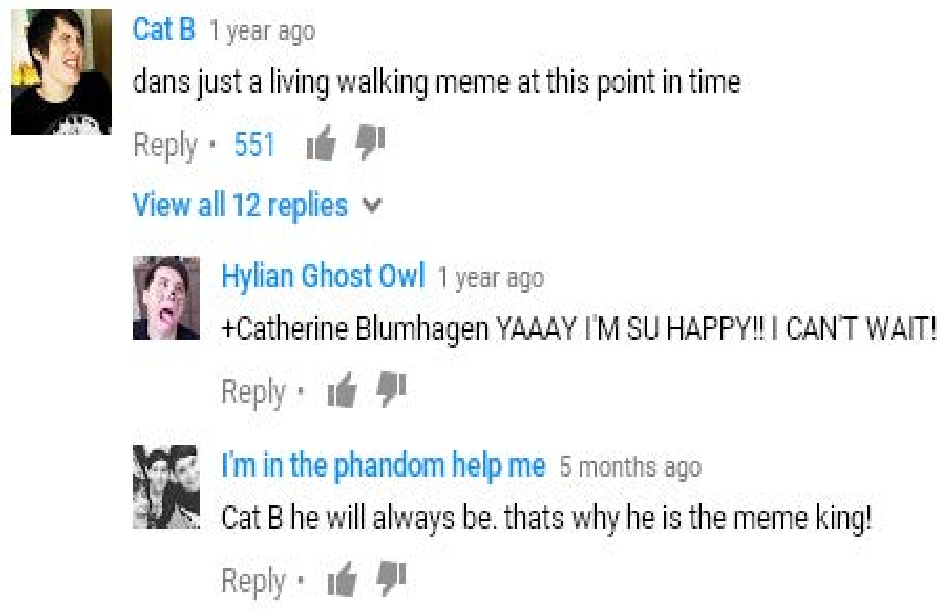
- Shared Jargon: References to specific real-life events, like the "Hey buddy you in London" Nick Jonas tweet, which acts as a "shibboleth" to separate true fans from casual viewers.
2. High Visual Cohesion
A staggering 73.2% of participants used images of the idols as their avatars. This visual uniformity creates a massive "signal" to other users that they are in a safe, shared space.
Fandom as an Online Community
The study applied Susan Herring’s criteria for an online community. While several traits were present, two stood out as the "glue" of the Phandom:
- Active Participation: The core of the community is formed not by the 500k+ viewers, but by the small percentage (approx. 3,700) who comment and interact.
- Shared Values (The "Shipping" Culture): The phenomenon of "shipping" (imagining the idols in a romantic relationship) serves as a primary cultural norm. This shared belief system allows users to understand complex, coded language (like "Phan") instantly.

Critical Insight & Conclusion
This paper highlights that identity in the digital age is performative and tribal. By adopting the jargon ("Existential Crisis"), the visuals (avatars), and the names of the community, users shed their physical selves to become part of a collective.
Takeaway for Tech & Social Media: The design of "channels" (how a platform allows you to name yourself or set a profile picture) directly dictates how communities form. For researchers, YouTube comments aren't just noise; they are a rich data source for understanding how the next generation defines themselves through shared digital history rather than geography or biology.
Limitations: The study is specific to one British fandom in 2017. Future work should explore if these patterns hold across different cultures (e.g., K-Pop fandoms) or on more ephemeral platforms like Snapchat or TikTok where "shared history" is harder to archive.